Skip to content

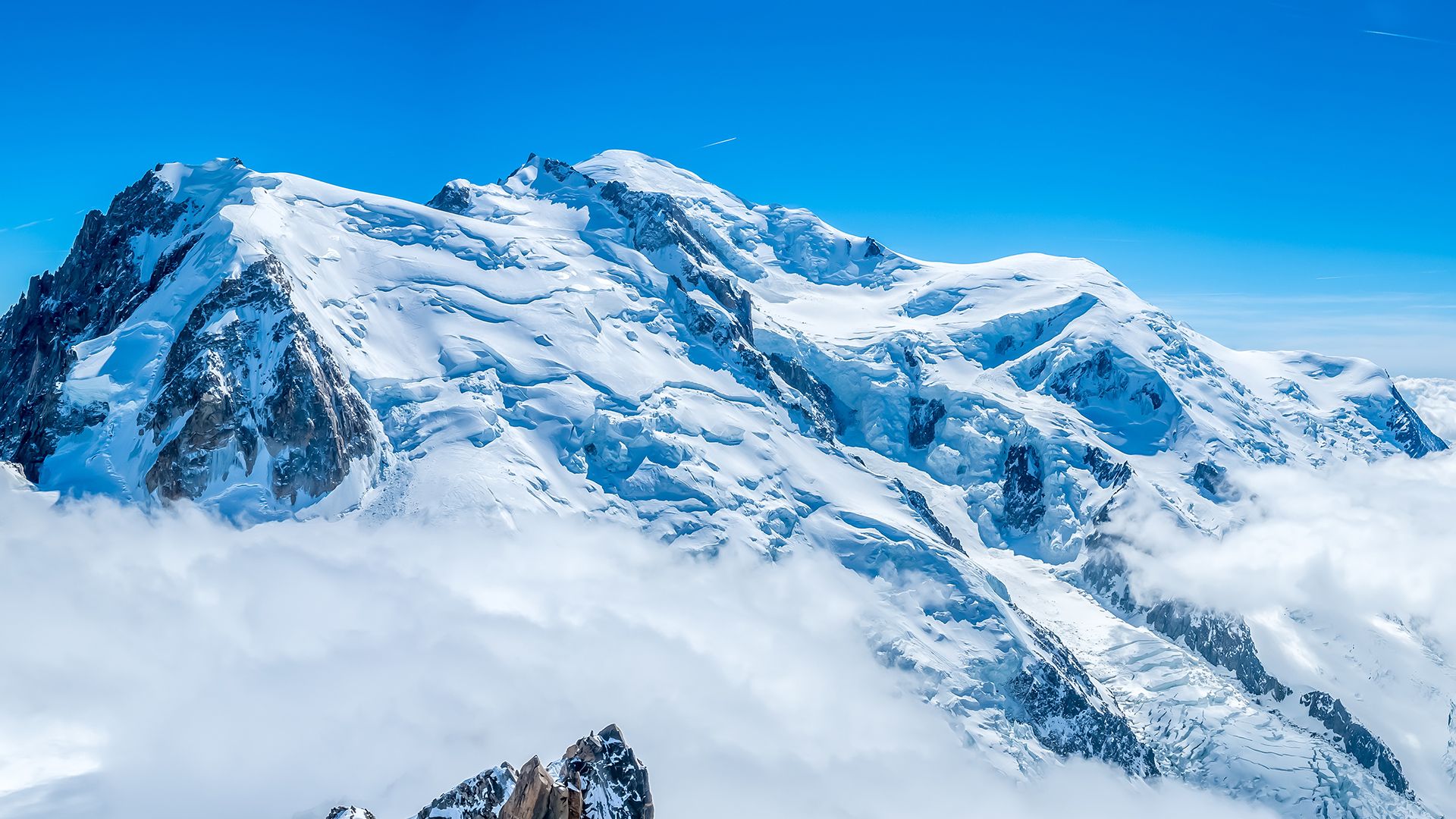
Two Climbers Die in the French Alps

General News
1 1 68 1

Suggested topics


  • 0 Votes
    1 Posts
    8 Views
    American Alpine ClubA
    Fuller, Miss Fay Peary, Mrs. Robert E. Peck, Miss Annie S.A.M. Workman, Mrs. Fanny Bullock, F.R.S.G.S. Their names were written in ink, part of the list of founding members of the American Alpine Club in the AAC bylaws and register book. These four women answered Angelo Heliprins' call to establish an “Alpine Society.” The American Alpine Club was established in 1902, but would not get its name until 1905. The founding members determined that dues were to be five dollars a year, about $186.90 in today's money. This early version of the Club was interested in projecting a reputation of mountain expertise: members had to apply for membership with a resume of mountain climbing or an explorational expedition they had participated in. Those without a sufficiently impressive resume would not be accepted as members. All the founders had lists of their ascents and exploratory expeditions underneath their names to drive the point home that this was a club of high mountain achievers. It was no small feat that these women were invited to participate in founding an alpine club at the turn of the 20th century. After all, women weren’t allowed in the British Alpine Club until 1974, forcing women to create their own alpine or climbing clubs. But Fay Fuller, Josephine Peary, Annie Peck, and Fanny Bullock Workman were forces to be reckoned with, each in their own way. They helped steer the American Alpine Club from its beginnings and pushed boundaries in mountain climbing and Arctic exploration, all well before the 19th Amendment, ratified in 1920, gave women the right to vote. Each year, their new accomplishments were published in the bylaws and register book under their name, and some were even invited to speak during the AAC Annual Gathering about their expeditions. Ultimately, these four women are foremothers to American climbing and exploration. Their stories are shaped by their historical context, but the meaning of their mountain achievements is timeless. Miss Edwina Fay Fuller was the first woman to summit Mt. Rainier in 1890. Fuller also climbed other glaciated peaks in the Cascades: Mt. Hood, Mt. Adams, Mt. Pitt (now Mt. McLoughlin, which still had a glacier until the early 20th century), and Sahale Mountain. She was described as self-reliant and dogged. Fay Fuller’s ascent of Rainier nearly ostracized her from Tacoma society—not because she was mountaineering but because of what she wore and who she traveled with. Her party of five, all men except for her—scandalous for the time—woke up on August 10, 1890, at half past four and began their arduous journey toward the summit. In a 1950 feature article about Fuller in Tacoma’s newspaper, The News Tribune, she said, “I was very nearly ostracized in Tacoma because of that trip—a lone woman and four men climbing a mountain, and in that immodest costume.” Her “immodest costume,” an ankle-length bloomer suit covered with a long coatdress, was made of thick blue flannel. She also covered her face in charcoal and cream to prevent a sunburn (unfortunately, it didn’t work). Fuller was determined to reach the summit on this attempt, her second up Mt. Tahoma or Tacoma, now Mt. Rainier. Fuller and her group climbed the Gibraltar Ledges, a Grade II Alpine Ice 1/2 with moderate snow climbing and significant rockfall hazard. Today, the most popular route on Rainier is Disappointment Cleaver, a mix of snowfields, steep switchbacks, and crevassed glaciers, but no technical climbing. Fuller and her team navigated the difficult and exposed terrain of there route with little prior experience and with gear we wouldn’t dare use today, successfully summiting Rainier. Len Longmire, their guide—though he had never been to the summit—recalled that one of the group members offered Fuller a hand at an especially dangerous place. “No thanks,” she replied, “I want to get up there under my own power or not at all.” That night, under the stars, the team slept in one of many craters on the stratovolcano, listening to avalanches raging down the mountain. The team continued down safely the next morning, leaving a sardine can containing their names, a tin cup, and a flask filled with brandy as proof of their adventure. Fuller went on to summit the mountain once more with the Mazamas in 1894. Her asc... https://americanalpineclub.org/news/2025/11/5/guidebook-xvilibrary-feature
  • Petzl Simple Primer

    Videos climbing hownot2
    1
    0 Votes
    1 Posts
    50 Views
    HowNOT2H
    https://www.youtube.com/watch?v=p-JuMl0Aoc4
  • Watch Climber Free-Solo 5.12d Sport Route

    General News climbing
    1
    0 Votes
    1 Posts
    81 Views
    GrippedG
    The American Alpine Club recently released a video talking about the dangers of free-soloing The post Watch Climber Free-Solo 5.12d Sport Route appeared first on Gripped Magazine. https://gripped.com/video/watch-climber-free-solo-5-12d-sport-route/
  • 72-Year-Old Rock Climber Still Going Strong

    General News climbing
    1
    0 Votes
    1 Posts
    81 Views
    GrippedG
    Watch an award-winning film about the legendary Australian climber who started climbing in his 50s The post 72-Year-Old Rock Climber Still Going Strong appeared first on Gripped Magazine. https://gripped.com/profiles/72-year-old-rock-climber-still-going-strong/
  • Kicking about with a pair of tools in a garage

    Videos climbing
    1
    0 Votes
    1 Posts
    90 Views
    EpicTVE
    https://www.youtube.com/watch?v=_zGSFxmqe9c
  • 1 Votes
    1 Posts
    111 Views
    American Alpine ClubA
    It has been a momentous week for climbing policy, and we want to thank all of you who shared your voices with your legislators on these matters. The EXPLORE Act, which the AAC and its partners have been working on in some form or another for nearly 10 years, passed with unanimous consent, and is awaiting a presidential signature as we speak. Secondly, the National Park Service announced late Wednesday afternoon (December 18th) that they were discontinuing the development of their proposed fixed anchor guidance. What does this mean for climbers? The EXPLORE Act: The EXPLORE Act, introduced by Rep Bruce Westerman (R-AR) and Rep Raul Grijalva (D-AZ), is a historic recreation package that has had widespread bipartisan support and support from outdoor recreationists of all stripes—including climbers, mountain bikers, hunters, anglers, and more.  The most important elements of the EXPLORE Act for climbers are two-fold.  First, EXPLORE includes the Protecting America’s Rock Climbing (PARC) Act, introduced by Rep. Joe Neguse (D-CO) and Rep John Curtis (R-UT). The PARC Act is intended to ensure safe and sustainable access to rock climbing in designated Wilderness areas. It requires federal agencies to recognize recreational climbing as an appropriate activity in accordance with the Wilderness Act of 1964, as well as recognizing that the placement, use, and maintenance of fixed anchors is appropriate. The act also ensures that a public comment period is made available prior to any final climbing management guidance being issued. Essentially, the PARC Act officially recognizes that the use of fixed anchors for climbing (and Search and Rescue operations) continues to be appropriate in Wilderness areas, provided it does not diminish the wilderness character of the area. Second, EXPLORE includes the Simplifying Outdoor Access for Recreation Act (SOAR Act), which will increase accessibility to the outdoors by improving recreational permitting for outfitters and guides. How? By: Additional elements of the EXPLORE Act include improving access to parks and public lands for veterans and people with disabilities by building additional accessible trails; the BOLT Act, which will create more long-distance biking trails; and the codification of FICOR and the Outdoor Recreation Legacy Partnership, which funds local parks and green spaces, and provides direct access to funding for tribes for developing green spaces. AAC Executive Director Ben Gabriel synthesized this win, saying: “It has been such a privilege to work with all the outdoor recreation organizations, and legislators from both chambers and parties, to see the EXPLORE Act through. This historic recreation package will broadly serve the public, protect recreation resources, and provide for our gateway communities.” As you might imagine, the AAC is thrilled with what this all means for public lands and accessibility to climbing across the United States! This win would not be possible without the combined efforts of our incredible partners, especially Outdoor Alliance, Access Fund, AMGA, and The Mountaineers. Fixed Anchor Policy: The National Park Service announced on December 18th that they were discontinuing the development of their proposed fixed anchor guidance. The update said that, "Park leaders will continue to manage climbing activities in Wilderness on a park-by-park basis consistent with applicable law and policy, including the Wilderness Act." This announcement comes nearly a year after Park officials sought public comment on proposed regulations which suggested a new interpretation of installations as defined in the Wilderness Act. This new interpretation, which could have prohibited fixed anchors in Wilderness, was met with significant concern from climbers, climbing organizations, and other recreation enthusiasts, as well as search and rescue professionals, throughout the country.   The AAC thanks the NPS for sensing the need to reevaluate the proposed regulations and looks forward to collaborating with them in the future on fixed anchor guidance. The AAC, Access Fund, Mountaineers, and many other organizations, worked tirelessly to educate lawmakers on the potential impacts of prohibiting fixed anchors, which resulted in 14 Senators reaching out to the Secretaries of the Department of I... https://americanalpineclub.org/news/2024/12/19/xqb6m95tn7yzrj9c0gjad322vzx4zx
  • 48 Hrs with Pepa Šindel: In The Footsteps Of Adam Ondra

    Videos climbing
    1
    0 Votes
    1 Posts
    116 Views
    EpicTVE
    https://www.youtube.com/watch?v=p-aZZZq-j0c
  • Helmets Can Save Your Life

    General News climbing
    1
    0 Votes
    1 Posts
    103 Views
    GrippedG
    Safety and performance go hand-in-hand with these climbing helmet picks The post Helmets Can Save Your Life appeared first on Gripped Magazine. https://gripped.com/gear/buyers-guide/helmets-can-save-your-life/