Skip to content

We invented a bag!

Videos
1 1 285 1

Suggested topics


  • The one and Only Camilla Moroni...

    Videos climbing
    1
    0 Votes
    1 Posts
    117 Views
    EpicTVE
    https://www.youtube.com/watch?v=zkeJj6Z9FaE
  • A Tribute to Chuck Fleischman

    General News climbing
    1
    1 Votes
    1 Posts
    180 Views
    American Alpine ClubA
    We are sad to share that beloved AAC community member Charles (Chuck) Fleischman passed away in November of 2025. Chuck was a devoted member of the AAC board of directors from 2013 to 2019, and was truly a person who lived out loud.  Chuck was a Harvard graduate who cofounded Digene Corporation, a molecular diagnostics company. Chuck’s work with Digene, as President, CFO, and director, resulted in the first FDA-approved test to detect high-risk HPV before it caused cervical cancer.  When he semi-retired, he threw himself into supporting other meaningful work, including his board term at the AAC. With Jackson Hole as their home, Chuck and his wife Lisa wanted to make a difference in their community. So their first step, beyond membership, was giving back to the local AAC community by supporting the introduction of solar panels on Cabin 2 at the AAC’s Grand Teton Climbers’ Ranch.   As an AAC board member, Chuck was the kind to always be outspoken and always push for greatness. He was very mission driven, always pursued excellence, and held the AAC to those same standards. Phil Powers, past AAC Executive Director, remembers his tough questions, but offered always with an upbeat demeanor, as well as a gregarious laugh.   Chuck’s commitment to the AAC was grounded in his love of the mountains and wilderness. He would ski as many days as the weather gods would allow, including more than 80 days each season, even as he was fighting off cancer. He regularly went on big ski adventures with partners like Jimmy Chin and Kit DeLauriers. Chuck was also a river rat and a committed climber, having summited El Cap, gone on expedition to K2, and floated the Grand Canyon many times.  Chuck lived larger than life, and his impact on the AAC will be felt for years to come. Our thoughts are with Chuck’s family as they process his passing.  “Chuck has been a career mentor but also a climbing and adventure mentor for me. He taught me not only about how to be a professional, and how to take my experience with being on the board of the Bay Area Climbers Coalition and build it into my role as an AAC board member, but he also taught me how to look for big objectives in the mountains. Being on the AAC BOD was probably the biggest summit I could have tried to climb. But he also inspired me to pursue Shasta, Whitney, and other big objectives. It was all directly a benefit of his mentorship.” —Jen Bruursema, former AAC board member “If I was going on a hike with Chuck, I knew it was going to be A) a great day, and B) there were going to be some hard questions to tackle along the way. I knew it meant he really just cared about the Club. He wasn’t going to let a day go by without pushing us forward.” —Phil Powers, former Executive Director of the American Alpine Club https://americanalpineclub.org/news/2025/12/10/a-tribute-to-chuck-fleischman
  • Guidebook XV—Policy Spotlight

    General News climbing
    1
    0 Votes
    1 Posts
    269 Views
    American Alpine ClubA
    Consider the following true story: It’s the mid-2000s and two friends are on a long, multi-pitch sport climb. They’re excited—it is the climbing vacation to paradise they’ve dreamt about. They’ve been on clean, hard limestone all week. They’re prepared and plenty experienced for this climb. The leader has reached a belay stance and is getting ready to bring up their partner. They are building an anchor on two shiny new bolts. As the leader flakes the rope, they see the first bolt on the next pitch is close, and they decide to clip the rope into it—giving their partner a little more of a top-rope in the last moves and setting them up for swinging into the next pitch. The follower gets to the anchor and clips in. What a climb! They both lean back to laugh. Both anchor bolts break. They fall. Only that extra bolt on the next pitch holds, keeping them from dying, but all three bolts were shiny and brand new. Corrosion isn’t always visible, and there are a few different kinds of severe corrosion that result in scary failures like the one described above. These have been known for a long time in industries like construction and nuclear power, but it has only been in the last 20 years or so that we’ve recognized them in climbing anchors. These failures don’t require a lot of corrosion, just a very small amount. The two main types are Stress Corrosion Cracking (SCC) and Sulfur Stress Cracking (SSC), but there are others as well. For a number of reasons, these are really terrifying problems in climbing safety: they can happen very quickly without any easy-to- spot outward signs; they are difficult to predict; and they happen on stainless steels that climbers and route developers commonly think of as bomber. Like in any other part of climbing, assumptions can kill. Starting in the late 1990s, climbers started talking about this issue. The problem seemed particularly obvious in coastal climbing areas, but it began to crop up elsewhere as well. Companies were quietly adjusting the alloying content of their wedge bolts, scientific papers were being written, and developers were beginning to use glue-ins and titanium. And ultimately, the Union Internationale des Associations d’Alpinisme (UIAA) Safety Commission (SafeComm) started looking into the issue in a rigorous way. The UIAA is where the buck stops with global climbing safety. It is a union of climbing federations from 73 countries that works on things like mountain medicine, protecting climbing areas globally, organizing Ice Climbing World Cups, and standardizing training curricula and safe practices. It is where gear failure from all countries gets analyzed. It is where climbers, manufacturers, and labs come together to make climbing safer. As the national organization for climbers in America, the American Alpine Club is the U.S. representative to the UIAA. To address the SCC issue, the SafeComm worked for almost 15 years to develop a new Rock Anchor Standard that tests the complete anchor—UIAA123. In the summer of 2025, we updated it at our 50th anniversary meeting with guidance on welding. SCC starts with a pit on the surface of the material. This could be a small defect in the steel, damage caused by placing the bolt, or something left over from manufacturing. Pitting corrosion can also start the process. Pitting corrosion causes deepening pits to form in the surface and is typically fueled by the presence of chlorine. In all these types of corrosion, chlorine isn’t consumed, it is just something that facilitates the corrosion’s progress. That means it doesn’t take very much to make this happen—a high concentration, but not a large amount. Once there is a deep enough pit, the process changes—in some cases it will stop here, but in others, the corrosion will develop into SCC and a crack will begin to extend from the bottom of the pit. This crack drives forward through the shaft of the bolt via a complex mechanism that doesn’t cause the outside of the bolt to corrode. In a short time, the bolt could break with body weight but show little sign of this danger. Sulfur Stress Cracking (SSC) is similar in effect, but not in process. For now, we’ll focus on SCC. Stress Corrosion Cracking requires three things: a susceptible material, a suitable environment, and sufficient stress in the material. None of these things are quite as straight-forward as they seem and the rate of cracking can ... https://americanalpineclub.org/news/2025/8/14/guidebook-xvpolicy-spotlight
  • 0 Votes
    1 Posts
    228 Views
    UK ClimbingU
    Jim Pope lives and breathes climbing. This video gives a glimpse into how he makes a living in the sport while staying fully immersed in his passion, from route setting and training to getting outside climbing at every opportunity and representing as a sponsored climber. https://www.ukclimbing.com/forums/t.php?n=782918
  • 0 Votes
    1 Posts
    210 Views
    IFSCI
    https://www.youtube.com/watch?v=-0-97eGpRVY
  • Guidebook XIV—Policy Spotlight

    General News climbing
    1
    0 Votes
    1 Posts
    414 Views
    American Alpine ClubA
    A thing done; a deed. A written ordinance of Congress, or another legislative body; a statute. A main division of a play, ballet, or opera. A play for theater, radio, or television. An enticing, emotional, or unexpected series of events or set of circumstances. EXPLORE, in the waning days of the 118th Congress, met every definition of the words “drama” and “act” as it made its way into becoming law. As I sat at my computer watching Senator Joe Manchin ask for unanimous consent of the bill on the Senate floor, it was not lost on me that years of work, by hundreds of organizations, teetered on the edge of achievement. And it passed in a most glorious fashion. But let me back up just a bit... Not too long ago, in early December of 2024, the AAC policy team traveled to Washington, DC, and met up with the Access Fund and American Mountain Guides Association (AMGA). The mission was clear—examine and pursue all avenues to get the EXPLORE Act passed. At that time, attachment to the National Defense Authorization Act (NDAA) was still on the table, as was the possibility of being bundled in with the Continuing Resolution (CR) to keep the government funded. Additionally, there was the less probable route of the bill going “stand-alone” for a unanimous consent vote on the Senate floor, but we sensed that there wasn’t enough floor time, especially given the need to end the lame-duck session of Congress, and the condition that a unanimous consent vote had to actually be unanimous without a single dissenting vote. It was an all-hands-on-deck moment for recreation-based organizations—Outdoor Alliance, Outdoor Recreation Roundtable, Surfrider, The Mountaineers, IMBA, Outdoor Industry Association, organizations representing hunting and fishing interests and RV interests, and many, many more orgs, all working simultaneously in an effort to see this historic recreation bill package passed. Our small team focused a lot of effort on speaking with the bipartisan group of 16 senators that submitted a joint letter to the Secretaries of Agriculture and the Interior expressing the appropriateness of fixed anchors in Wilderness and wanting a report on the status of the agencies’ respective proposed fixed anchor regulations. The Protecting America’s Rock Climbing (PARC) Act, a component of the EXPLORE Act that serves to recognize recreational climbing (including the use, placement, and maintenance of fixed anchors) as an appropriate use within the National Wilderness Preservation System, further emphasized the intent of those senators, and of Congress more broadly, to preserve the historical and well-precedented practice of fixed anchor utilization in Wilderness. It is no secret that the waning days of the 118th Congress were fairly chaotic. Characterized by the forthcoming change of administrations, few clear “unified” priorities, and the pending departure of several longtime members of Congress, the landscape was hard to navigate. We left DC understanding the potential pathways to passage of EXPLORE, but still not certain which vehicle would get it across the finish line. The following week we saw it miss the cut for the NDAA Manager’s Amendment and concentrated on advocating for its inclusion in the CR. As the days drew closer to a potential government shutdown, we came to understand that the CR was likely going to be relatively tight compared to previous iterations, and would probably not allow for bills such as EXPLORE to ride on it. The CR was out for us. That is when we heard that Senator Joe Manchin (I-WV) was considering introducing EXPLORE as a stand-alone bill. This was INCREDIBLE news. However, we had some concerns as we knew that the Senate was working off of the House-passed version, which had been passed via unanimous consent (UC) in April of 2024, stewarded by Rep. Bruce Westerman (R-AR). We understood that the Senate wanted the House to address some issues in the bill, but that would require the bill to be sent back to the House for consideration and a vote...which would require time. And there wasn’t any. On the morning of December 19, we heard that Senator Manchin was planning to introduce the House version of EXPLORE on the Senate floor for a UC vote. For those tuning into the live broadcast, we had no idea what time the possible introduction would occur. It was observable that Senator Manchin was talking to a group of senators and then left the floor. A few hours later Senator Manchin appeared and presented the EXPLORE Act for consideration via a U... https://americanalpineclub.org/news/2025/5/19/guidebook-xivpolicy-spotlight
  • 0 Votes
    1 Posts
    299 Views
    mkroehnertM
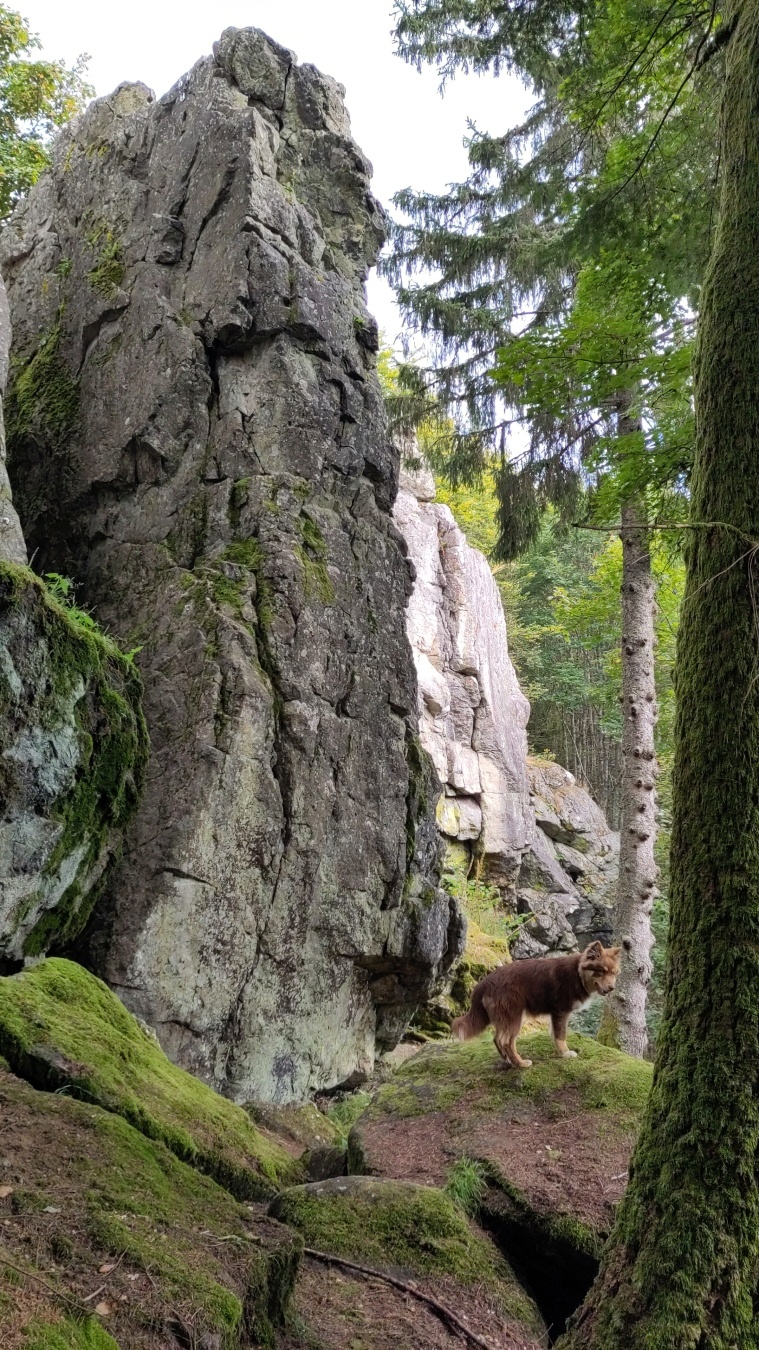
    Vor ein paar Wochen waren wir in den #Vogesen #Klettern. Erster Tag am Neuntelstein mit Granit. Zweiter Tag am Carriere de Ziegelberg mit Sandstein. Crag photos from #climbing in the #Vosges. One day Neuntelstein with granite. Second day sandstone at Ziegelberg. #RockClimbing #OutdoorClimbing
  • 0 Votes
    1 Posts
    232 Views
    climbingC
    With a route name like “Slammin’,” perhaps this violent whipper isn’t so surprising. https://www.climbing.com/videos/watch-large-climbing-fall-gunks/