Skip to content

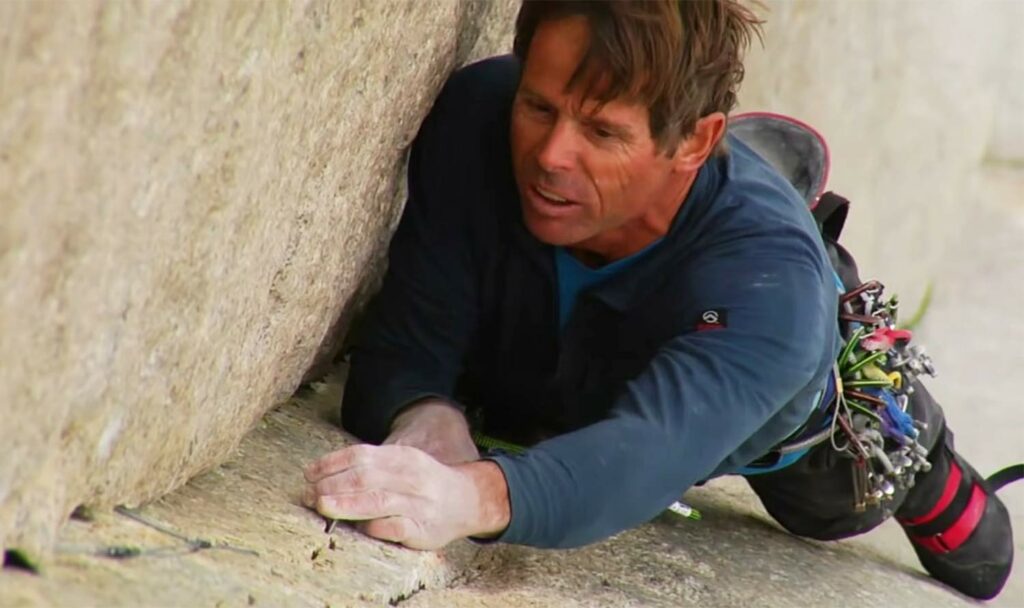
10 Iconic Rock Climbs by Legend Peter Croft

General News
1 1 131 1

Suggested topics


  • 0 Votes
    1 Posts
    25 Views
    GrippedG
    The Swiss duo repeated test-piece routes and opened bold new mixed lines during their historic trip The post Remembering Ueli Steck and Simon Anthamatten’s Epic Visit to the Rockies appeared first on Gripped Magazine. https://gripped.com/profiles/remembering-ueli-steck-and-simon-anthamattens-epic-visit-to-the-rockies/
  • 0 Votes
    1 Posts
    42 Views
    GrippedG
    Shadow Buttress Direct and Shadowboxin are the newest additions to the world of Scottish winter routes The post Two Epic New Scottish Mixed Climbs in Full-On Conditions appeared first on Gripped Magazine. https://gripped.com/profiles/two-epic-new-scottish-mixed-climbs-in-full-on-conditions/
  • Jérôme St-Michel Sends 5.13d Trad in Quebec

    General News climbing
    1
    0 Votes
    1 Posts
    100 Views
    GrippedG
    Hypothénuse is a stout crack climb found at Val-David The post Jérôme St-Michel Sends 5.13d Trad in Quebec appeared first on Gripped Magazine. https://gripped.com/news/jerome-st-michel-sends-5-13d-trad-in-quebec/
  • Guidebook XIV—An Interview with Dougald MacDonald

    General News climbing
    1
    0 Votes
    1 Posts
    130 Views
    American Alpine ClubA
    How would you describe the scope of the work that goes into making the American Alpine Journal (AAJ)? Dougald MacDonald: Producing the AA J is a year-round effort that involves literally hundreds of people. The actual “staff” of the AAJ (who are all part-timers and volunteers) includes more than 15 people, and each year we work with roughly 300 individual climbers and photographers to share their stories. The book goes to press in late April, so the peak of the cycle is in March and April. But the work on the following year’s edition starts immediately, plus we prepare and upload online stories all year round. AND we produce The Cutting Edge podcast and the monthly Line newsletter. What’s the history of the AAJ? How has it changed over the years? DM: The AAJ is coming up on its 100th birthday, and unsurprisingly it has changed quite a lot over the years. It started out as much more of a Club publication, telling the stories of AAC members’ adventures. In the 1950s, with the rise of Himalayan climbing, the book started to become much more international. But it was really Ad Carter—who edited the AAJ for 35 years, starting in the 1960s—who created the wide-ranging, international publication it is today. We no longer focus mostly on the activities of AAC members—though we’re very happy to tell those stories when we can—but instead try to document all significant long routes and mountain exploration anywhere in the world, by climbers from every country. For both the AAJ and Accidents in North American Climbing (ANAC), the most significant changes of the last 10 to 15 years have been 1) the introduction of color photography throughout both books and 2) the launch of the searchable online database of every AAJ and ANAC article ever published. What’s an example of a unique challenge the editors have to deal with when making the AAJ? DM: One challenge is that we come out so long after many of the climbs actually happened. So, readers may have seen something about any given climb several times, in news reports and social media posts and even video productions. But the AAJ has never been in the breaking news business. Instead, we aim to provide perspective and context. Perspective in that we don’t have any vested interest that might slant a story one way or another, and context on the history and geography that helps readers really understand the significance of a climb, how it relates to what’s been done before, and what other opportunities might be out there. Another big challenge is language barriers, since we work with people from all over the world. We’re fortunate to work in English, which so many people around the world use these days. We also use skilled translators for some stories, and online translation tools have improved dramatically in recent years. But there’s still a lot of back-and-forth with authors to ensure we’re getting everything just right. What’s an example report that was really exciting for you to edit from the last few years? DM: For me, personally, the coolest stories are the ones that teach me about an area of the world—or a moment in climbing history—that I knew nothing about before starting to work on a story. In the upcoming book, for example, we have stories about winter climbing in Greece (who knew?) and a mountain range in Venezuela that’s gorgeous and has peaks over 16,000 feet. Unfortunately, that range is rapidly losing its snow cover and its small glaciers. AAJ senior editor Lindsay Griffin, who is editing the story, did some cool climbs in the range in 1985, and the difference between his photos and those from today is shocking. Are there any big differences in process between making the AAJ and ANAC? DM: The biggest differences are just the scale and scope of the two books: The AAJ is a nearly 400-page book that tries to cover the entir... https://americanalpineclub.org/news/2025/5/19/guidebook-xivan-interview-with-dougald-macdonald
  • 0 Votes
    1 Posts
    110 Views
    climber-magazineC
    American Sean Bailey has made the first ascent of Shaolin (Font 9A) at Red Rock, Las Vegas. https://www.climber.co.uk/news/sean-bailey-joins-font-9a-v17-gang-with-first-ascent-of-shaolin/
  • 0 Votes
    1 Posts
    132 Views
    American Alpine ClubA
    It’s hard to find a route quite like Stoned Temple Pilot: a steep, beta intensive masterpiece hidden in Rumney’s Northwest Crags. And appropriately, it's hard to get people to want to walk to The Prudential crag. Most climbers flock to more classic crags, such as Main Cliff, Waimea, and Bonsai. However, if you can talk someone into trekking out there, you’ll most certainly secure a projecting buddy once they experience the epic kneebars, throws, and intricate boulder problems.  I’ve always described the Rumney scene as a culture of beta. Often regarded as one of the most cryptic major sport climbing destinations, Rumney routes are rarely sent on raw power alone. Most climbs can feel a full grade harder until you know the trick to climbing them. The result is a really supportive projecting culture. Once you send, you become part of the crew that can now pass the beta down to the next inquiring aspirant.  Before Stoned Temple Pilot, I was more of a trad climber. I was accustomed to the practice of climbing lots of different routes, and very slowly pushing my limit. Conversely, most people I met hanging out at Rumney had longer term projects they came back to every session.  I first climbed Stoned Temple Pilot while project shopping for my first 5.12a. I was getting to that phase many of us enter in climbing, when the 5.11s start going faster than before and your friends encourage you to get on 12s. I’ve never considered myself much of a grade chaser, but 12a always represented a blockade for me. For years the idea that my body would be capable of that level of climbing seemed outlandish. Finally in spring of 2022, I decided it was time to find a route that inspired me and throw myself at it like never before. I tried a few different classic 12as, but Stoned was the one that captured my imagination. The route begins with a jug haul through spongy rock, culminating with a double knee bar rest at a monumental hueco. Next comes a bulge, nothing too bouldery, but it saps your energy before the crux. A bad crimp allows you to set your feet and throw. If not for a common tick mark, you might assume you need to make a desperate upward stab into the fat undercling, which is certainly big enough to distract you from the key crimp right above the lip. One more committing move gets you to a sneaky corner rest. If not for meeting a local who showed me this rest, I might’ve abandoned this project a long time ago. As you exit the corner, all the holds seem to face weird directions, but some knee bar wizardry lets you cross to a jug otherwise just out of reach. Made it this far? It’s in the bag.  As I started projecting Stoned Temple Pilot, I didn’t feel like things were going swimmingly whatsoever. On my first burn I did all the moves, then proceeded to never be able to do the top sequence again. I expected to climb the route better with each attempt, but each burn slowly whittled away my faith. Optimism is something I struggled with a lot my whole life, and climbing forced that reality closer and closer to the surface. Finally I had to acknowledge that somewhere deep down, no matter what I accomplished, I still didn’t believe in myself. Coming back to this route multiple times, somehow getting worse with each burn, was easy evidence to justify the pessimism in my brain.  Two things haunted me. The first: every time I tried to clip from the undercling, I struggled to reach it and pumped out. The second: ever since my project shopping burn, I had not been to the top of the route. Each time I reached the top crux, even after resting in the corner, I failed to recollect how I had climbed it on my first attempt. I would try different sequences that left me hanging on the permadraw over and over, until finally opting to lower. Good links aside, how was I supposed to bring optimism to this route, if I couldn’t clip the crux draw, or even top it out? One day in June 2022, I discovered the complex relationship between embracing optimism, and letting go of expectations. My friend Mike, and Allyssa, who I had met that morning, walked up to Prudential Wall with me. I had very low expectations. I already had aided my way through a bouldery 11c and my forearms felt fried. The previous day I tried Stoned multiple times and got shut down at the clip in the big undercling. I’d been trying to reach above my head to fear-clip it, ultimately pumping out.  As I pulled onto the wall this time, I already planned on falling. I looked down at Mike after th... https://americanalpineclub.org/news/2024/10/10/learning-the-power-of-low-expectations-on-a-rumney-classic
  • How Strong is a CMC Squid? #breaktest #rescue

    Videos climbing hownot2
    1
    0 Votes
    1 Posts
    118 Views
    HowNOT2H
    https://www.youtube.com/watch?v=Oseu3-VipnQ
  • The Physics of GriGri | When does No-Hands Belay Fail?

    Videos climbing
    1
    0 Votes
    1 Posts
    119 Views
    Hard Is EasyH
    https://www.youtube.com/watch?v=6ev960Q_v8w