Skip to content

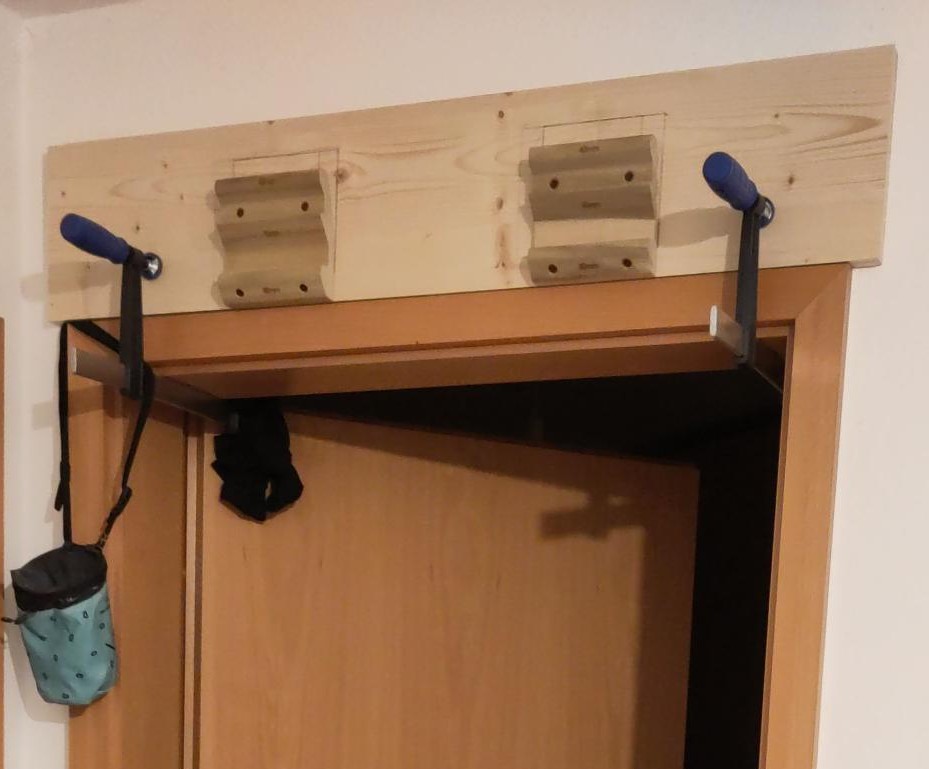
Mitte November habe ich mir eine DIY Halterung für Hangboard Training gebaut.

General Climbing
1 1 34

Suggested topics


  • The Prescription—Ground Fall

    General News climbing
    1
    0 Votes
    1 Posts
    19 Views
    American Alpine ClubA
    It’s February, and yours truly is bouldering in sunny Hueco Tanks, Texas. I was reminded a few weeks ago that all climbing is not without risk, when a close friend fractured his ankle bouldering in the park and had to be extracted by SAR. The situation was compounded when a rescuer fell off the low-fifth-class approach and also required extraction. This accident, like the one featured below, happened despite the fact that everyone was playing by the book. In the accident below, two apparently textbook cam placements failed when the leader applied body weight to the top cam on a lead of a slippery granite crack. More serious injury was prevented because the climbers in question had built a solid belay anchor on the ledge below, and the leader and the belayer were both wearing helmets. Still, this is a case in point that you can do everything right and still end up in the hospital.  On May 18, 2024, at about 10:40 a.m., my climbing partner and I prepared to climb Gallwas Crack (5.9) at the Main Wall of Mission Gorge in San Diego. Another friend was with us for his first outdoor climbing session. The three of us had already warmed up. Access involved scrambling eight feet up to a large, flat ledge, then up and over to another ledge at the base of the route. This ledge was big enough to not worry about falling off, but there was a risk of the belayer getting pulled off if the leader fell before placing any gear. We all wore helmets and were very safety focused. The ledge was 40 feet above the trail. We built a three-piece gear anchor to secure the belayer (me), and our other friend sat untethered on the large ledge below and left. Gallwas Crack looked challenging, with slippery rock, but my climbing partner had led higher-rated climbs at similar areas, so I thought it would be possible, though perhaps at his limit. There appeared to be plentiful gear placements. He racked up and we did thorough safety checks. He got up a short fourth-class ramp to a secure stance and put in a No. 0.5 Camalot, clipped with an alpine draw. He climbed to where his feet were level with the first cam and placed another, then climbed to where the second cam was at his waist and placed a third cam. When the third cam was at his waist, he paused to figure out the move, then yelled, “Take! Take! Take!” I pulled in a couple of arm lengths of slack as fast as I could. The rope started becoming taut just before he fell, but it never became completely tight during the fall. I did not get pulled toward the wall as one would expect. The highest (third) piece pulled immediately, and he continued falling. The second piece also pulled as he rotated backward and began falling headfirst. The first piece caught him. I don’t remember being pulled by the rope despite the fact that he fell 30 feet total, past the ledge, and ended hanging upside down, about 30 feet above the trail. He was not moving. Our other friend yelled, “He’s bleeding out of his right ear.” I can't recall the sequence, but someone yelled to ask if they should call 911. I asked our other friend to attend, since he had emergency medical training. I slowly lowered my partner as he was pulled over to the large ledge. As I was lowering, his body shook for a few seconds. On the flat ledge, he had a pulse and breathing was heavy. I called 911 at 10:56 a.m. and learned that someone else had already called in. I clipped my climbing partner into the anchor so I could be freed up to help. I held his head, and he’d periodically sit up and moan, then lie back. We tried to keep him down, and he would tell us to stop touching him. A woman with emergency medical training came over and did a good job helping us all stay calm. She confirmed that my climbing partner could respond to his name, by turning his head. A helicopter arrived, lowering a paramedic with a radio and litter, who assessed his condition. The paramedic tried to place a neck brace, but my climbing partner refused it. When we got the brace on, he immediately took it off. Eventually, he was put on a litter and flown to a trauma center. It was less than an hour after he’d started the climb. One of the pieces that pulled was a No. 3... https://americanalpineclub.org/news/2026/2/10/the-prescriptionground-fall
  • The Prescription—Free Solo Fall

    General News climbing
    1
    0 Votes
    1 Posts
    107 Views
    American Alpine ClubA
    Besides being prime time in the high country, summer is a high-traffic season for alpine rock and long moderate climbs. This time of year, climbers of all levels venture unroped onto “easy” terrain. Every year, we also see a handful of free solo accidents. These are almost always fatal and usually take place on well-trafficked moderate routes. A disturbing pattern emerged last year when several fatalities occurred on adjacent formations in the same area. Recently, the Flatirons above Boulder, Colorado, saw three fatalities, two within two days in mid-December. On December 16, 2024 the Boulder County Sheriff’s Office received a report that 42-year-old Keith Hayes did not return home that evening. Around 9 p.m., friends of Keith found his body near the top of Second Flatiron after he presumably fell while unroped from Freezeway (5.7). Friends of Hayes report that there was no sign of snow or ice on the route and that there was no sign of broken rock contributing to the fall. The day after, December 17, a 27-year-old male was reported missing after not returning home in the evening from a Flatirons climb. The Boulder Emergency Squad found the body of the missing male the next day on the Standard East Face route (5.4) on the Third Flatiron; he was presumed to have fallen unroped. Rocky Mountain Rescue Group recovered the body after an eight-plus-hour operation. “Scrambling” blurs the line between third-class (easy unroped climbing) and fifth-class technical climbing. While the grade of the actual climbing is often anywhere between 5.0 and 5.6, the terrain is climbed unroped and is usually accompanied by consequential fall potential. A search of the Accidents archive reveals 33 accidents in the Flatirons described and analyzed by the editors (including 11 deaths) since the 1950s. Many of these were the result of unroped climbing. The editor of Accidents in North American Climbing, Pete Takeda, walks us through why free soloing or scrambling accidents are so prevalent in this area. Pete Takeda, Editor of Accidents in North American Climbing; Producers: Shane Johnson and Sierra McGivney; Videographer: Foster Denney; Editor: Sierra McGivney; Location: Flatirons, Boulder, Colorado. Freezeway is a steep, alternate finish to gain the summit of the Second Flatiron after completing one of several low-angle east face routes. Keith Hayes was very experienced and had climbed this route without a rope many times before his fall. The Standard East Face of the Third Flatiron is one of the most popular beginner climbs in the U.S. and is frequently climbed unroped. The accidents shocked the local community, and the timing and proximity of both fatalities gained national attention. These tragedies serve as a reminder of the inherent risks of free solo climbing. Experience and fitness do not guarantee survival, and familiarity can degrade attentiveness. (Source: Friends of Keith Hayes and Bill Kinter.) https://americanalpineclub.org/news/2025/8/12/the-prescription
  • The New Metolius Basic Stick Clip

    General News climbing
    1
    0 Votes
    1 Posts
    148 Views
    GrippedG
    An easy-to-use lightweight option that will make your days at the crag safer and more fun The post The New Metolius Basic Stick Clip appeared first on Gripped Magazine. https://gripped.com/profiles/the-new-metolius-basic-stick-clip/
  • Carlo Traversi and Colin Duffy Climb V15

    General News climbing
    1
    0 Votes
    1 Posts
    129 Views
    GrippedG
    The two American climbers have been making headlines for their impressive sends for years The post Carlo Traversi and Colin Duffy Climb V15 appeared first on Gripped Magazine. https://gripped.com/news/carlo-traversi-and-colin-duffy-climb-v15/
  • Prescription—Knee Stuck in Crack

    General News climbing
    1
    1 Votes
    1 Posts
    142 Views
    American Alpine ClubA
    Wild as it may seem, every year we publish at least one report of a climber getting their knee stuck in an offwidth crack. Sound crazy? It happened to Martin Boysen on Trango Tower and more recently Jason Kruk on Boogie Till You Puke.  On January 8, Climber 1 (female, 25) got her knee stuck in a wide crack on the Regular Route (3 pitches, 5.7) on Queen Victoria Spire in Sedona. Climber 1 was following four friends on her first outdoor climb when she attempted an “alpine knee” while pulling onto a ledge on the second pitch. An “alpine knee” is when you place that joint on top of a high hold and use it for progress, instead of a foot. Rather than helping her onto the ledge, Climber 1’s knee slipped into a four-inch-wide crack, where it wedged and became stuck. Others in her party tried pouring water over her knee in an attempt to free it but were unsuccessful.  At 5:15 p.m., the Coconino County Sheriff’s department was contacted to perform a rescue. By 8 p.m., the SAR team had arrived. It took over an hour to free the climber from the crack, and by then the climber was exhibiting signs of mild hypothermia (they had started climbing at 12:30 p.m.). The climbing party was airlifted off the spire. The stuck climber was not injured and refused treatment. The climbers in this scenario did “everything right,” according to the SAR team. They tried to free their partner, and failing that, they initiated a rescue. Many relatively easy routes have awkward sections or styles of climbing that may seem above the technical grade when first encountered outdoors. Care should be taken when making a move where a slip or fall could result in injury or entrapment. It took about four hours to free this climber, and temperatures at the crag dropped to around 30°F. Consider worst-case scenarios when preparing for a climb, as unexpected events could result in prolonged exposure to the elements. (Source: Dan Apodaca.)  If getting your knee stuck in an offwidth is so common, what do we do if it happens? In the video analysis, ANAC editor Pete Takeda provides some tips on how to prepare for this kind of worst-case scenario when rock climbing. Credits: Pete Takeda, Editor of Accidents in North American Climbing, and Hannah Provost, Content Director; Producer: Shane Johnson and Sierra McGivney @Sierra_McGivney; Videographer: Foster Denney @fosterdoodle_; Editor: Sierra McGivney @Sierra_McGivney; Location: Cob Rock, Boulder Canyon, CO https://americanalpineclub.org/news/2025/3/12/prescriptionknee
  • Rock Climber Dies on Devils Tower in U.S.A.

    General News climbing
    1
    0 Votes
    1 Posts
    140 Views
    GrippedG
    The National Park Service issued a press statement with details about the accident The post Rock Climber Dies on Devils Tower in U.S.A. appeared first on Gripped Magazine. https://gripped.com/news/rock-climber-dies-on-devils-tower-in-u-s-a/
  • 0 Votes
    1 Posts
    110 Views
    EpicTVE
    https://www.youtube.com/watch?v=Dzfm75FxAY8
  • World’s Largest Bouldering Meet

    Videos climbing epictv
    1
    0 Votes
    1 Posts
    141 Views
    EpicTVE
    https://www.youtube.com/watch?v=eBDqhNzBfbM