Skip to content

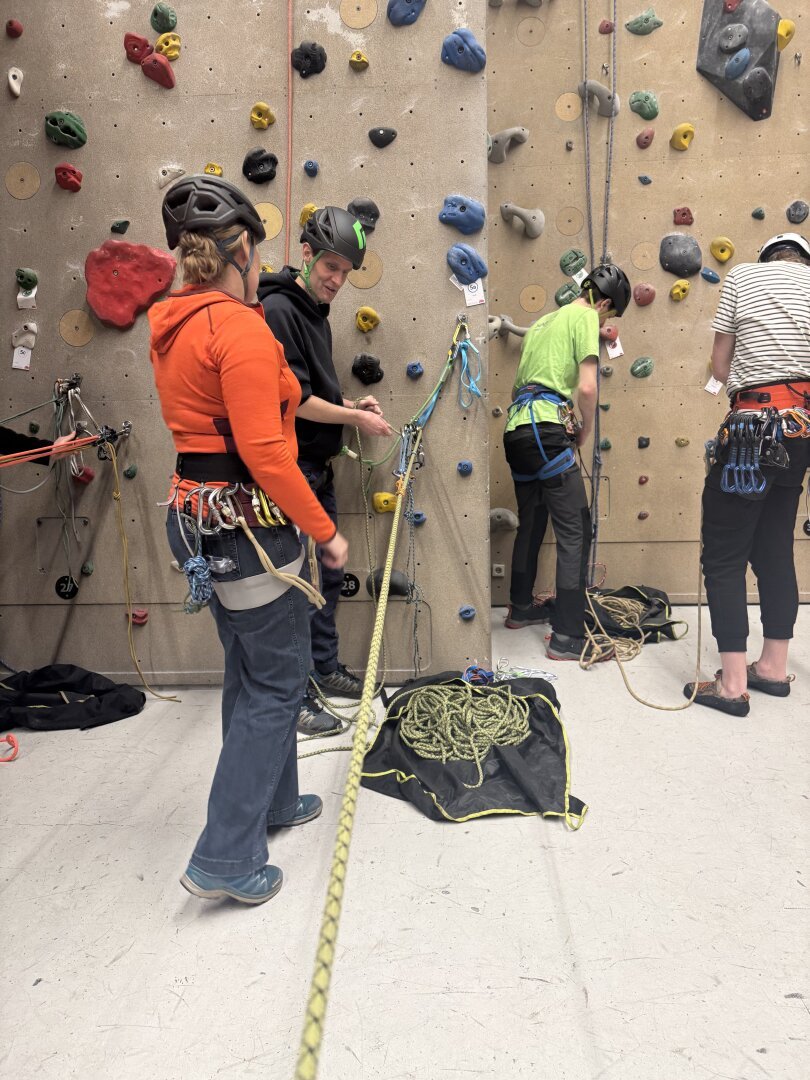
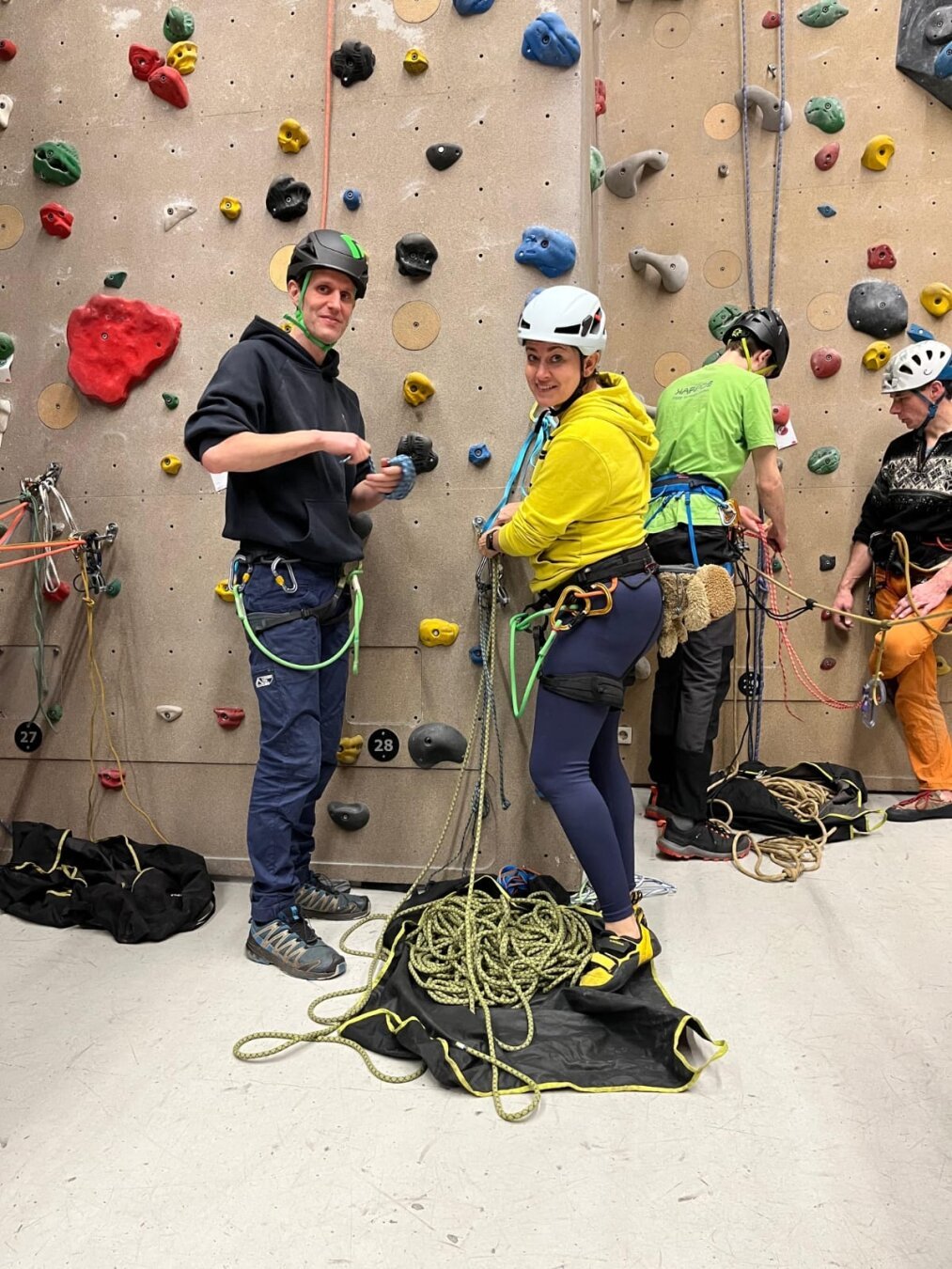
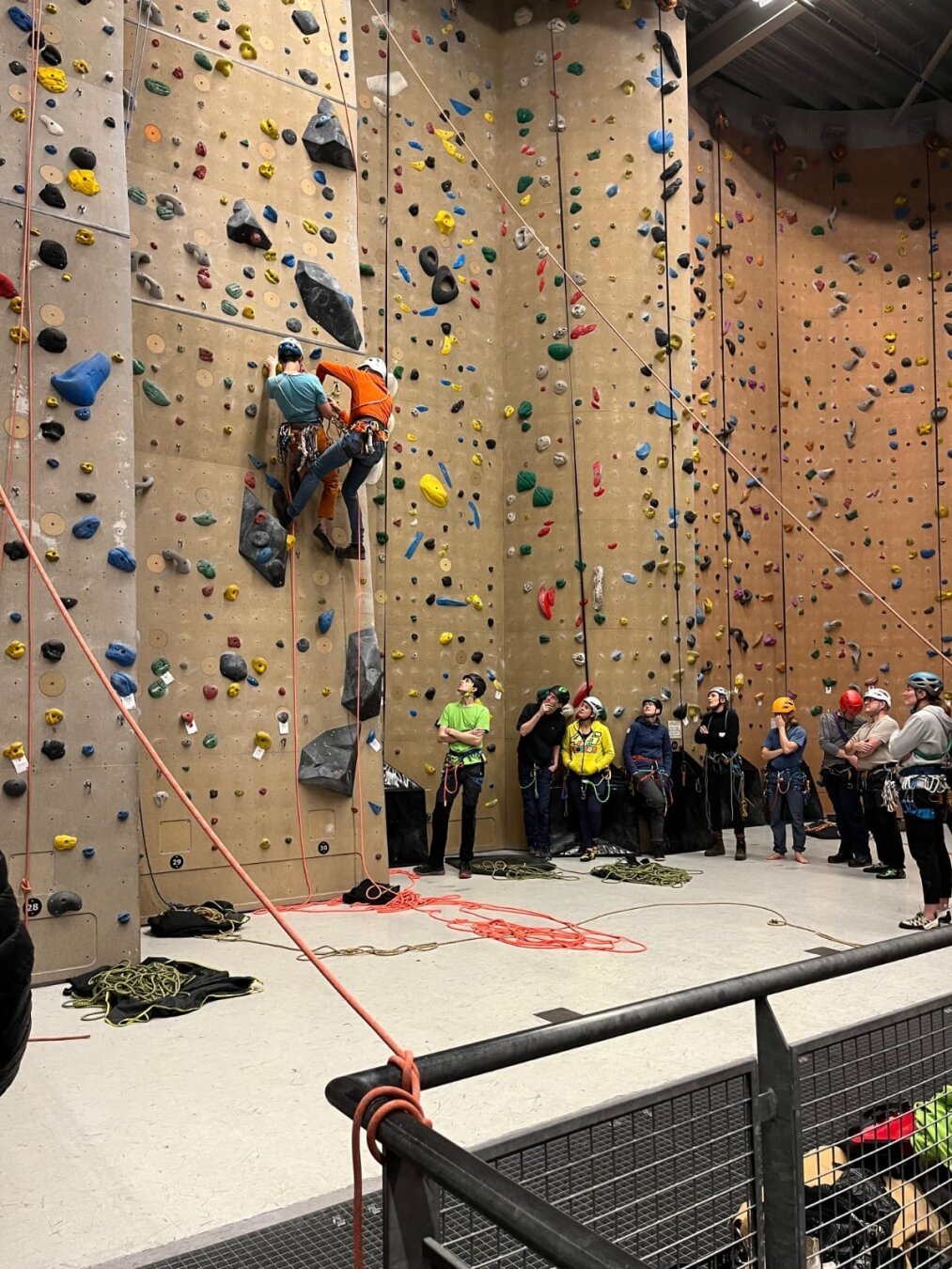
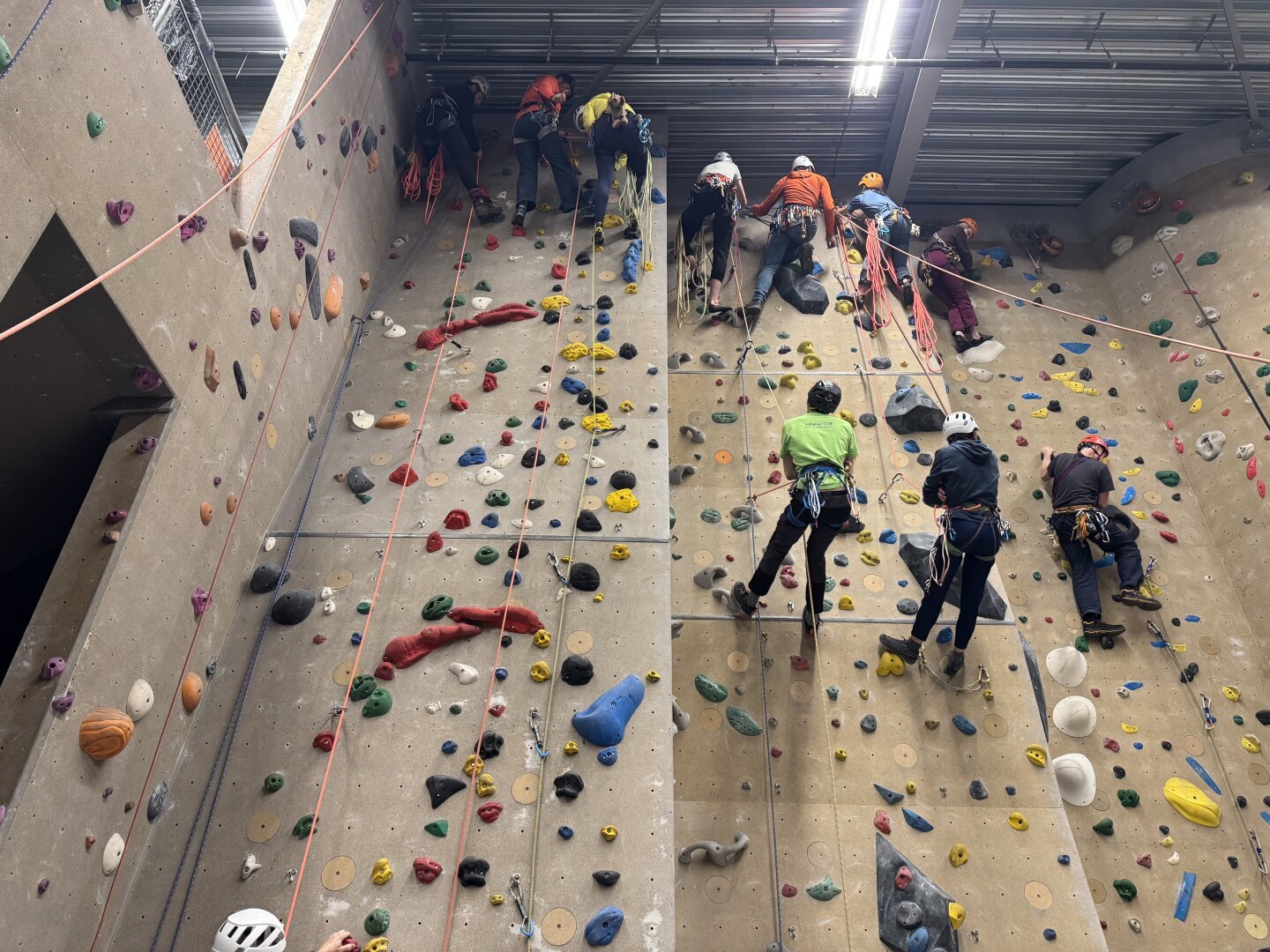
It’s so much fun doing this rescuing climbing techniques course.

Pics and trips
1 1 135

Suggested topics


  • 0 Votes
    1 Posts
    54 Views
    American Alpine ClubA
    Luis Contreras is breathing steadily, forcefully, with intention. He is 15 feet off the deck, and has 20 more feet of textured edges, sidepulls, and huecos to top out Wyoming Cowgirls, a 35-foot V5 on Hueco Tanks’ North Mountain that has recently been reopened. A few pads sit lonely in the rocks below. Each of his precise foot placements and composed breaths are indicators of the stakes, and they reflect the time this climber put into top-rope rehearsing such a consequential highball. His movements are linked in chains of powerful bursts punctuated by rests. A certain barely observable shaking reverberates from his core into his limbs, but his breaths and the wind are the song he is dancing to—the shaking and the fear squashed down. For Contreras, “the best climbs are the ones that even if you’re not a climber you walk by and you say, 'Wow that’s a sick climb...' I [am] drawn to these striking tall faces.” Wyoming Cowgirls had always been one of those climbs. Contreras tops out quietly, his focus unwavering until he is fully over the rounded slab of this immense boulder, where he sits. No whoops, no cheers. Just a private adrenaline high coursing through his veins. Instead of celebration, he gazes out to the brush-filled desert beyond. How do you understand the essence of a place? There are of course the facts and figures, the ecology and topography of the terrain, but there are also the traditions and rituals and history of the people who move across it. Such entanglements are why some might say that “the climbing community” (singular) is a misnomer. Our landscapes too-specifically shape us. For example, Rifle is the land of lifers. That tight canyon, with its near-instant access to climbing seconds from the car, allows for kids splashing in the stream, craggers at Project Wall rubbernecking as you drive by, and the daily parking shuffle as you move from crag to crag. Ten Sleep is Adult Summer Camp: Given the long journey required to get there and its minimal infrastructure, the place welcomes tech bros and remote workers to set up shop for a month or the whole summer, with scheduled camp activities limited to river time, brewery time, or climbing time. As a final example, the Red River Gorge is never never land, where a dirtbag might never grow up. Climbing cultures, like any culture, are a mixture of language, beliefs, rituals, norms, legends, and ethics that are largely shared by a community and emerge from the interaction of that community with their landscape. Hueco’s iconic roofs, abundant kneebars, airy highballs, deep bouldering history, importance to Indigenous cultures like the Tigua Indians of Ysleta del Sur, and fragile and rare ecosystem shape its climbers too, on an individual level and at scale. Bouldering in Hueco is an intimate affair. With guides required to access most of the climbing, and groups capped at ten people, “most people know most people, and if you don’t know them it’s only a matter of time,” says Luis Contreras, who is a Hueco guide of a decade and El Paso born and raised. Most climbers at Hueco fall into one of four groups: the El Paso “city” climbers, the lifers who own property right outside Hueco Tanks State Park, the seasonal dirtbags who migrate every winter, and the out-of-town visitors who pilgrimage there (often yearly) when they can scrabble together some PTO. Even the visitors become known entities—once you have a guide you trust, why not come back to climb with them again and again? You’ll likely find who you’re looking for at one of three community hubs: the Iron Gnome, the AAC’s Hueco Rock Ranch, or the Mountain Hut. Within such a small community, a run-in with an old head or unique character is considered commonplace. You might chat with Lynn Hill over beers at the Iron Gnome, or spot Jason Kehl out in the distance developing a new line. You’ll likely wave at Sid Roberts as he leaves the park from his early-morning session, or even share a laugh with the colorful John Sherman—the originator of the V-Scale. But no matter what kind of Hueco climber you are, climbing at Hueco feels deeply entangled—it requires a self-consciousness of landscape, access, and ethics that doesn’t just fall away when you throw down your pads and pull onto rock. But that’s not a downside for locals like Luis Contreras and Joey McDaniel. That’s... https://americanalpineclub.org/news/2025/11/5/guidebook-xvilodging-feature
  • Unparallel's Dirty Little Secret | The Gear Show

    Videos climbing
    1
    1 Votes
    1 Posts
    82 Views
    EpicTVE
    https://www.youtube.com/watch?v=hKTBkED1n-4
  • Overcome Your Fear of Falling Off Boulders

    General News climbing
    1
    0 Votes
    1 Posts
    75 Views
    GrippedG
    A new video from Dave MacLeod gives great insight on how to boulder safely The post Overcome Your Fear of Falling Off Boulders appeared first on Gripped Magazine. https://gripped.com/video/overcome-your-fear-of-falling-off-boulders/
  • Climbing event, but the FREE stuff

    Videos climbing
    1
    0 Votes
    1 Posts
    136 Views
    EpicTVE
    https://www.youtube.com/watch?v=3hUnSP5Eqvg
  • Fri Night Vid 100 Stars at Stanage

    General News climbing
    1
    0 Votes
    1 Posts
    148 Views
    UK ClimbingU
    100 Stars at Stanage follows two climbers, Harry and Richard, as they take on a unique challenge at Stanage Edge: climbing 100 stars in a single day, all in support of Climbers Against Cancer (CAC). The film explores the physical and emotional journey of these climbers, delving into themes of friendship and ageing. https://www.ukclimbing.com/forums/t.php?n=777396
  • 0 Votes
    1 Posts
    186 Views
    JaromírC
    Anyone up for a climbing session in Chiang Mai? 🧗‍️ Indoors or outdoors#ChiangMai #thailand #climbing
  • 0 Votes
    1 Posts
    131 Views
    IFSCI
    https://www.youtube.com/watch?v=sF-wRphbud8
  • 0 Votes
    1 Posts
    136 Views
    American Alpine ClubA
    By: Katie Ives Each book in the American Alpine Club Library is a portal to another world—of golden spires feathered with rime, fluted snow beneath indigo skies, or red-granite aiguilles above a sea of ice. Beyond these worlds, there are countless layers of other worlds encountered by readers inspired to seek their own adventures and return with their own tales. For climbing is an act of storytelling: we trace the arc of a narrative with our bodies and our minds, rising from the base of a mountain toward a climactic point and descending to a resolution. And the history of mountaineering is also the history of reading and imagination, of old dreams endlessly transforming into new ones. On July 15, 1865, English alpinist Adolphus Warburton Moore found himself on the edge of a ridge that looked like something from a fantasy novel. The slender crest of blue ice seemed to rise for an eternity. Sheer voids dropped off on either side. Neither the iron tips of their alpenstocks nor the hobnails of their boots stuck to its flawless surface.   It was inconceivable to climb. No one had yet established a route on this aspect of Mont Blanc, where the Brenva Face rose for 1,400 meters in a chaos of cliffs, towers, and buttresses, fringed by unstable seracs and swept by avalanches and rockfall.  Still, the Swiss guide Jakob Anderegg kept going, and the rest of the team, including Moore, cautiously followed. As the crest narrowed, they shuffled along à cheval, one leg on either side, aware that any fall might be catastrophic [1]. Long after they finished the first ascent of the Brenva Spur and descended by a safer route, the ice crest lingered in the imaginations of those who read Moore’s memoir, The Alps in 1864. In 1906, British author A.E.W. Mason located the climactic scene of his crime novel Running Water on the Brenva Spur—a point of no return that appeared perfect for an attempted murder of one climber by another, “a line without breadth of cold blue ice” [2]. Mason’s Running Water, like its author’s inspiration, begins with reading. Riding the train to Chamonix, his young protagonist Sylvia Thesiger becomes immersed in an old copy of the British Alpine Journal, published more than two decades prior to the novel. All night, she couldn’t sleep, remembering her first glimpse of the Mont Blanc massif beyond the curtain of a train window, recalling her sense of inchoate longing for its moonlit towers of ice and snow.  Although women climbers had taken part in numerous firsts by the time of the novel’s plot, they weren’t permitted to publish in the Alpine Journal under their own bylines until 1889, when Margaret Jackson recounted her epic first winter traverse of the Jungfrau. And there’s no female author or character in the story Thesiger reads about the first ascent of an aiguille near Mont Blanc. Yet she longs to enter its world, and when she arrives in Chamonix, she hires guides to take her on her own first climb, up the Aiguille d’Argentière. As an ice slope tilts upward, sheer and smooth as a pane of glass, she rejoices, feeling as if she’s finally dreamed her way into a scene from mountain literature, “the place where no slip must be made.” Astounded at her fearlessness and intuitive skill, a guide tells her she bears an uncanny resemblance to a famous climber from the Alpine Journal story she’d just admired.  “I felt something had happened to me which I had to recognize—a new thing,” she recalls. “Climbing that mountain...was just like hearing very beautiful music. All the vague longings which had ever stirred within me, longings for something beyond, and beyond.” Later, after she falls in love with a climber, the memory of that day suffuses their bond with a steadfast alpine glow—“ice-slope and rock-spire and the bright sun over all.”    By the end, however, the novel shifts from her journey of self-discovery toward an outcome more conventional for its era. Newly wed, Thesiger is relegated to waiting below the Brenva Spur while the male hero and villain confront each other above that narrow blue crest. Readers don’t find out, for certain, whether she’ll climb any mountains again. A sense of incompleteness remains: the mysterious promise of her alpine epiphanies and of her suppressed and inmost self seem to flow beyond the narrative’s abrupt conclusion, like the recurring dreams she has of running water.  After the publication of https://americanalpineclub.org/news/2024/6/26/the-climb-that-inspired-the-novel-that-inspired-the-climbs-the-many-stories-of-the-brenva-face-of-mont-blanc