Skip to content

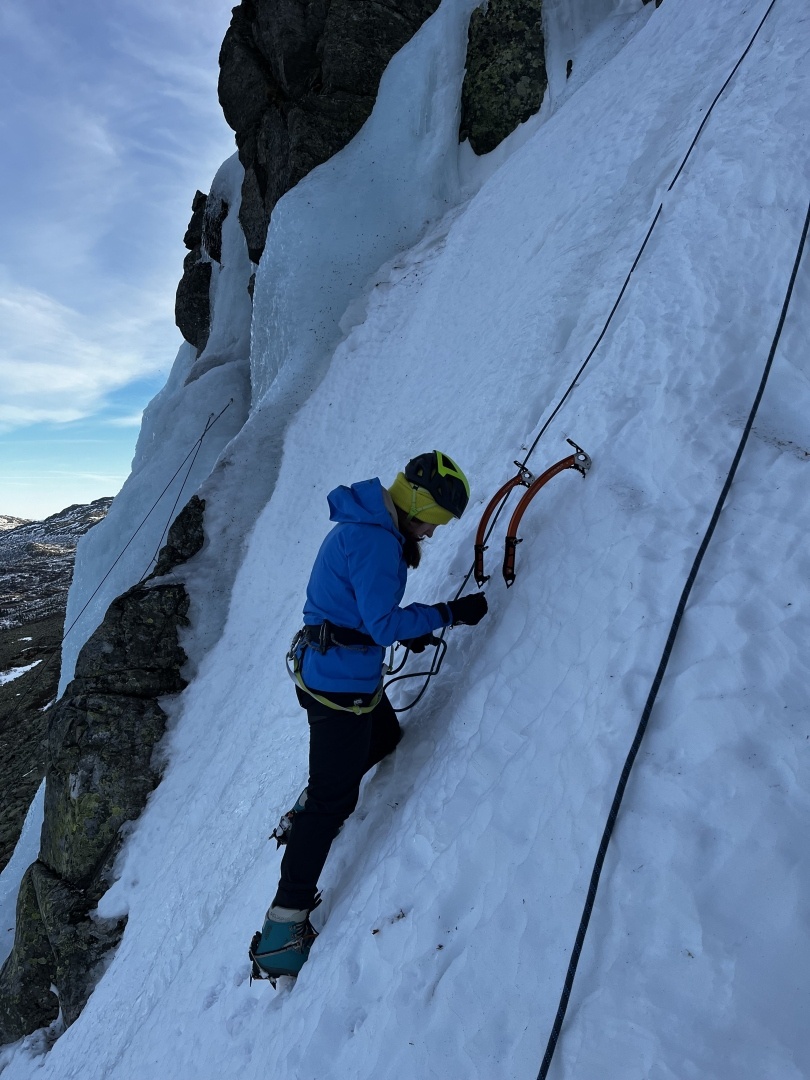
Getting ready for another ice climb.
Pics and trips
1 1 193

Suggested topics


  • The Line: A Climb for Kei Taniguchi

    General News climbing
    1
    0 Votes
    1 Posts
    54 Views
    American Alpine ClubA
    In 2009, Kei Taniguchi from Japan became the first woman to win a Piolet d’Or (along with climbing partner Kazyua Hiraide) for a new route up 7,756-meter Kamet in India. Tragically, neither Taniguchi nor Hiraide are still with us. In AAJ 2025, we’re publishing a story by Akihiro Oishi, Taniguchi’s biographer, who set out to complete a route she had attempted years earlier in Nepal. We’re sharing part of Oishi’s story here. “Mr. Hagiwara, what mountain is this?” The question was asked by Kei Taniguchi as she looked at a picture taken by Hiroshi Hagiwara, editor of Rock and Snow, in 2013. The photo showed the unclimbed northeast face of Pandra (6,673 meters) in eastern Nepal. In 2016, Taniguchi attempted Pandra with Junji Wada, retreating from two-thirds height (AAJ 2017). On return to Japan she wrote, “I’ve opened Pandora’s Box. I will definitely go back to check what’s inside.” Tragically, a month later, she fell to her death from Mt. Kurodake in Japan. I interviewed many people to compile a book about Kei’s life, called A Piece of the Sun. In the final chapter, I hoped to incorporate a scene in which some of us, including Wada, climbed Pandra. However, Wada was seriously injured just before our team was due to leave Japan, and the expedition was postponed. Finally, in 2024, eight years after Kei’s accident, I went to Pandra with Suguru Takayanagi and Hiroki Suzuki to complete Kei’s route. Wada had become a family man, starting a new life. We arrived at our 5,100-meter base camp on October 12. The approach to advanced base and the face itself had changed significantly in eight years due to global warming: The northeast face looked far drier than in pictures taken by the French team that completed the first route up the face. [In October 2017, one year after the attempt by Taniguchi and Wada, French climbers Mathieu Détrie, Pierre Labbre, and Benjamin Védrines completed Peine Plancher (1,200m, WI6 M6; see AAJ 2018).] After acclimatization, we left advanced base for Pandra at 7 a.m. on October 25. It took three hours to reach the foot of the wall, after which we climbed to a bivouac site at 5,500 meters, where we pitched the tent using a snow hammock. The climbing to this point, following the line taken by Taniguchi and Wada, had involved crumbling rock and brittle ice. On day two, we climbed three pitches of excellent, steep alpine ice, dubbed the Pandra Great Icicle. Above, a couloir with poor protection and belays cut through the center of the face, and at 5,800 meters we made our second bivouac. On the 27th, we headed directly toward the summit. [From around this point or below, in 2016, Taniguchi and Wada traversed to the north spur; the 2024 team continued direct and joined the line of the 2017 French route, which came in from the left.] At around 6,000 meters, the French party had found a pitch of M6. Takayanagi, who is about ten years younger than us, onsighted that pitch easily—he should achieve great things in the Himalaya. At 6,200 meters, we found a bivouac site beneath a rock outcrop. The next morning, we left our bivouac gear and headed for the top. Takayanagi climbed an overhang that was much more difficult than the M6 the day before. We then climbed ice and difficult sugar snow, with little meaningful protection, to reach a snow cave at around 6,500 meters after dark. We shivered through the night in just the clothes we were wearing. With Suzuki in the lead, it took only 30 minutes to reach the top the next morning. Suzuki shouted, “Whoa, we did it!” I’ve been climbing with him for 20 years, but this was the first time I’d heard a serious roar. By 4 p.m. we had returned to our snow cave, and the following day we rappelled to the base. We named our route A Piece of the Sun. It will continue to burn in our hearts and guide us toward greater mountains.                   —Akihiro Oishi, Japan, with help from Kaoru Wada, Hiroshi Hagiwara, and Rodolphe Popier 2004 Taniguchi and Kazuya Hiraide complete a https://americanalpineclub.org/news/2025/8/12/the-line
  • 0 Votes
    1 Posts
    108 Views
    Access FundA
    https://www.accessfund.org/latest-news/alex-honnold-climbing-changed-my-life-lets-protect-it-together
  • The Prescription—Fatal Rockfall

    General News climbing
    1
    0 Votes
    1 Posts
    130 Views
    American Alpine ClubA
    Every year we publish several accounts of rockfall. What makes a few of these accidents so scary is the fact that several climbers have experienced this kind of accident just standing at the base of a crag. On July 9, 2022, Anna Laila Leikvold (22) was preparing to climb at the Wizard’s Gate crag, south of Estes Park, when she was struck by a rock falling from above on a route called The Arrival (4 pitches, 5.11). Leikvold, who was wearing a helmet, was at the base of the cliff in a party of three when a football-sized rock dislodged by another climber struck her as she was fleeing from the base of the wall. Bob Siegrist, a developer of this area and first ascensionist of The Arrival, wrote to ANAC, “I think the falling rock came from pitch two, but I did not talk with the climbers who were on the route and caused the rockfall. This speculation is based on talking with other climbers who were at the base and also my inspection of [the] route after the accident. Later, I discovered a spot on pitch two where a stone had broken off, matching the features of the suspect rock that was found at the bottom of the crag below where Anna was struck.” Climbers called 911 and gathered to help Leikvold. Rescuers arrived with a litter, but she passed away before they reached the ambulance. Her evacuation was compounded by the rugged terrain and the lengthy hike to the road (the approach is a steep 30 to 45 minutes). Siegrist returned two weeks later and removed the bolts from the upper three pitches of the climb to prevent such an accident in the future. There are annual instances of rockfall injuries and fatalities suffered by climbers at the base of crags. With the growing popularity of multi-pitch sport routes—often extensions of existing single-pitch climbs—the need grows for caution on the ground and above. According to “Neale D” on Mountainproject.com, “There were over 20 of us climbing at or near Wizard’s Gate [that day], maybe the most some have experienced at this crag. Most importantly, though, probably in an effort to find something open to climb, several parties ventured up multi-pitch routes while others stuck to single-pitching below.” With a shady aspect and an elevation of 10,000 feet, Wizard’s Gate is a popular high-country escape from Colorado’s summer heat. Kim Schwartz, who was at the Wizard’s Gate on the day of the accident, says, “It’s easy to treat an area like this as a sport crag, but it is an alpine environment with all the attendant hazards.” For those climbing or rappelling above others, avoid loose rock, look for white chalk Xs marking unstable rocks, and be aware of how the rope might catch on sketchy blocks. Consider not climbing when others are below. For those below, wear a helmet while leading, belaying, or spectating. However, remember that in this case, a helmet did not save the individual’s life. Adapting an alpinist’s sense of mountain awareness can help prevent such accidents. Watch and listen for falling rock, and choose protected areas while belaying or waiting for your turn to climb. This is especially true if there are climbers above, after heavy rain or snow, and during windstorms. A further lesson extends to route developers or first ascensionists. Pay heed to the numbers and demographics of climbers venturing into alpine and remote areas, many of whom have little experience in the risks inherent in such terrain. Consider the potential for both human-generated or natural rockfall before establishing new routes. This is especially true for multi-pitch routes extending above established climbs. The base of a crag can be a hazardous place. In this video, Pete Takeda, Editor of Accidents in North American Climbing, gives some tips to avoid causing rockfall while climbing and avoid being hit while at the base of the crag. For climbing at Wizard’s Gate and similar areas, Siegrist has a few safety tips: (Sources: Bob Siegrist, Kim Schwartz, Kelly Cordes, and Mountainproject.com.) https://americanalpineclub.org/news/2025/5/13/the-prescription
  • 0 Votes
    1 Posts
    88 Views
    climber-magazineC
    Never very far from the cutting edge Adam Ondra reports that he has just flashed another Font 8B+, El Elegido at La Pedriza. https://www.climber.co.uk/news/adam-ondra-flashes-el-elegido-font-8b-at-la-pedriza/
  • 0 Votes
    1 Posts
    121 Views
    Suzan PutS
    It’s so much fun doing this rescuing climbing techniques course. I learned last time how to do a safe abseil with my “unconscious” climbing partner hanging below me. #climbing #nkbv #rescuingtechniques
  • Fri Night Vid 100 Stars at Stanage

    General News climbing
    1
    0 Votes
    1 Posts
    129 Views
    UK ClimbingU
    100 Stars at Stanage follows two climbers, Harry and Richard, as they take on a unique challenge at Stanage Edge: climbing 100 stars in a single day, all in support of Climbers Against Cancer (CAC). The film explores the physical and emotional journey of these climbers, delving into themes of friendship and ageing. https://www.ukclimbing.com/forums/t.php?n=777396
  • What's special about bouldering?

    Videos climbing
    1
    0 Votes
    1 Posts
    96 Views
    EpicTVE
    https://www.youtube.com/watch?v=gAeqpW_De-c
  • 0 Votes
    1 Posts
    95 Views
    IFSCI
    https://www.youtube.com/watch?v=L4STKnHzzu0