Skip to content

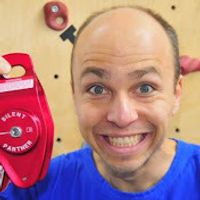
No Harness? My DIY Backup Trick (also used for Big Walls)

Videos
1 1 116 1

Suggested topics


  • The Line—A Sensational Spire in Pakistan

    General News climbing
    1
    0 Votes
    1 Posts
    40 Views
    American Alpine ClubA
    One winner of a 2025 Cutting Edge Grant from the AAC was alpinist and photographer Tad McCrea, who, along with fellow American Jon Griffin and German climber Thomas Huber, traveled to the Karakoram for their second expedition to attempt two sensational peaks. The first part of Tad’s trip report is shared below. For the second half, you’ll have to wait for your 2026 American Alpine Journal, coming later this year. Jon Griffin, Thomas Huber, and I had visited the Choktoi Glacier in 2024, our goals the west summit of Suma Brakk and the southeast pillar of Latok III. Initially, the weather was stunning, but as our preparation was beginning to pay off, we were hit by five weeks of wet and restless weather. Our objectives quickly became out of reach. On July 14, 2025, the three of us reconvened in Skardu, in northern Pakistan. The approach this time to base camp, at around 4,400 meters on the east side of the glacier, was challenging due to hot weather and raging river crossings.  Then, five days into our stay at base camp, Thomas and I were called to assist in the attempted rescue of Laura Dahlmeier on Laila Peak. [The German athlete was a two-time Olympic biathlon champion and friend of Huber’s. She was retreating from the peak when she was hit by rockfall, fatally, around 5,700 meters]. Along with Americans Jackson Marvell and Alan Rousseau, who were on another expedition in Pakistan, we were airlifted to the peak, where we located her body from the air and realized any attempt to retrieve her would be futile. We hiked out to Hushe, then were helicoptered back to our Choktoi base camp on August 2.  Two days later, we made an acclimatization trip to 5,700 meters near Suma Brakk. At 12:30 a.m. on August 9, we set off from base camp for the climb. Suma Brakk is a triple-summited peak that has been climbed at least a couple of times by different routes. [The first ascent of the central and highest summit (6,166m) was made in 2007 via the southern slopes and southeast ridge, by Americans Doug Chabot, Mark Richey, and Steve Swenson. In 2018, Fabian Buhl and Alexander Huber—Thomas’s brother—completed the south ridge, with more than 56 pitches of climbing]. The west summit, which we dubbed Eye Ri (6,120m), was unclimbed. It appears as a spectacular needle when seen from the Choktoi side; moving around the peak to the west exposes a gash splitting the entire summit tower. There is a giant chockstone wedged 15 to 20 meters from the top that mimics Sauron's Eye. We started up loose ribs and even looser rock gullies just left of a 300-meter icefall blocking access to a hanging glacier at the base of Eye Ri’s northwestern aspect. We had been here the year before, so we knew where to find the best path to the notch leading to the upper glacial basin. The climbing ranged from steep walking to scrambling. A hike up the glacier, then steep snow and névé with occasional stretches of ice and mixed (50°–75°), took us to the previous year's high point at 5,600 meters on the west ridge, between the first and second gendarmes. While I chopped out a site for the tent, Jon and Thomas took our two single ropes and a tag line and fixed three pitches to the top of the second gendarme.  The next day, we continued past three more gendarmes to a bivouac below the final tower. There were a few rock pitches up to 5.10+ on textured golden granite, and ice up to 80°, and we needed the full quiver of alpine tactics and trickery to get our under-acclimatized bodies up to 6,000 meters. In the morning, we climbed three challenging pitches up the tower, utilizing 12 bolts for protection and anchors. Free climbing up to 5.11, we also employed a variety of aid tactics. At a bus-sized platform four meters below the top of the tower, we fixed lines and rappelled 85 meters to our camp. On August 12th, we jugged our lines and did a short boulder problem to the summit, for what appears to be its first ascent. We laughed, danced, and cried a little as we soaked in the expansive vista, then descended all the way to our 5,600-meter camp, making at least 15 rap... https://americanalpineclub.org/news/2026/3/25/the-linea-sensational-spire-in-pakistan
  • Ring vs Rope vs Quicklink

    Videos climbing hownot2
    1
    0 Votes
    1 Posts
    56 Views
    HowNOT2H
    https://www.youtube.com/watch?v=6tLpzrWIFU0
  • Crag Cleanup Day at Canmore’s Echo Canyon

    General News climbing
    1
    0 Votes
    1 Posts
    101 Views
    GrippedG
    The local access group is inviting all climbers to join them on a day of crag cleaning and socializing The post Crag Cleanup Day at Canmore’s Echo Canyon appeared first on Gripped Magazine. https://gripped.com/news/crag-cleanup-day-at-canmores-echo-canyon/
  • 0 Votes
    1 Posts
    168 Views
    EpicTVE
    https://www.youtube.com/watch?v=6PqBeInyEvo
  • The Legal Anchor

    General News accessfund climbing
    1
    0 Votes
    1 Posts
    171 Views
    Access FundA
    https://www.accessfund.org/latest-news/the-legal-anchor
  • Guidebook XIV—Member Spotlight

    General News climbing
    1
    0 Votes
    1 Posts
    167 Views
    American Alpine ClubA
    Spacewalking outside the Hubble Space Telescope, John Grunsfeld wasn’t that much closer to the stars than when he was back on the surface of Earth, but it certainly felt that way. The sensation of spacewalking, of constantly being in freefall, but orbiting Earth fast enough that it felt like weightlessness, was more of a thrill than terrifying. Looking out to the vaster universe, seeing the moon in its proximity, the giant body of the sun, stole his breath away. Grunsfeld was experiencing a sense of exploration that very few humans get to. It was deeply moving, a sensation he also got in the high glaciated ranges when he’d look around and be surrounded by crevasses and granite walls of rock and ice. Throughout his life, he couldn’t help but seek out the most inhospitable places on the planet, and even beyond. You might think that there is nothing similar between climbing and spacewalking. But when you ask John Grunsfeld, former astronaut and NASA Chief Scientist—and an AAC member since 1996—about the similarities, the connections are potent. The focus required of spacewalking and climbing is very much the same, Grunsfeld says. Just like you can’t perform at your best on the moves of a climb high above the ground without intense focus on the next move and the currents of balance in your body, so, too, suited up in the 300-pound spacesuit, with 4.3 pounds per square inch of oxygen, and 11 layers of protective cloth insulation, you still have to be careful not to bump the space shuttle, station, or telescope as you go about the work of repairing and updating such technology—the job of the mission in the first place. Outside the astronaut’s suit is a vacuum, and Grunsfeld is not shy about the stakes. “Humans survive seconds when vacuum-exposed,” he says. With such high risks, it’s a shame that the AAC rescue benefit doesn’t work in space. Not only is spacewalking, like climbing, inherently dangerous, it also requires intense focus, and it can be a lot like redpointing. Grunsfeld reflects that “it’s very highly scripted. Every task that you’re going to do is laid out long before we go to space. We practice extensively.” In Grunsfeld’s three missions to the Hubble Space Telescope, his spacewalks were a race against the clock—the battery life and limited oxygen that the suit supplied versus the many highly technical tasks he had to perform to update the Hubble instruments and repair various electronic systems. It’s about flow, focus, and execution—skills and a sequence of moves that he had practiced again and again on Earth before coming to space. Similarly, tether management is critical. Body positioning, and not getting tangled in the tether, is important in order to not break something—say, kick a radiator and cause a leak that destroys Hubble and his fellow astronauts inside. But to Grunsfeld, the risk is worth it. The Hubble Space Telescope is “the world’s most significant scientific instrument and worth billions of dollars. Thousands of people are counting on that work.” Indeed, perhaps a little more is at stake than a send or a summit. Growing up in Chicago, Grunsfeld’s mind first alighted on the world of science and adventure through the National Geographic magazines he devoured, and a school project that had an outsized effect. Grunsfeld’s peers were assigned to write a brief biography of people like George Washington and Babe Ruth. Rather than these more familiar figures, Grunsfeld was assigned to research the life of Enrico Fermi—a nuclear physicist who was instrumental in the Manhattan Project, the creator of the world’s first artificial nuclear reactor, and a lifelong mountaineer. Suddenly, science and the alpine seemed deeply intertwined. Grunsfeld started climbing as a teenager, top-roping in Devil’s Lake, back when the cutting edge of gear innovation meant climbing by wrapping the rope around your waist and tying it with a bowline. Attending a NOLS trip to the Wind River Range and further expanding on his rope and survivor skills truly cemented his love of climbing in wild spaces. Throughout the years, climbing was a steady beat in his life, a resource for joy. He would climb in Lumpy Ridge, the Sierra, the White Mountains of New Hampshire, Tahquitz, Peru, Bolivia, and many other places with his wife, Carol, his daughter, and close friends like Tom Loeff, another AAC member. If climbing was a steady beat, his fascination with space and astrophysics would be a starburst. At first, his application to become a NASA astronaut was denied, but in 1992, Grunsfeld joined the NASA Astronaut Corps. It would shape the rest of his life’s work. Between 1... https://americanalpineclub.org/news/2025/5/19/guidebook-xivmember-spotlight
  • We're in this book

    Videos climbing hownot2
    1
    0 Votes
    1 Posts
    175 Views
    HowNOT2H
    https://www.youtube.com/watch?v=pKiIbPziR6I
  • Alpine Climbing Tips for Gumbies

    General News climbing
    1
    1 Votes
    1 Posts
    191 Views
    GrippedG
    Alpine climbing is dangerous, here are some reminders before heading out The post Alpine Climbing Tips for Gumbies appeared first on Gripped Magazine. https://gripped.com/profiles/alpine-climbing-tips-for-gumbies/