Skip to content

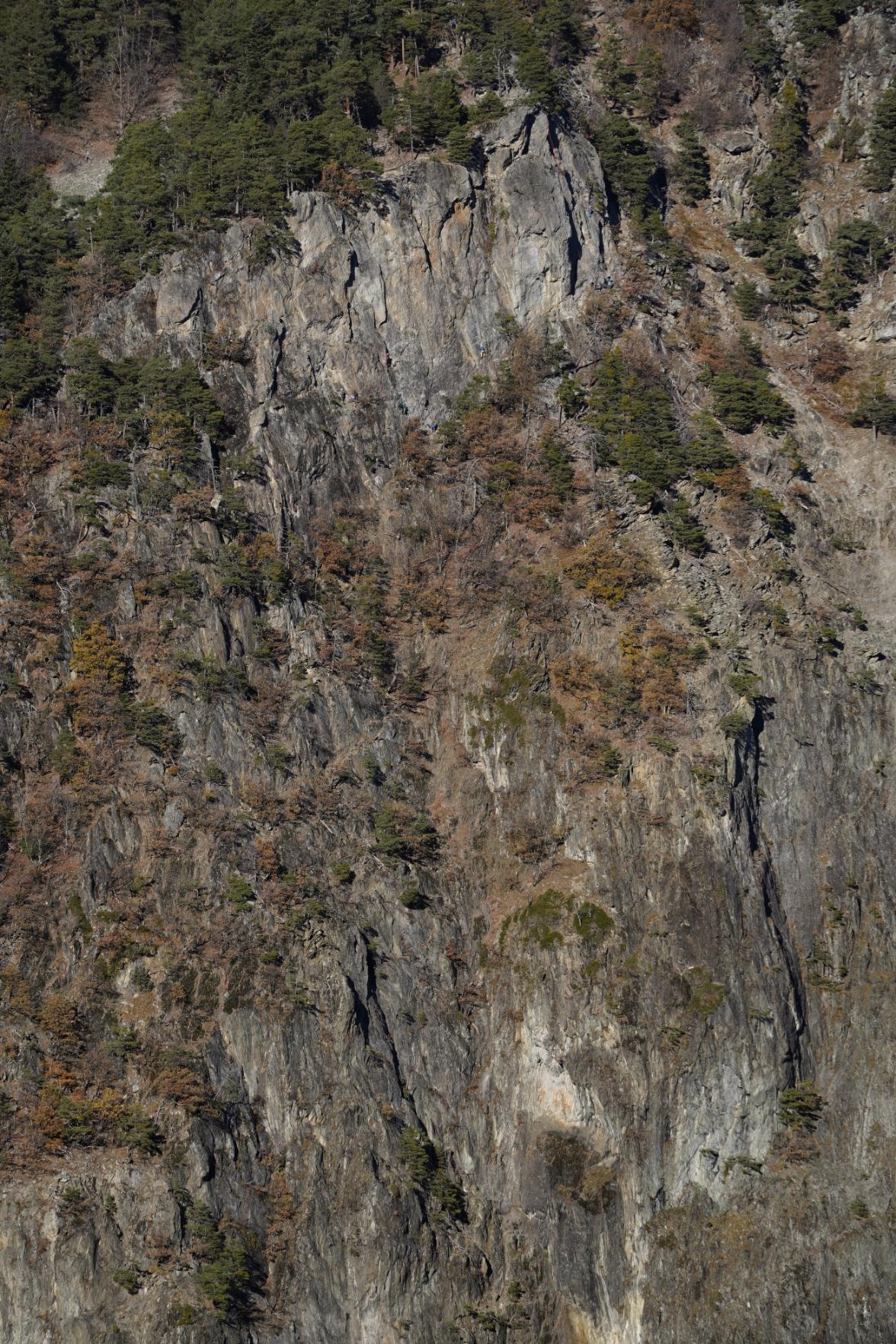
Climbing in Martigny
Pics and trips
1 1 227

Suggested topics


  • 0 Votes
    1 Posts
    112 Views
    American Alpine ClubA
    It wasn’t the first time, nor would it be the last, that Geoff Hill had chopped up frozen human waste—overflowing from a 200-liter barrel. He was a graduate student at the University of British Columbia (UBC), studying the effects of climate change in the Canadian Arctic. The university had arranged a deal with the Inuit whose land he was standing on. The students could conduct research there, but they could not leave any trace, including human waste—hence the chopping. All around him, the Arctic gleamed in shades of dense ice, the ocean a penetrating blue. Below the tundra, in a hole, out of sight, was where the research team kept the thing no one ever talks about: a frozen bucket of human waste, a.k.a. a “sht barrel,” as Hill often calls it. Tucked away. Put elsewhere. And that’s the trouble. In a wilderness like the Arctic, there is no elsewhere. As a climber who fell in love with alpine rock, Hill has spent much time on the road driving toward his next climbing destination. He learned quickly that what he loved most was swimming through a 5.10 hand crack high on a steep, sunny wall. That lifelong thirst for high-country granite would bring him to many wild places, including Mt. Barrill in the Ruth Gorge, El Cap, the Bugaboos, and Mont Blanc’s aiguilles. An epic during an alpine climb in the Canadian Rockies in 2004 spurred him to start reading Accidents in North American Climbing, and he would continue engaging with the AAC throughout his climbing career—for the rescue benefit, community, and research grants that would, in turn, help catalyze his calling. His passion for these alpine landscapes was boundless, but Hill’s educational path in environmental science was bringing him up against the reality of outdoor recreation’s environmental impact. He wanted to do something about it. Hill began with driving, launching the Biodiesel Project at UBC, which added sodium hydroxide and methanol to a vat of recycled cooking oil to create an alternative to diesel. “It was fun and dangerous in the beginning,” he recalls. “The pH is crazy. Like, if it splashed in your eye, for sure it would have dissolved a hole in your eyeball.” But it worked. He would fuel up his 1993 Volkswagen Jetta with this biofuel and hit the road to Canmore, Squamish, and even Yosemite. He would later teach some Yosemite rangers how to run their own trucks on biofuel from their waste kitchen grease. Called by the mountains, Hill toyed with becoming an ACMG Guide (the AMGA equivalent in Canada), but when he failed his exam, he realized his heart wasn’t in it and that he’d rather serve the mountain environment itself—not clients. Funded by Canada’s Natural Sciences and Engineering Research Council (and an AAC Research Grant), Hill started ringing up the rangers and national park personnel he’d worked with during his previous studies and guide training. He wanted to study the alpine environment in a way that would produce practical results: What did they need help with? Again and again, the National Park Service spoke to the problem of human waste management. Tara Vessella, who runs the backcountry program in Rocky Mountain National Park, spoke of the ongoing struggle to find new land for pit toilets. As Hill recalls her saying, “I cannot find a spot in the forest to put a new pit toilet because every time I dig a hole in the ground, I find old sht.” The pit-toilet model, so ubiquitous in the United States, wasn’t sustainable for backcountry landscapes with such intense visitation numbers. So Hill, recalling his frozen-waste-chopping days, embarked on a PhD that would make everyone else’s “business” into his business. Humans expel feces and urine daily—what we term “waste” when it’s not well integrated into the ecosystem, especially our poop. Yet when we look at the terms more commonly used for animal poop—dung, scat, droppings, guano—the “waste” subtext is absent, revealing a bias toward thinking that human excrement is dysfunctionally related to the natural environment. But Geoff Hill believes it doesn’t have to be that way. The science is pretty straightforward: Human urine (and all mammal urine, for that matter) is excellent plant fertilizer. Meanwhile, human poop is food for invertebrates and microorganisms—in fact, in the process of eating mammal poop, microorganisms produce rich organic matter that makes for fertile soil. https://americanalpineclub.org/news/2026/2/15/elsewhere-the-problem-of-human-waste-management-in-the-wilderness
  • 0 Votes
    1 Posts
    86 Views
    Klaproos (she/her)L
    "What's your favourite kind of tree?" "That one, it looks like it's fun to climb" Proceeds to climb said tree all the way to the top #climbing #tree #trees #nature #outside #touchgrass #fun #photography
  • 0 Votes
    1 Posts
    115 Views
    RaphaelT
    start from Dösner See to SÀuleck, via ferrata in mid October - little ice, good conditions, crampons on route down helpful#mountain #climbing #photography #austria
  • Jonathan Siegrist Climbs New 5.15a in Nevada

    General News climbing
    1
    0 Votes
    1 Posts
    204 Views
    GrippedG
    Eazy Street climbs a steep line at Mount Charleston near Las Vegas The post Jonathan Siegrist Climbs New 5.15a in Nevada appeared first on Gripped Magazine. https://gripped.com/news/jonathan-siegrist-climbs-new-5-15a-in-nevada/
  • The New Metolius Basic Stick Clip

    General News climbing
    1
    0 Votes
    1 Posts
    338 Views
    GrippedG
    An easy-to-use lightweight option that will make your days at the crag safer and more fun The post The New Metolius Basic Stick Clip appeared first on Gripped Magazine. https://gripped.com/profiles/the-new-metolius-basic-stick-clip/
  • The Art of Being Crusty by Luke Mehall

    General News climbing climbingzine
    1
    0 Votes
    1 Posts
    206 Views
    ClimbingZineC
    Me and my higher self, We often would speak Somehow we lost the connection, Might meet at Joshua Tree —Nas, “Nobody”   Banner photo of Hobo Greg by Emmie Snead   My greatest fear as a climber is becoming crusty. Not the good kind of crusty but the bad kind of crusty. The crust that
 https://climbingzine.com/the-art-of-being-crusty-by-luke-mehall/
  • Para Climbing finals | Arco 2024

    Videos climbing ifsc
    1
    0 Votes
    1 Posts
    316 Views
    IFSCI
    https://www.youtube.com/watch?v=QR--Ze2GxXo
  • 0 Votes
    1 Posts
    214 Views
    ClimbingZineC
    https://climbingzine.com/beats-climbs-and-life-a-conversation-with-kris-hampton/