Skip to content

Double Spoc; top rope solo

General Climbing
10 4 543 1
  • Not sure how active the rope solo scene is on fedi, but I figure I'd ask.

    There's been quite a bit of discussion over the years about various systems, but the modern consensus seems to be to use two progress capture devices on a single (or dual) fixed line, with one suspended higher than the other via use of a neck strap or chest harness.

    By far (at least in North America) the consensus seems to be to use the Petzl Microtraxion.

    The Edelrid Spoc seems to be a good alternative, is both lighter and cheaper, and is also mentioned occasionally in discussions about TRS.

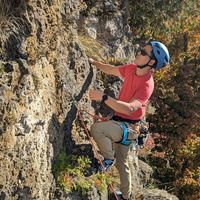
    Brent Barghahn is seen in this photo in a double-Spoc setup:
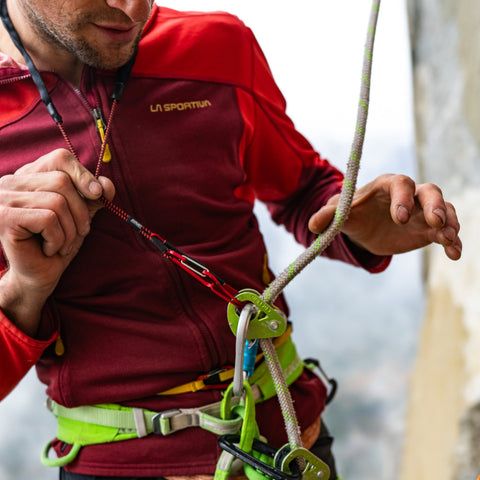
    1000006397.jpg

    Any potential problems I should be considering?

  • Not sure how active the rope solo scene is on fedi, but I figure I'd ask.

    There's been quite a bit of discussion over the years about various systems, but the modern consensus seems to be to use two progress capture devices on a single (or dual) fixed line, with one suspended higher than the other via use of a neck strap or chest harness.

    By far (at least in North America) the consensus seems to be to use the Petzl Microtraxion.

    The Edelrid Spoc seems to be a good alternative, is both lighter and cheaper, and is also mentioned occasionally in discussions about TRS.

    Brent Barghahn is seen in this photo in a double-Spoc setup:

    1000006397.jpg

    Any potential problems I should be considering?

    This post is deleted!
  • This post is deleted!

    This post is deleted!
  • Not sure how active the rope solo scene is on fedi, but I figure I'd ask.

    There's been quite a bit of discussion over the years about various systems, but the modern consensus seems to be to use two progress capture devices on a single (or dual) fixed line, with one suspended higher than the other via use of a neck strap or chest harness.

    By far (at least in North America) the consensus seems to be to use the Petzl Microtraxion.

    The Edelrid Spoc seems to be a good alternative, is both lighter and cheaper, and is also mentioned occasionally in discussions about TRS.

    Brent Barghahn is seen in this photo in a double-Spoc setup:

    1000006397.jpg

    Any potential problems I should be considering?

    @devnull
    In general, or specific to the devices?

    Note, I only read/watched information on TRS.

    Regarding devices in general, the most crucial things seem to be carabiner cross loading and devices getting unblocked.

    Regarding general aspects it makes sense to analyse all steps that could fail and check for mitigations.
    Like is doing in their Lead Rope Solo risk analysis video (https://www.youtube.com/watch?v=mTTDRX6RTWc).
    But I think more details could/should be included.

  • @devnull
    In general, or specific to the devices?

    Note, I only read/watched information on TRS.

    Regarding devices in general, the most crucial things seem to be carabiner cross loading and devices getting unblocked.

    Regarding general aspects it makes sense to analyse all steps that could fail and check for mitigations.
    Like is doing in their Lead Rope Solo risk analysis video (https://www.youtube.com/watch?v=mTTDRX6RTWc).
    But I think more details could/should be included.

    @devnull

    For cross loading, you might have seen the latest video by Yann Camus already
    https://www.youtube.com/watch?v=WXVF5zmPt_I

    And for other risks to consider, there is also the episodes on Top Rope Solo and Lead Rope Solo.

  • @devnull

    For cross loading, you might have seen the latest video by Yann Camus already
    https://www.youtube.com/watch?v=WXVF5zmPt_I

    And for other risks to consider, there is also the episodes on Top Rope Solo and Lead Rope Solo.

    @mkroehnert@social.tchncs.de I actually hadn't seen the latest video Yann put out, so that'll be on the list tonight!

    @HowNOT2's video is actually how I got interested in TRS in the first place! Really good and straightforward explanation of the mechanisms and risks involved.

  • This post is deleted!

    @pmonks@sfba.social @mkroehnert@social.tchncs.de That's a good list, although your two thoughts ended up being six 😆

    I've thought a bit about the idea of using two different devices. I was about to pull the trigger on a CAMP Lift, but I wasn't convinced of its safety given its tendency to no longer engage when grabbed or tilted (against a rock perhaps?) — additionally most rope soloists who climb with progress capture devices (again, talking North America) seem to go with the double-trax, which also doesn't satisfy the "two different devices" constraint.

    I will have an ascender (a tibloc + PAS) and a descender (Mammut Smart).

    As for rope protection, I was planning on re-fixing often so as to not worry (too much) about edge protection.

    Lastly, will be running all of this on my garage anchor board to get all these new skills (and devices!) tested for real before I get out on rock!

  • @mkroehnert@social.tchncs.de I actually hadn't seen the latest video Yann put out, so that'll be on the list tonight!

    @HowNOT2's video is actually how I got interested in TRS in the first place! Really good and straightforward explanation of the mechanisms and risks involved.

    @devnull
    I forgot, that has a collection of articles regarding Toprope solo.
    Including a non exhaustive list for risk analysis.

    You can find them at the end of the following page, where the first article is called 'To read for self-belaying'
    https://www.petzl.com/US/en/Sport/Indoor-and-Outdoor-Climbing

  • Not sure how active the rope solo scene is on fedi, but I figure I'd ask.

    There's been quite a bit of discussion over the years about various systems, but the modern consensus seems to be to use two progress capture devices on a single (or dual) fixed line, with one suspended higher than the other via use of a neck strap or chest harness.

    By far (at least in North America) the consensus seems to be to use the Petzl Microtraxion.

    The Edelrid Spoc seems to be a good alternative, is both lighter and cheaper, and is also mentioned occasionally in discussions about TRS.

    Brent Barghahn is seen in this photo in a double-Spoc setup:

    1000006397.jpg

    Any potential problems I should be considering?

    I use microtraction, an old ushba and a homemade neck/elastic loop. Works fine. Ushba is primary, micro traction is secondary. Very smooth. Pay close attention to how your system performs in overhanging terrrain.
  • Not sure how active the rope solo scene is on fedi, but I figure I'd ask.

    There's been quite a bit of discussion over the years about various systems, but the modern consensus seems to be to use two progress capture devices on a single (or dual) fixed line, with one suspended higher than the other via use of a neck strap or chest harness.

    By far (at least in North America) the consensus seems to be to use the Petzl Microtraxion.

    The Edelrid Spoc seems to be a good alternative, is both lighter and cheaper, and is also mentioned occasionally in discussions about TRS.

    Brent Barghahn is seen in this photo in a double-Spoc setup:

    1000006397.jpg

    Any potential problems I should be considering?

    This post did not contain any content.
Suggested topics


  • James Pearson on Send of Master’s Crack E9

    General News climbing
    1
    0 Votes
    1 Posts
    55 Views
    GrippedG
    Master's Crack was first climbed by James McHaffie at E9 - watch a short film by James Pearson about the route below The post James Pearson on Send of Master’s Crack E9 appeared first on Gripped Magazine. https://gripped.com/profiles/james-pearson-on-send-of-masters-crack-e9/
  • Make it stronger!

    Videos climbing hownot2
    1
    0 Votes
    1 Posts
    95 Views
    HowNOT2H
    https://www.youtube.com/watch?v=Zp4aFbADnos
  • 1 Votes
    1 Posts
    110 Views
    American Alpine ClubA
    It has been a momentous week for climbing policy, and we want to thank all of you who shared your voices with your legislators on these matters. The EXPLORE Act, which the AAC and its partners have been working on in some form or another for nearly 10 years, passed with unanimous consent, and is awaiting a presidential signature as we speak. Secondly, the National Park Service announced late Wednesday afternoon (December 18th) that they were discontinuing the development of their proposed fixed anchor guidance. What does this mean for climbers? The EXPLORE Act: The EXPLORE Act, introduced by Rep Bruce Westerman (R-AR) and Rep Raul Grijalva (D-AZ), is a historic recreation package that has had widespread bipartisan support and support from outdoor recreationists of all stripes—including climbers, mountain bikers, hunters, anglers, and more.  The most important elements of the EXPLORE Act for climbers are two-fold.  First, EXPLORE includes the Protecting America’s Rock Climbing (PARC) Act, introduced by Rep. Joe Neguse (D-CO) and Rep John Curtis (R-UT). The PARC Act is intended to ensure safe and sustainable access to rock climbing in designated Wilderness areas. It requires federal agencies to recognize recreational climbing as an appropriate activity in accordance with the Wilderness Act of 1964, as well as recognizing that the placement, use, and maintenance of fixed anchors is appropriate. The act also ensures that a public comment period is made available prior to any final climbing management guidance being issued. Essentially, the PARC Act officially recognizes that the use of fixed anchors for climbing (and Search and Rescue operations) continues to be appropriate in Wilderness areas, provided it does not diminish the wilderness character of the area. Second, EXPLORE includes the Simplifying Outdoor Access for Recreation Act (SOAR Act), which will increase accessibility to the outdoors by improving recreational permitting for outfitters and guides. How? By: Additional elements of the EXPLORE Act include improving access to parks and public lands for veterans and people with disabilities by building additional accessible trails; the BOLT Act, which will create more long-distance biking trails; and the codification of FICOR and the Outdoor Recreation Legacy Partnership, which funds local parks and green spaces, and provides direct access to funding for tribes for developing green spaces. AAC Executive Director Ben Gabriel synthesized this win, saying: “It has been such a privilege to work with all the outdoor recreation organizations, and legislators from both chambers and parties, to see the EXPLORE Act through. This historic recreation package will broadly serve the public, protect recreation resources, and provide for our gateway communities.” As you might imagine, the AAC is thrilled with what this all means for public lands and accessibility to climbing across the United States! This win would not be possible without the combined efforts of our incredible partners, especially Outdoor Alliance, Access Fund, AMGA, and The Mountaineers. Fixed Anchor Policy: The National Park Service announced on December 18th that they were discontinuing the development of their proposed fixed anchor guidance. The update said that, "Park leaders will continue to manage climbing activities in Wilderness on a park-by-park basis consistent with applicable law and policy, including the Wilderness Act." This announcement comes nearly a year after Park officials sought public comment on proposed regulations which suggested a new interpretation of installations as defined in the Wilderness Act. This new interpretation, which could have prohibited fixed anchors in Wilderness, was met with significant concern from climbers, climbing organizations, and other recreation enthusiasts, as well as search and rescue professionals, throughout the country.   The AAC thanks the NPS for sensing the need to reevaluate the proposed regulations and looks forward to collaborating with them in the future on fixed anchor guidance. The AAC, Access Fund, Mountaineers, and many other organizations, worked tirelessly to educate lawmakers on the potential impacts of prohibiting fixed anchors, which resulted in 14 Senators reaching out to the Secretaries of the Department of I... https://americanalpineclub.org/news/2024/12/19/xqb6m95tn7yzrj9c0gjad322vzx4zx
  • 👇 Discover why it's the right harness for you!

    Videos climbing
    1
    0 Votes
    1 Posts
    146 Views
    EpicTVE
    https://www.youtube.com/watch?v=6xo8JFB_e18
  • 0 Votes
    1 Posts
    112 Views
    GrippedG
    The aesthetic peak is in a remote part of the southern Patagonia Ice Field The post Climbers Make First Ascent of Patagonia Mountain Then Ski It appeared first on Gripped Magazine. https://gripped.com/uncategorized/climbers-make-first-ascent-of-patagonia-mountain-then-ski-it/
  • 0 Votes
    1 Posts
    103 Views
    ClimbingZineC
    And so castles made of sand Fall into the sea eventually —Jimi Hendrix, “Castles Made of Sand”  “Did you hear the Crooked Arrow Spire fell down?” my buddy, Ben Kiessel, asked me.  Another one bites the dust, I thought. I used to be surprised when I heard a climb or a major section of a… https://climbingzine.com/climbs-fall-apart-by-luke-mehall-an-excerpt/
  • Some history about boulder climbing grades

    General Climbing climbing
    1
    0 Votes
    1 Posts
    105 Views
    RaykoR
    Some history about boulder #climbing grades. From easy, all the way to unforgiving nightmare xD V17 looks absolutely nuts.Not sure if I learnt anything new about grades, other than lower V is easy and higher V is difficult though lol Some of the middle blocks in the scale look somewhat similar to me.https://youtu.be/DnvpYvzbcg8?si=mA06GWeeA_gApGtL
  • Chris Sharma’s Famous 5.15 Dynos Repeated

    General News climbing
    1
    0 Votes
    1 Posts
    113 Views
    GrippedG
    https://gripped.com/news/chris-sharmas-famous-5-15-dynos-repeated/