Skip to content

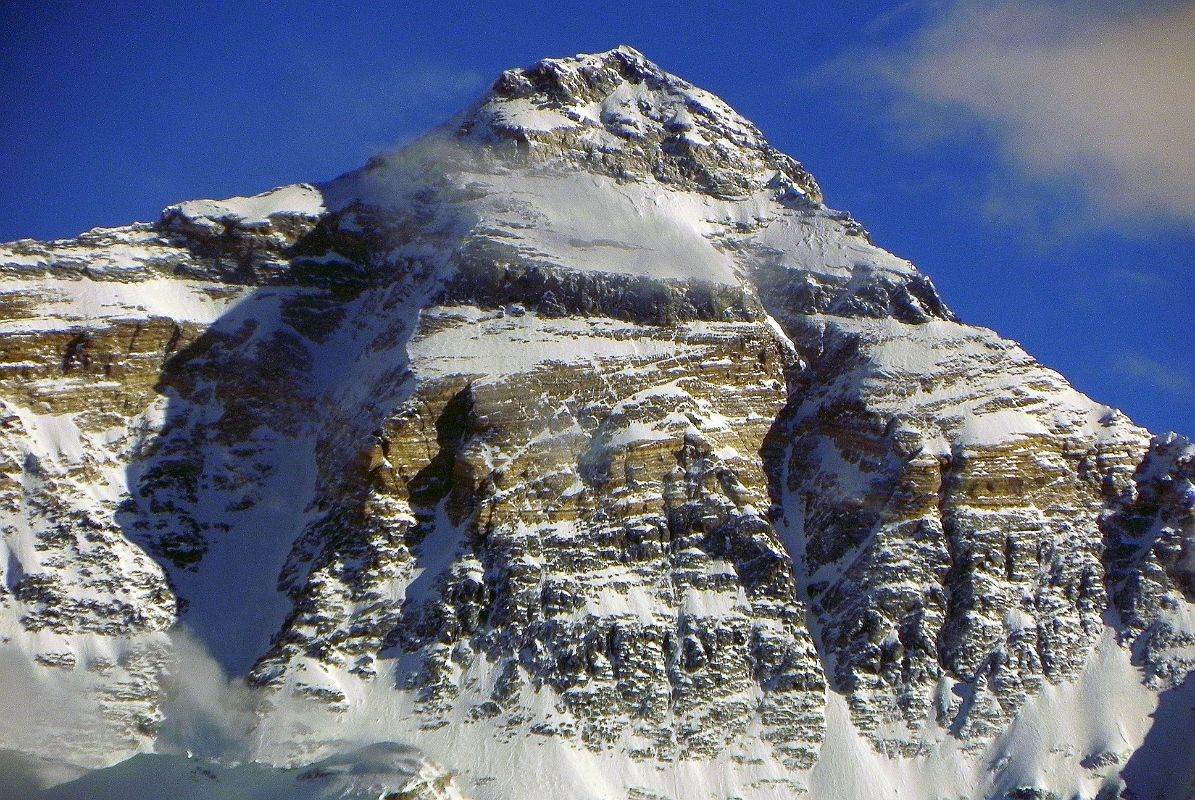
American Skiers to Attempt Everest Descent

General News
1 1 140 1

Suggested topics


  • The Line—A Sensational Spire in Pakistan

    General News climbing
    1
    0 Votes
    1 Posts
    18 Views
    American Alpine ClubA
    One winner of a 2025 Cutting Edge Grant from the AAC was alpinist and photographer Tad McCrea, who, along with fellow American Jon Griffin and German climber Thomas Huber, traveled to the Karakoram for their second expedition to attempt two sensational peaks. The first part of Tad’s trip report is shared below. For the second half, you’ll have to wait for your 2026 American Alpine Journal, coming later this year. Jon Griffin, Thomas Huber, and I had visited the Choktoi Glacier in 2024, our goals the west summit of Suma Brakk and the southeast pillar of Latok III. Initially, the weather was stunning, but as our preparation was beginning to pay off, we were hit by five weeks of wet and restless weather. Our objectives quickly became out of reach. On July 14, 2025, the three of us reconvened in Skardu, in northern Pakistan. The approach this time to base camp, at around 4,400 meters on the east side of the glacier, was challenging due to hot weather and raging river crossings.  Then, five days into our stay at base camp, Thomas and I were called to assist in the attempted rescue of Laura Dahlmeier on Laila Peak. [The German athlete was a two-time Olympic biathlon champion and friend of Huber’s. She was retreating from the peak when she was hit by rockfall, fatally, around 5,700 meters]. Along with Americans Jackson Marvell and Alan Rousseau, who were on another expedition in Pakistan, we were airlifted to the peak, where we located her body from the air and realized any attempt to retrieve her would be futile. We hiked out to Hushe, then were helicoptered back to our Choktoi base camp on August 2.  Two days later, we made an acclimatization trip to 5,700 meters near Suma Brakk. At 12:30 a.m. on August 9, we set off from base camp for the climb. Suma Brakk is a triple-summited peak that has been climbed at least a couple of times by different routes. [The first ascent of the central and highest summit (6,166m) was made in 2007 via the southern slopes and southeast ridge, by Americans Doug Chabot, Mark Richey, and Steve Swenson. In 2018, Fabian Buhl and Alexander Huber—Thomas’s brother—completed the south ridge, with more than 56 pitches of climbing]. The west summit, which we dubbed Eye Ri (6,120m), was unclimbed. It appears as a spectacular needle when seen from the Choktoi side; moving around the peak to the west exposes a gash splitting the entire summit tower. There is a giant chockstone wedged 15 to 20 meters from the top that mimics Sauron's Eye. We started up loose ribs and even looser rock gullies just left of a 300-meter icefall blocking access to a hanging glacier at the base of Eye Ri’s northwestern aspect. We had been here the year before, so we knew where to find the best path to the notch leading to the upper glacial basin. The climbing ranged from steep walking to scrambling. A hike up the glacier, then steep snow and névé with occasional stretches of ice and mixed (50°–75°), took us to the previous year's high point at 5,600 meters on the west ridge, between the first and second gendarmes. While I chopped out a site for the tent, Jon and Thomas took our two single ropes and a tag line and fixed three pitches to the top of the second gendarme.  The next day, we continued past three more gendarmes to a bivouac below the final tower. There were a few rock pitches up to 5.10+ on textured golden granite, and ice up to 80°, and we needed the full quiver of alpine tactics and trickery to get our under-acclimatized bodies up to 6,000 meters. In the morning, we climbed three challenging pitches up the tower, utilizing 12 bolts for protection and anchors. Free climbing up to 5.11, we also employed a variety of aid tactics. At a bus-sized platform four meters below the top of the tower, we fixed lines and rappelled 85 meters to our camp. On August 12th, we jugged our lines and did a short boulder problem to the summit, for what appears to be its first ascent. We laughed, danced, and cried a little as we soaked in the expansive vista, then descended all the way to our 5,600-meter camp, making at least 15 rap... https://americanalpineclub.org/news/2026/3/25/the-linea-sensational-spire-in-pakistan
  • Spring Cracks by Luke Mehall

    General News climbing climbingzine
    1
    0 Votes
    1 Posts
    45 Views
    ClimbingZineC
    My friends are gettin’ older, So I guess I must be too. Without their loving kindness, I don’t know what I would do.   —Greg Brown, “Spring Wind”   This story can only begin in one way, and that is with tears. Whether they were the tears from heartbreak, loss, or just from when John… https://climbingzine.com/spring-cracks-by-luke-mehall/
  • Illegal Yosemite BASE Jumpers Plead Guilty

    General News climbing
    1
    0 Votes
    1 Posts
    101 Views
    GrippedG
    The U.S. government shutdown has led to a rise in reckless activities in the park The post Illegal Yosemite BASE Jumpers Plead Guilty appeared first on Gripped Magazine. https://gripped.com/news/illegal-yosemite-base-jumpers-plead-guilty/
  • Alex Honnold Climbing 5.13 Trad in California

    General News climbing
    1
    0 Votes
    1 Posts
    95 Views
    GrippedG
    Alex Honnold appears in a new short film by Black Diamond climbing cracks near Lake Tahoe The post Alex Honnold Climbing 5.13 Trad in California appeared first on Gripped Magazine. https://gripped.com/news/alex-honnold-climbing-5-13-trad-in-california/
  • The “fish eye” anchor

    General News climbing alpinesavvy
    1
    0 Votes
    1 Posts
    157 Views
    AlpineSavvyA
    A double loop bowline on a bight is a good starting point for various types of anchors. Here's one application, the “fisheye”. Make a three-piece anchor with a 120 cm sling? Yep! Learn all about it here. Premium Article available https://www.alpinesavvy.com/blog/the-fish-eye-anchor
  • The Prescription—Fatal Rockfall

    General News climbing
    1
    0 Votes
    1 Posts
    199 Views
    American Alpine ClubA
    Every year we publish several accounts of rockfall. What makes a few of these accidents so scary is the fact that several climbers have experienced this kind of accident just standing at the base of a crag. On July 9, 2022, Anna Laila Leikvold (22) was preparing to climb at the Wizard’s Gate crag, south of Estes Park, when she was struck by a rock falling from above on a route called The Arrival (4 pitches, 5.11). Leikvold, who was wearing a helmet, was at the base of the cliff in a party of three when a football-sized rock dislodged by another climber struck her as she was fleeing from the base of the wall. Bob Siegrist, a developer of this area and first ascensionist of The Arrival, wrote to ANAC, “I think the falling rock came from pitch two, but I did not talk with the climbers who were on the route and caused the rockfall. This speculation is based on talking with other climbers who were at the base and also my inspection of [the] route after the accident. Later, I discovered a spot on pitch two where a stone had broken off, matching the features of the suspect rock that was found at the bottom of the crag below where Anna was struck.” Climbers called 911 and gathered to help Leikvold. Rescuers arrived with a litter, but she passed away before they reached the ambulance. Her evacuation was compounded by the rugged terrain and the lengthy hike to the road (the approach is a steep 30 to 45 minutes). Siegrist returned two weeks later and removed the bolts from the upper three pitches of the climb to prevent such an accident in the future. There are annual instances of rockfall injuries and fatalities suffered by climbers at the base of crags. With the growing popularity of multi-pitch sport routes—often extensions of existing single-pitch climbs—the need grows for caution on the ground and above. According to “Neale D” on Mountainproject.com, “There were over 20 of us climbing at or near Wizard’s Gate [that day], maybe the most some have experienced at this crag. Most importantly, though, probably in an effort to find something open to climb, several parties ventured up multi-pitch routes while others stuck to single-pitching below.” With a shady aspect and an elevation of 10,000 feet, Wizard’s Gate is a popular high-country escape from Colorado’s summer heat. Kim Schwartz, who was at the Wizard’s Gate on the day of the accident, says, “It’s easy to treat an area like this as a sport crag, but it is an alpine environment with all the attendant hazards.” For those climbing or rappelling above others, avoid loose rock, look for white chalk Xs marking unstable rocks, and be aware of how the rope might catch on sketchy blocks. Consider not climbing when others are below. For those below, wear a helmet while leading, belaying, or spectating. However, remember that in this case, a helmet did not save the individual’s life. Adapting an alpinist’s sense of mountain awareness can help prevent such accidents. Watch and listen for falling rock, and choose protected areas while belaying or waiting for your turn to climb. This is especially true if there are climbers above, after heavy rain or snow, and during windstorms. A further lesson extends to route developers or first ascensionists. Pay heed to the numbers and demographics of climbers venturing into alpine and remote areas, many of whom have little experience in the risks inherent in such terrain. Consider the potential for both human-generated or natural rockfall before establishing new routes. This is especially true for multi-pitch routes extending above established climbs. The base of a crag can be a hazardous place. In this video, Pete Takeda, Editor of Accidents in North American Climbing, gives some tips to avoid causing rockfall while climbing and avoid being hit while at the base of the crag. For climbing at Wizard’s Gate and similar areas, Siegrist has a few safety tips: (Sources: Bob Siegrist, Kim Schwartz, Kelly Cordes, and Mountainproject.com.) https://americanalpineclub.org/news/2025/5/13/the-prescription
  • 1 Votes
    1 Posts
    202 Views
    IFSCI
    https://www.youtube.com/watch?v=08yzR9LKkhE
  • Drew Ruana Has a V14 on His Home Wall

    General News climbing
    1
    0 Votes
    1 Posts
    186 Views
    GrippedG
    Strong climbers visit Drew Ruana's spray wall to try some of the hardest plastic problems in the neighborhood The post Drew Ruana Has a V14 on His Home Wall appeared first on Gripped Magazine. https://gripped.com/video/drew-ruana-has-a-v14-on-his-home-wall/