Skip to content

The best online sales on climbing gear

General News
1 1 141

Suggested topics


  • An Interview with ANAC Editor Pete Takeda

    General News climbing
    1
    0 Votes
    1 Posts
    9 Views
    American Alpine ClubA
    AAC: Describe the scope of the work that goes into making Accidents in North American Climbing [ANAC]. Pete Takeda: The scope and the type of coverage we do have expanded over the years. It’s not just a print publication anymore, where we analyze accidents from across the continent. It’s also the monthly email, called The Prescription, that delves into one of the accidents from that year’s book, repackages it, and adds related resources. Now we’ve also brought in the video component, with me as the on-camera personality, plus IFMGA/ AMGA guide Jason Antin and how he recommends folks avoid the accident we’re analyzing. So as an editor, I have to change hats a bit. I kind of hate being the on-camera personality. But I see it has an impact, and so whatever I feel about it is irrelevant because it serves the community. Another new exciting thing is working with Dr. Valerie Karr, a professor who studies human behavior across many complex environments, who came out of the blue and scanned and made searchable every physical copy of ANAC dating back to 1948. We can now respond to legitimate, official queries for data. Dr. Karr has also brought forward a framework for examining human factors in accidents. In other words, how you feel, what you’re thinking, your background, what you’re doing and experiencing in the moment, and how those all can lead to accidents and also influence the outcome. For example: I was distracted, or I was thinking about my dog, or someone asked me a question. It’s just basic things like that every climber can relate to. You can read about some of her initial findings in this year’s book. So, we’re no longer just addressing the mechanics of the accident: My carabiner came undone, or the rope was running over the edge, or I placed a cam and it blew. It goes beyond just these technical aspects. AAC: What’s the history of ANAC? Pete: First, it was simply a report from the AAC Safety Committee, starting in 1948. In 1952 they settled on calling the annual book Accidents in North American Mountaineering. The person who really evolved it into what it is today is Jed Williamson, a past president of the AAC and the editor emeritus on the masthead of ANAC. He steered the direction of ANAC, as a volunteer, for 30 or 40 years. He’s the one who established this current format and managed to source information from all these different reporting sources, like federal rangers, SAR teams, and individuals. In 2016 the name changed to Accidents in North American Climbing, [to reflect the fact that] we as climbers really would not self-apply the term “mountaineer” to what we do 99 percent of the time. AAC: What’s a unique challenge you’ve faced while compiling and editing ANAC? Pete: Figuring out how to accurately portray such technical concepts is always a challenge. You really have to partition your mindset, just like you do in the disciplines in climbing. Some things work in the print realm. Some things work in the digital realm. Some things work in video. With a print publication, you’re combining imagery with graphics and words. Between those three things, you should be able to allow people to view the material, read the material, and come away with as comprehensive and as fact-checked a report as they can. And that’s something that really sets us apart: We actually check facts. Of course, it is challenging to create a graphic that matches the nuances of how a knot came undone or how a carabiner unclipped, but we have excellent designers on our team. [Another] major hurdle I have is acquiring photos for every accident, either of the accident scene or showing the mechanics of the accident, the routes, the area, etc. People on Mountain Project have been very generous in donating their photos. The purpose of all this material is to evoke questions. You can usually tell how successful you’ve been by the questions that people write on social platforms or via email. That’s [certainly] the case with the Prescription videos—and, if someone wants to dig more, they can always look in the book or get on the AAC website and look up the accid... https://americanalpineclub.org/news/2026/2/15/an-interview-with-anac-editor-pete-takeda
  • The Setting Room

    Videos climbing
    1
    0 Votes
    1 Posts
    27 Views
    EpicTVE
    https://www.youtube.com/watch?v=blsFletWk44
  • 50 years used vs stored

    Videos climbing hownot2
    1
    0 Votes
    1 Posts
    96 Views
    HowNOT2H
    https://www.youtube.com/watch?v=giS0mNyiVpw
  • Guidebook XV—Rewind the Climb

    General News climbing
    1
    0 Votes
    1 Posts
    115 Views
    American Alpine ClubA
    The snowy fortress of Mt. Logan massif had opened its door after weeks of siege. It was June 23, 1925, when Allen CarpĂ© and five others stood atop the highest peak in Canada for the first time, the sheer pinnacle of the summit plunging down sharply to the Seward Glacier below. To Carpé, in the thin air, it felt like every moment was twice lived. And in the media storm and flurry of drama that followed, he would be called upon to set the record straight—and relive those moments yet another time. At first glance, the 100-year-old story of the first ascent of Mt. Logan might have a familiar outline—a band of men push up and up to ascend to the great heights, facing great hardship along the way. In the classic telling, we follow the expedition leader Albert MacCarthy as he spends weeks caching supplies in the dead of winter, utilizing sleds pulled by snowshoe-clad horses, and higher up on the mountain, cunning dog teams that fight whenever left alone. In the classic telling, we follow MacCarthy, American Alpine Club representative Allen Carpé, American Norman Read, Colonel Foster, and the others on the expedition as they ferry their own gear back and forth between each subsequent camp, the measure of days the number of heavy loads these men have carried to the next advanced base camp, or their proximity to frostbite. With teeth on edge, we’d read of 11 journeys through a precarious icefall as they consolidated their camp above 10,000 feet, transporting nearly a ton of equipment and food. Once high on the massif, we’d delight in the cunning trick, attributed to MacCarthy, of planting 600 bare willow branches in the blowing snow every hundred feet, to prevent against getting lost in the whiteout. Such trail maintenance would ultimately save lives and precious time, but still couldn’t prevent one rope team from losing their way during a storm that chased them down from the summit. Those men spent 42 hours without shelter in the freezing, grainy snowbanks, only realizing their mistake when they found themselves walking in circles, back on the summit plateau, the slopes ominously appearing at unexpected angles. The theme of that story is loneliness, drudgery, and the sheer force of will needed against the worst conditions that such an icy world could offer. Reflecting on these themes, CarpĂ© writes in his own telling of the ascent, published in 1933 in the American Alpine Journal: “I think it was during these days that the awful loneliness of these great ranges was first borne in upon me with something of the force of a personal experience. Until we turned the corner into the Ogilvie glacier, we could look back down the valley and sense the presence of the lower hills and of living things. Now as we worked in toward the savage cliffs of Logan we entered a new world of appalling grandeur, and our little band seemed insignificant and very much alone. We had no support behind us, no organization of supply, no linkage at all with the outer world. We were on our own.” That telling is perhaps best left to those who experienced it. But a 100-year distance can sharpen the focus of our lens on something else—the mundane letters and newspaper stories that came afterward, that can so easily be forgotten as part of the story, and that might tell us a little something different about the legacy our climbing ancestors have left us. There are, of course, the historical accounts—a hundred pages dedicated to the planning of the ascent, scientific studies accomplished during the expedition, and the story of the climb itself, all included in the Canadian Alpine Journal. Because the AAC was not yet publishing the American Alpine Journal (it would do so for the first time in 1929), the American account of the ascent was published in the Appalachian Mountain Club’s journal. The American public, too, was in awe, with repeated articles appearing in the New York Times, the Boston Transcript, and others. But a flurry of letters from September 1925, dashed off in angry haste with cross-outs and misspellings, reveal a gap in the telling. The writer, expedition member Norman Read, repeatedly argues to his friend and reader, Allen Carpé, that the representations of the expedition in the media are “positively disgusting in its sensationalism and its falsity.” He asks Carpé to write the story the right way—to tell it in a manner ‘worthy of the fraternity of mountaineering.’ The letters are a source of 100-year-old gossip—they tell of ... https://americanalpineclub.org/news/2025/8/14/guidebook-xvrewind-the-climb
  • Overcome Your Fear of Falling Off Boulders

    General News climbing
    1
    0 Votes
    1 Posts
    101 Views
    GrippedG
    A new video from Dave MacLeod gives great insight on how to boulder safely The post Overcome Your Fear of Falling Off Boulders appeared first on Gripped Magazine. https://gripped.com/video/overcome-your-fear-of-falling-off-boulders/
  • Andy Lamb announces FA of Event Horizon, 8C+

    General News climbing
    1
    0 Votes
    1 Posts
    97 Views
    UK ClimbingU
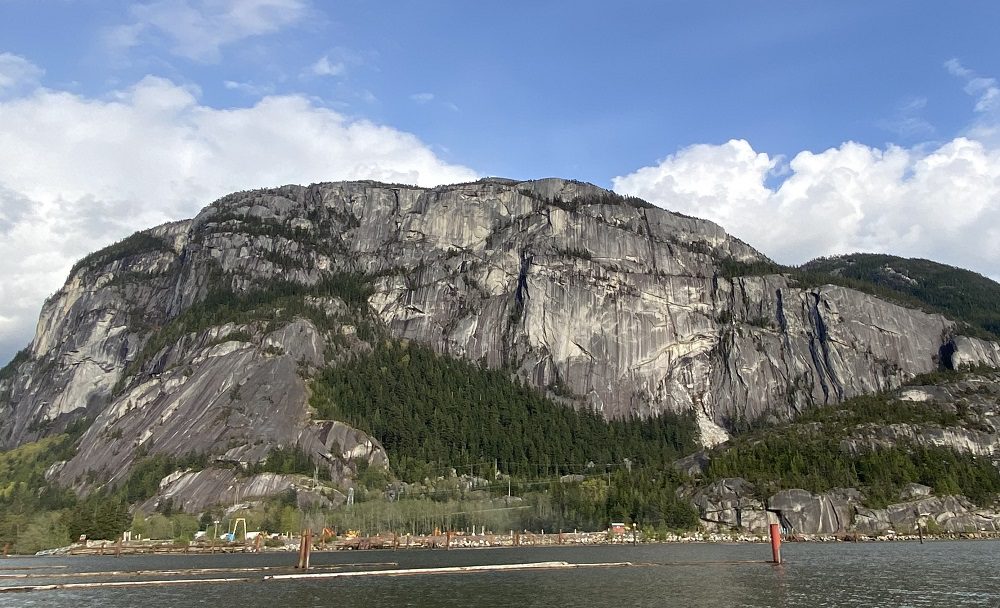
    More than a year after making the ascent, Andy Lamb has announced the first ascent of Event Horizon (f8C+), at Grand Wall Boulders, in Squamish. https://www.ukclimbing.com/forums/t.php?n=783051
  • Navajo Rising by Aaron Mike

    General News climbing climbingzine
    1
    0 Votes
    1 Posts
    99 Views
    ClimbingZineC
    Acknowledging the roots and conceptualizations of the outdoor activities that we so passionately pursue enriches our participation and ties us to the land, as well as to one another. When we view our industry through a historical lens, we inevitably hear about John Muir, Sir Edmund Hillary, Royal Robbins, and other giants of outdoor recreation.
 https://climbingzine.com/navajo-rising-by-aaron-mike/
  • 0 Votes
    1 Posts
    110 Views
    climber-magazineC
    https://www.climber.co.uk/news/james-pearson-repeats-bernd-zangerl-s-highball-29-dots/