Skip to content

We haven’t seen a comp format like this before…
Videos
1 1 10 1

Suggested topics


  • Blue Pill Or The Red Pill?

    Videos climbing
    1
    0 Votes
    1 Posts
    84 Views
    EpicTVE
    https://www.youtube.com/watch?v=itymXom_xrI
  • The Line— Skiing the Tetons Enduro Traverse

    General News climbing
    1
    0 Votes
    1 Posts
    106 Views
    American Alpine ClubA
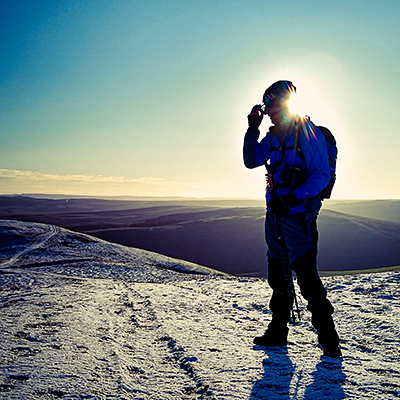
    In the evening of April 22, 2024, Teton guides Adam Fabrikant, Michael Gardner, and Brendan O’Neill started skinning up Death Canyon in Wyoming’s Teton Range, aiming for Buck Mountain, near the south end of the range. A little over 20 hours and seven peaks later, they skied off Teewinot Mountain and back to the valley floor to complete the Enduro Traverse—an unprecedented ski mountaineering adventure. Adam’s story about the Enduro will be in AAJ 2025. We’re offering a condensed version here. You can read an extended story—replete with Adam’s history of Teton link-ups—at the AAJ website. In 1963, John Evans, Richard Long, and Allen Steck completed the Grand Traverse, a summertime traverse of ten Teton Range summits, from Nez Perce to Teewinot (the opposite direction of how this now-classic traverse is usually done today). In the 1965 AAJ, Steck wrote, “Any route or time of day is acceptable, however, only be sure to finish within 24 hours.” For the Enduro ski traverse of the Tetons that I envisioned, sub-24 hours was our sole metric, as Steck had laid it out for us. For some years, I’ve been exploring Teton link-ups on skis with various partners, culminating with a day of skiing the Grand Teton, Mt. Owen, and Teewinot Mountain by some of their most technical routes. Sam Hennessey, Brendan O’Neill, and I pulled off this fine adventure in March 2023. To me it seemed logical to bring all of our experiences together in a much longer traverse—to see how far we could go in under 24 hours. In the Alaska Range, I have enjoyed moving under the midnight sun for 24, 30, hell, even 64 hours—why not see how this would work back home? It gets darker in Wyoming in the spring than in Alaska, but we have headlamps. The idea of the Enduro Traverse was to enchain the Teton skyline from Buck Mountain in the south to Teewinot, crossing over Mt. Wister, South Teton, Middle Teton, Grand Teton, and Mt. Owen along the way. At 6 p.m. on April 22, with the day’s heat still in the air, Michael Gardner, Brendan O’Neill, and I started skinning up Death Canyon in wet, sloppy snow. Under an endless sunset, we climbed the east ridge of Buck Mountain (11,938’) and clicked in on top for our first descent at 9:15 p.m. (A full moon allowed us to complete all the climbs sans headlamps, but we did use the lamps for our descents.) We skied down Buck’s hyper-classic east face and used a piece of terrain called the Buckshot to drop into the South Fork of Avalanche Canyon. The next climb was the South Headwall of Mt. Wister (11,490’), which flows into the upper east ridge. We reached Wister’s summit at 10:53 p.m. This was the lowest peak in our traverse, yet it packed a punch. The northeast face offered up some proper steep skiing—it felt engaging via headlamp—and deposited the three of us in the North Fork of Avalanche Canyon. Our next ascent took us up the South Teton’s Amora Vida Couloir (much more fun to descend than ascend), and here we encountered our least efficient travel of the day, with heinous breakable crust and soggy snow engulfing our entire legs. From the top of the South Teton (12,514’), the descent by the Northwest Chute was fast and uneventful. Now in Garnet Canyon’s South Fork, we began our climb up the Middle Teton’s Southwest Couloir, where efficient cramponing put us on the summit rather quickly. The descent down the east face into the Middle Teton Glacier route was harrowing on the refrozen undulating snow left by skiers who had descended in the warm days before us. But we were not there for the ski quality, rather the continuous movement. From the North Fork of Garnet Canyon, we made quick work of the Ford-Stettner route, topping out the Grand Teton (13,770’) at 6 a.m., 12 hours into our journey. The sun was beginning to rise above the horizon, and it felt great to embrace its warmth again. With a long block of daylight ahead, the three of us were confident as we descended the Ford-Stettner, with some thoughtful downclimbing in the Chevy Couloir, which is normally rappelled. (To save weight, we did not carry a rope and chose lines that would go without one.) We made our way into the Dike Snowfield an... https://americanalpineclub.org/news/2025/5/19/the-enduro-traverse
  • Oriane Bertone 🇫🇷 and her brand new tattoo 😳

    Videos climbing ifsc
    1
    1 Votes
    1 Posts
    178 Views
    IFSCI
    https://www.youtube.com/watch?v=o-ySyQQ571c
  • Lara Neumeier repeats Psychogramm, 8b+ (Trad)

    General News climbing
    1
    0 Votes
    1 Posts
    90 Views
    UK ClimbingU
    German climber Lara Neumeier has made the fourth ascent, and first female ascent, of Psychogramm, 8b+ (Trad) at Brser Platte, Austria. https://www.ukclimbing.com/forums/t.php?n=779911
  • The Prescription—Top-Rope Solo

    General News climbing
    1
    0 Votes
    1 Posts
    138 Views
    American Alpine ClubA
    In this month’s Prescription, an expert climber made two crucial errors in her rope ascension/top-rope solo system. She fortunately escaped with relatively minor injuries. This accident was featured in the 2024 Accidents in North American Climbing. On October 8, 2023 Whitney Clark was ascending a fixed rope at the start of Valkyrie (17 pitches, 5.11+) when her single ascension device was jammed by a sling. She fell 30 feet to the ground. Clark wrote to ANAC: “We woke at around 6 a.m. and made our way to the fixed line from the day before. The days were short and we had many pitches to do. My partner, Luka Krajnc, went first, using a Grigri to jug and then transitioning to climbing. About 40 feet up, he clove-hitched the rope to a bolt. I then started jugging with a single Micro Traxion. Thirty feet up, I leaned back on the rope. My body weight wasn’t supported because the sling around my neck [part of the top-rope solo setup] got sucked into the device and caught in the teeth of the Traxion. The rope was sliding against the sling. I hadn’t tied a backup knot.” Clark attempted to wrap the rope around her leg. But her rope was new, thin, and slippery. She wrote, “I grabbed the rope and slowly started sliding down. Eventually the rope burn was too painful and I let go. I hit the ground, landed on my feet, and fell backward. I struck my lower back and then my head. I was wearing a helmet. Because the ground was angled, some of the force was dissipated, though I landed six inches from a large rock spike. “I never lost consciousness but was in a bit of shock. Luka rappelled down and did a spinal exam. He got me comfortable, and I sat there for a while. I had pain in my back and my left ankle. I used my inReach to call for a rescue while Luka retrieved our stuff. I started crawling and butt-scooting to where a heli could reach me. I would have loved to have self-rescued, but it’s a 16-mile hike out. It took about 2.5 hours of crawling to make it to a flat place. Four hours later, a helicopter airlifted me to the Visalia Level III trauma center.”  Whitney Clark’s progress-capture device failed when the as-yet-unused retention sling got stuck in the device as she was ascending. It is common practice to use a sling and an elastic connection to hold the progress-capture device upright as one climbs along a fixed rope. Photo: Luka Krajnc Top-rope soloing is becoming increasingly popular. In this video, Pete Takeda, Editor of Accidents in North American Climbing, and IFMGA/AMGA guide Jason Antin are back to provide an accident analysis and give you some quick tips on how to mitigate risk when top-rope soloing. Top-rope soloing is an integral part of modern climbing. Currently, only one device (the El Mudo) is designed and commercially available for top-rope (and lead) soloing. There are many ways to configure these systems and we’ve demonstrated one possible solution here. Solo top-roping allows a climber to self-belay when no partner is available, for a team to work on individual sections of a route without the need for a belayer, or for two climbers to move simultaneously, as in this situation. The errors Clark made were using only one device to safeguard her progress and not tying a backup knot. “I was jugging by pulling on the rope, syncing up the slack, and sitting back,” Clark said. “The route was meandering and the fixed line didn’t allow me to readily climb, so I decided to jug straight up the initial blank slab. The sling around my neck was going to hold the Traxion upright [allowing the rope to feed freely] once I started climbing. I haven’t done any top-rope soloing since the accident. I probably will at some point, but I will definitely use two devices. This was the first time I only used a single progress-capture device.”  (Source: Whitney Clark.) Each membership is critical to the AAC’s work: advocating for climbing access and natural landscapes, offering essential knowledge to the climbing community through our accident analysis and documentation of cutting edge climbing, and supporting our members with our rescue benefit, discounts, grants and more. Plus, get the new 2025 member tee! https://americanalpineclub.org/news/2025/2/11/the-prescription
  • 0 Votes
    1 Posts
    115 Views
    climbingC
    The Strong Mind master discusses risk and her advice for moms and dads who climb https://www.climbing.com/people/hazel-findlay-pregnant-postpartum-climbing/
  • 0 Votes
    1 Posts
    105 Views
    climbingC
    'Dreamtime' was the world first proposed V15 boulder. In climbing it, Kiersch becomes the ninth woman to climb the grade. https://www.climbing.com/news/michaela-kiersch-dreamtime-v15/
  • 0 Votes
    1 Posts
    118 Views
    climbingC
    The setters compressed the difficulty into the tops of each of the four boulders. It made for a slow start and an exhilarating finish. https://www.climbing.com/competition/olympics/mens-boulder-semifinal-paris-olympics/