Skip to content

The Line—Reward and Risk on Kaqur Kangri

General News
1 1 109 1
  • Three teams will be honored with Piolets d’Or in Italy this December, and all three contributed feature articles about their climbs to the 2025 American Alpine Journal (AAJ). Tom Livingstone wrote about his and Aleš Česen’s new route on Gasherbrum III in Pakistan; Dane Steadman described the first ascent of Yashkuk Sar, also in Pakistan, with August Franzen and Cody Winckler; and Spencer Gray told the story of climbing the southwest arête of Kaqur Kangri in Nepal with Ryan Griffiths.

    There’s a lot to love about

    Spencer’s AAJ piece
    

    —it documents an amazing ascent. But we were also struck by the final passage, in which he reflects on the inherent and sometimes insidious risks of Himalayan alpinism. No one got hurt on the climb of 6,859-meter Kaqur Kangri, but afterward Spencer tallied 20-plus minor incidents that each could have ended very badly. Honest self-assessments like this are essential to a long life in the mountains, so we’ve shared Spencer’s thoughts here for readers to consider in light of their own climbing.

    Objectives like the southwest arête of Kaqur Kangri used to be what most climbing was: trying something kind of hard, an inconvenient distance from home, and relying on imagination as much as effort to turn a thing dreamt into a thing done. There are still plenty of places to contrive that same experience. We just have to look harder—and be willing to court risk in an unpredictable operating environment. 
    Our team didn’t have what we’d consider a close call, but in debriefing, I still counted 23 discrete times when the risk ticked up. A mule nearly broke my knee with a kick when I tried to bring it into camp one morning. On our first day of climbing, we hustled up a ramp that was probably at the outside edge of the ricochet zone of the upper serac band. Two days later, Ryan [Griffiths] and I both simultaneously realized that we were pushing our unroped luck on low-angle but hard-frozen talus above the west face. “If we slip here, it’s to the bottom, eh?” I said.
    Of four minor rockfall incidents, we mitigated two by our choice of protected belays and bivvies. Another was friendly fire: On rappel, I chucked a baseball-sized rock so the ropes wouldn’t dislodge it. But I misaimed, and the rock bounced down the snow slope and nailed Ryan in the shoulder. I reasoned that Ryan had probably done something in a prior life to deserve getting punched in the clavicle. He was less sure.
    On day three, below the snowfield, we pulled through suspended, stacked blocks in a roof that would have chopped the rope had they dislodged. On the upper headwall, my ice tool tethers got tangled behind a cam after I had campused out a diagonal rail. I couldn’t reverse the move, and I couldn’t continue until I had unthreaded the tools. Half growling, half screaming, I locked off on one arm, frontpoints screeching, and freed myself. When he followed, Ryan simply lowered out and jugged. 
    On the descent, Ryan and I had probably our riskiest moment when we crossed a 40-foot-wide wind slab partway down the upper northwest face. It appeared suddenly, a shallow pocket of cross-loaded danger in an otherwise stable snowpack. The tension on the slope and the soft, hollow thump as our boots and ice tools pressed through the snow put us both on edge. But with no other signs of failure or propagation, and a morning of downclimbing a similar aspect and angle above us, we each judged it safe enough to proceed.
    An hour before we regained the base of the mountain, fed up with navigating the messy corners of the final glacier, we briefly but obtusely committed to soloing steep glacial ice, embedded with crushed pebbles, as we traversed 15 feet above the bottom of a closed crevasse. We were spurred on by our friend Matt’s tiny light in the distance and the promise of fresh Snickers. Perhaps a week on the mountain and the tedious descent had dulled our nose for risk. 
    Three days later, we stopped at Chyargo La on the trek back out and took in our final view of Kaqur. I crouched beneath fluttering prayer flags to lounge against a rock, my fingers getting sticky pulling globs of gulab jamun out of a can we’d saved until now for a treat. Kaqur’s summit seracs glinted in the midday sun from what seemed like a very long ways away. Matt and Ryan laughed as I passed them the can for a shot of syrup to wash it all down.


Suggested topics


  • 0 Votes
    1 Posts
    40 Views
    mkroehnertM
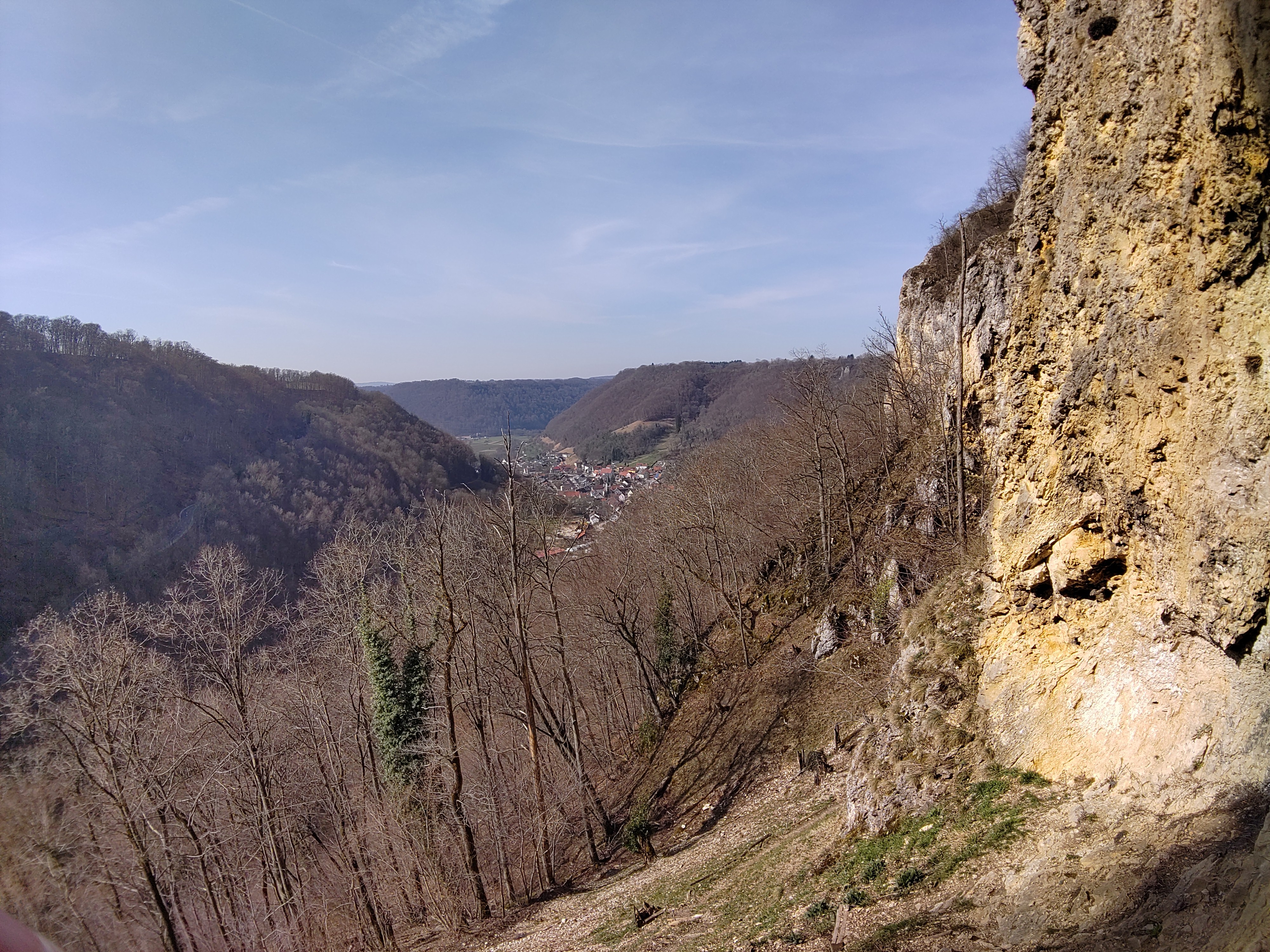
    Erstes draußen Klettern dieses Jahr an der Sylphenwand auf der Schwäbischen Alb. First outdoor climbing this year at Sylphenwand on the Swabian Alb. #klettern #climbing #RockClimbing #outdoor
  • 1 Votes
    2 Posts
    70 Views
    AlpineSavvyA
    Looking for a small, durable pack specifically designed for multi-pitch rock climbing? You‘ve found it with the redesigned Petzl Bug. Here’s a full review. Premium Article available https://www.alpinesavvy.com/blog/the-petzl-bug-multipitch-rock-pack-newest-version
  • 0 Votes
    1 Posts
    52 Views
    pietro87P
    First 8a of the year!! #climbing #rockclimbing #freeclimbing #sportclimbing #bouldering
  • Guidebook XV—Balance

    General News climbing
    1
    2 Votes
    1 Posts
    127 Views
    American Alpine ClubA
    Brooke Raboutou had booked her flight home. She had one final session to send Excalibur 9b+ (5.15c)—an18-move, 40-degree crimpy sport climb near Acro, Italy—before that flight. She felt good about it. She needed the time pressure, similar to a competition. In her mind, two things were true: She might have to walk away from Excalibur for the season, and she could send it during that final session. On Saturday, she began her day like every other, with yoga and meditation in her Airbnb, breakfast, and a warm up at her friends’ climbing wall. It was the warmest day she had had in Italy, a good sign, since she had previously numbed out on the climb. On her first try on the route that day, she fell on the last move. We’re getting into it, that felt good,Raboutou thought. She fell off the third move on her second try, which hadn’t happened in a while. She wasn’t frustrated; this was part of the process. “I felt like I mentally was in a place where I was able to try harder than I had before, and had more of a margin than maybe a month ago, from just training on the climb,” said Raboutou. She rested for 30 seconds and then hopped back on, trying harder than ever. Not every move was perfect, but this time, she stuck the final move from the ground, and time stopped as she clipped the chains. She topped out the feature, making the moment even more special. Every fall, every moment of doubt, all the ripped skin and sore muscles, the days filled with cold weather, were background noise to this moment, this historic climb—Raboutou believing fully in her abilities and achieving something only a few climbers have. With her ascent of Excalibur, Brooke Raboutou became the first woman in the world to climb 5.15c. This cutting-edge success didn’t come out of nowhere. Raboutou has been crushing boulders for the last few years while balancing the Climbing World Cup, the Olympics, and college. In May 2020, she sent Muscle Car (V14), her first of the grade. Her summer bouldering season in Rocky Mountain National Park saw solid sends with The Automator (V13), The Shining (V12/V13), The Wheel of Chaos (V13), Doppelgänger Poltergeist (V13),and Jade (V14). Raboutou also attended the 2020 Tokyo Summer Olympics, earning fifth in the overall combined event (speed, lead, and bouldering). After the Tokyo Olympics, she felt very low and lost for a while. It was a pivotal time—she was a sophomore in college and still figuring out what she wanted to do with her life. She didn’t expect to feel the post-Olympics depression that a lot of athletes deal with. Raboutou worked with a sports psychologist and a therapist to help her process her emotions and goals in this heightened context of elite competition. She started to put her well-being above climbing and training. She is still constantly working on shifting that paradigm. It’s no surprise that in 2021 and 2022, Raboutou sent a handful of V13s and V14s, most of them documented on her Instagram and Mellow Climbing’s YouTube: Euro Trash (V12/8a+) and Euro Roof Low Low (V13/8b) in Little Cottonwood Canyon, Utah; Trieste (V14) in Red Rocks, Nevada; Heritage (V13), La Proue (V13) and Lur (V14) in Switzerland, snagging the FFA for La Proue; and Evil Backwards (V13) in the Mt. Blue Sky area, Colorado. By the end of 2022, only three women had climbed V15, and none had climbed V16. But the dream was there. Early in 2023, Raboutou graduated from the University of San Diego with a degree in marketing—something she was cautioned against since she had a full-time professional climbing career. She also took classes in psychology and was interested in how mental health and climbing interact. Balancing learning and climbing was important to her. “I love climbing so much, but I’ve always believed it cannot be my everything,” said Raboutou. In October of 2023, Raboutou sent Box Therapy (V15/V16) in Rocky Mountain National Park, and she promptly downgraded it from V16 to V15. Her brother, Shawn Raboutou, an elite boulderer who has climbed V17, sent the boulder that same day. In an Instagram post, she wrote, “I first touched this boulder in September 2022 and have not stopped dreaming about it since that day. It took me a whole year to get back... https://americanalpineclub.org/news/2025/8/14/guidebook-xvbalance
  • Prime Day deals on climbing gear

    General News climbing
    1
    0 Votes
    1 Posts
    119 Views
    GrippedG
    Upgrade your rack for less with Prime Day deals The post Prime Day deals on climbing gear appeared first on Gripped Magazine. https://gripped.com/gear/buyers-guide/prime-day-deals-on-climbing-gear/
  • 0 Votes
    1 Posts
    174 Views
    IFSCI
    https://www.youtube.com/watch?v=Wtofs6b_pXE
  • Five Climbing Tips from V17 Climber Noah Wheeler

    General News climbing
    1
    0 Votes
    1 Posts
    157 Views
    GrippedG
    A few suggestions that could improve your spring indoor training sessions The post Five Climbing Tips from V17 Climber Noah Wheeler appeared first on Gripped Magazine. https://gripped.com/news/five-climbing-tips-from-v17-climber-noah-wheeler/
  • James Pearson suggests hard E11 for Echo Wall

    General News climbing
    1
    0 Votes
    1 Posts
    142 Views
    climber-magazineC
    A few weeks after his second ascent of Echo Wall on Ben Nevis, Scotland James shares his thoughts on the route and in particular the grade. https://www.climber.co.uk/news/james-pearson-suggests-hard-e11-for-echo-wall/