Skip to content

Keenan Griscom is Doing Everything Your Parents Tell You Not To Do

General News
1 1 158 1
  • Every year, ice climbers flock to the Ouray Ice Festival to test their skills on the human made ice flows in the park. A select few test their skills on the ice climbing competition wall. Routes are created that include ice, rock, and plywood in the Scottish Gullies section of the ice park. 
    The American Alpine Club sat down with USA ice climbing competitor Keenan Griscom. Griscom was rocking a North Face leopard-print 1996 retro Nuptse puffer and Y2K gray wrap-around sunglasses, as chill as the ice around us. We chatted about growing up competing in ice climbing competitions, his new link up Tommy's X (5.14b) in Clear Creek Canyon's Nomad’s Cave, and his experimental competition headspace. The experiment succeeded clearly, since Griscom took home the gold in the Ouray men's lead finals the next day.

    AAC: You were the youngest American to win the Ouray Elite Mixed Climbing Competition at age 16. When did you start climbing? How did you get into competitive ice climbing?

    Keenan Griscom: My dad actually started me ice climbing when I was four or five here in Ouray. So I've had tools for a long time. And then through Marcus Garcia, [I] found the competition scene and got hooked. I was doing rock comps, and the community in the ice climbing comps was just, so, so good and supportive and friendly, so, as someone who's already into competing, starting the ice comps is just like, oh, this is it. This is a cool spot to be in.

    AAC: What was it like competing at such a young age?

    KG: I don't know, I've been competing since I was nine. It was somewhat second nature. I've always wanted to give it [my] all in the comps. And Ouray was really special because when I started, there weren't any age categories. It was just the open format, and anyone could sign up. So if you were in, you're competing with everyone. My first two seasons, I didn't place particularly well. But it was so cool to be competing with people like Will Gadd and Ryan Vachon and all these epic mixed-climbers and alpinists who I looked up to.

    AAC: What drew you to continue doing competition ice climbing while you fell away from competition bouldering and rock climbing?

    KG: I stopped competing in rock comps mainly because the scene isn't as welcoming. There's a lot more toxic competitive nature there, and a lot of people get really worked up and will take other people down to get a better result. There's not really any of that in the ice climbing crew. Ice climbing comps are really fun. I'm going to stick with that. But I've been rock climbing outside nonstop.

    AAC: On that note, I noticed you put up an alternative finish to Tommy's Hard Route (5.13d)—Tommy's X (5.14b). What is the relationship between route development and ice climbing? How do those two things relate, if at all for you?

    KG: They don't relate a ton since I haven't really done much development for ice or mixed. I've gotten a lot of help from mentors like Marcus, who I met through ice climbing, to teach me development ethics. That route, specifically, it's in a cave near my house, and there's a lot of link ups. I didn't put in any new bolts [for Tommy's X] it was just a new line that hadn't been done yet.

    AAC: And what inspired you to do that?

    KG: Tommy's Hard Route (5.13d) is an old school natural line in a cave that's almost all manufactured. There is this really, really big dead point crux that I always thought was super, super interesting. Then it's over. You do this really gnarly dead point, and it's jugs to the chains. Which is nice, but more sustained climbing is more my style. There's this other route called Predator X (5.13a/b) that comes in from the left and finishes basically directly above that dead point. And one day, I was wondering if I could link those up, and then it'd be like a perfectly straight line of bolts through the wall. Yeah, it ended up being a really interesting crux sequence after the initial crux.

    AAC: That's awesome. You also boulder, can you tell me a little bit more about that?

    KG: Yeah, I grew up almost exclusively sport climbing, and then started to do ...


  • Sport ChannelS Sport Channel shared this topic on

Suggested topics


  • 1 Votes
    1 Posts
    18 Views
    GrippedG
    With his first-go ascent of Vecchio Leone, Wheeler has now flashed six V13s and one V14 The post Noah Wheeler Flashes V13 Two Months After Fully Rupturing A2 Pulley appeared first on Gripped Magazine. https://gripped.com/news/noah-wheeler-flashes-v13-two-months-after-fully-rupturing-a2-pulley/
  • 1 Votes
    1 Posts
    34 Views
    GrippedG
    The inaugural event in London features 16 world-class athletes, including competition GOAT Janja Garnbret and Olympic gold medalist Toby Roberts. The post How to watch some of the world’s best climbers compete in the first-ever Pro Climbing League comp this weekend appeared first on Gripped Magazine. https://gripped.com/news/how-to-watch-some-of-the-worlds-best-climbers-compete-in-the-first-ever-pro-climbing-league-comp-this-weekend/
  • Climber Dies on Peru’s Highest Mountain

    General News climbing
    1
    0 Votes
    1 Posts
    118 Views
    GrippedG
    Two climbers became trapped in a storm on Huascaran, only one was rescued The post Climber Dies on Peru’s Highest Mountain appeared first on Gripped Magazine. https://gripped.com/news/climber-dies-on-perus-highest-mountain/
  • Laura Rogora Repeats New 5.14d in Arco

    General News climbing
    1
    0 Votes
    1 Posts
    132 Views
    GrippedG
    The ascent follows her 5.14d redpoint and 5.14a and 5.14b onsights in Oliana The post Laura Rogora Repeats New 5.14d in Arco appeared first on Gripped Magazine. https://gripped.com/news/laura-rogora-repeats-new-5-14d-in-arco/
  • Found in Translation

    General News climbing
    1
    0 Votes
    1 Posts
    157 Views
    American Alpine ClubA
    Originally published in Guidebook XIII Across the Pacific, on the small island of Taiwan, climber Maurice Chen received an email from Dougald MacDonald, the Executive Editor of the American Alpine Club. It was July 2024, and the summer air hung as heavy as mist. Attached to the email was a large document: the full version of the 2024 Accidents in North American Climbing (ANAC). Chen called his two colleagues at the Taiwan Outdoor Climbers’ Coalition (TOCC), Matt Robertson and Ta Chi Wang. Together, they began their meticulous work—marking pages, circling terms, and discussing any accident relevant to Taiwanese climbing in obsessive detail. The task ahead would be long and tedious. Taiwan is an island shaped like a yam, floating between the South and East China Seas. It sits in the shadow of two superpowers, one threatening to occupy it and another half-heartedly protecting it. A young island by geological standards, it was formed by the collision of two tectonic plates. The island is 89 miles wide and 250 miles long, with its eastern half stitched to its western half by a spine of mountain ranges. Among these ranges are 151 peaks taller than 10,000 feet, with the tallest, Jade Mountain, standing just shy of 13,000 feet. Taiwan is a land of sea and sky. The island’s diverse climate shifts from coastal tide pools to alpine tundra and back to tide pools in less than a hundred miles. Thanks to these rich natural landscapes, the Taiwanese have always embraced outdoor activities such as hiking, mountaineering, diving, biking, surfing, and climbing. The first mountaineering clubs of Taiwan were formed as early as 1905. Chen and Robertson belonged to Taiwan’s third generation of climbers, Wang to the second. The first generation of Taiwanese climbers were born during the Japanese occupation, and were early-century mountaineers, tackling the many tall peaks with traditional expedition and siege-style strategies. Mountaineering and hiking gained mainstream attention when a list of a hundred notable mountains was published in 1972, aptly named “Taiwan’s Hundred Mountains.” The serious Taiwanese mountaineer aspired to climb all hundred. By the late 1970s, mountaineering boots were the go-to climbing shoe, but tales of the Stonemasters had floated across the Pacific. Wang remembers reading an issue of Climbing Magazine that his friends and brought back from the States, but without the internet, information passed slowly. The climbing scene lagged behind the Americans and Europeans by about half a decade. Gradually, Taiwanese climbers began distinguishing rock climbing from mountaineering. When Chen began climbing in the 1990s, free climbing—primarily trad climbing—was already widespread. By the time Robertson arrived in Taiwan in 2002, sport climbing had just begun to gain traction. In the mid-2010s, the indoor climbing scene boomed, and the number of gyms tripled. Due to the limited real estate in the maze-like Taiwanese cities, most of these facilities were bouldering gyms, which gave rise to the fourth generation of Taiwanese climbers, predominantly boulderers. Published annually since 1948, Accidents in North American Climbing documents the year’s most significant and teachable climbing accidents. Get it annually as an AAC member. Each membership is critical to the AAC’s work: advocating for climbing access and natural landscapes, offering essential knowledge to the climbing community, and supporting our members with our rescue benefit, discounts, grants and more.  Chen and Robertson met at Long Dong (meaning “Dragon’s Cave”), a seacliff climbing area on the northern end of the island. Climbers have compared Long Dong with the Shawangunks in New York or Clear Creek Canyon in Colorado, but Wang waves away those comparisons—it cannot be compared because the serenity of home is an incomparable experience. Seacliffs rise out of the Pacific and waves crash behind the belayer, requiring not only knowledge of the rocks but knowledge of the tides. The lines are short and stout, punchy, getting the grade in less than 50 feet in most places. This was before the first climbing gym in Taiwan had opened, and the pair collaborated to pu... https://americanalpineclub.org/news/2025/2/4/guidebook-xiiivolunteer-spotlight
  • 0 Votes
    1 Posts
    173 Views
    AndresA
    #Climbing is so closely associated with what I eat and my weight.I eat a bunch of ice cream and carbs the day before; I'm like 2 lbs heavier when I go to climb, and I'm falling off of V2s and having trouble starting V3s.I eat healthier and don't overeat on the day before; I don't have that extra weight and I'm climbing V3s and falling off V4s.
  • A Letter To Kurt Blair by Luke Mehall

    General News climbing climbingzine
    1
    0 Votes
    1 Posts
    163 Views
    ClimbingZineC
    Dear Kurt,  This is a letter I don’t want to write. Writing is often difficult to get started, but this one is nearly impossible because you are gone, at least in the physical.  It was in the evening of my birthday when I learned that you were presumed dead on Mt. Cook in New Zealand. … https://climbingzine.com/a-letter-to-kurt-blair-by-luke-mehall/
  • Rolled up stick?

    Videos climbing hownot2
    1
    0 Votes
    1 Posts
    139 Views
    HowNOT2H
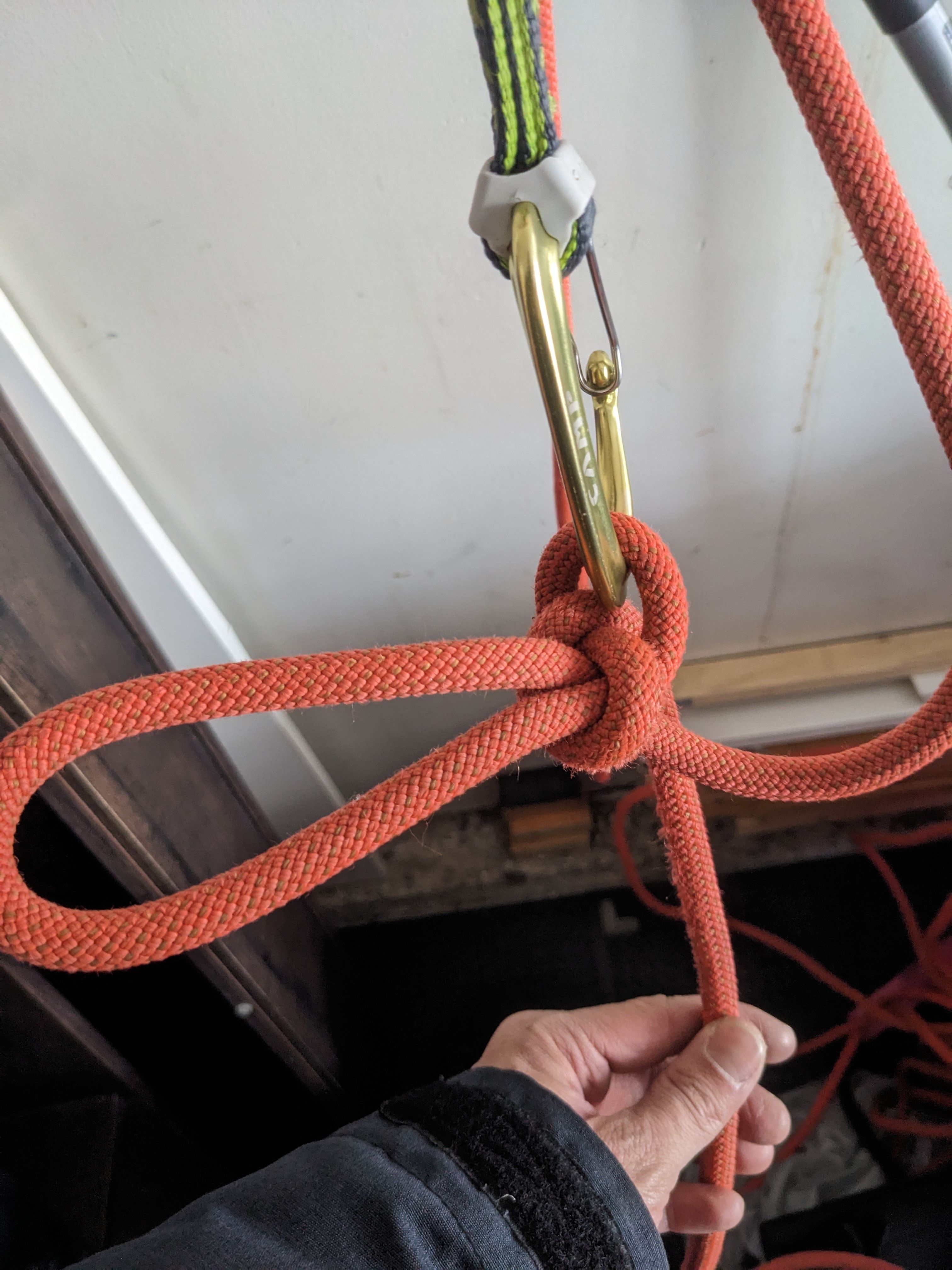
    https://www.youtube.com/watch?v=KsOnOcSe9Dw