Skip to content
  • Feed
  • Categories
  • Recent
  • Tags
  • Popular
  • World
  • Users
Skins
  • Light
  • Brite
  • Cerulean
  • Cosmo
  • Flatly
  • Journal
  • Litera
  • Lumen
  • Lux
  • Materia
  • Minty
  • Morph
  • Pulse
  • Sandstone
  • Simplex
  • Sketchy
  • Spacelab
  • United
  • Yeti
  • Zephyr
  • Dark
  • Cyborg
  • Darkly
  • Quartz
  • Slate
  • Solar
  • Superhero
  • Vapor

  • Default (No Skin)
  • No Skin
Collapse
OpenBeta Forum

OpenBeta Forums

  • FAQ and resources

    Frequently Asked Questions, Community Guidelines, and more


  • General Climbing

    Discussion about general climbing topics. A great place to talk about gear, technique, and the climbing community!


  • OpenBeta

    Discussion about the OpenBeta website, forums, and community


  • Pics and trips

    Share stories and pictures from your climbing trips!


  • News and media

    Share or browse articles, videos, and news about climbing from around the web

    General News
    Local News
    Videos
    Gear

  • Development

    Discussion about OpenBeta (and related projects) development


Log in to post

  • All categories
  • GrippedG
    Five Unrepeated Rockies Big Wall Aid Routes
    GrippedG Gripped

    These big Rockies climbs remain test-pieces for anyone looking to push their aid climbing skills
    The post Five Unrepeated Rockies Big Wall Aid Routes appeared first on Gripped Magazine.


    Link Preview Image
    Five Unrepeated Rockies Big Wall Aid Routes - Gripped Magazine

    These big Rockies climbs remain test-pieces for anyone looking to push their aid climbing skills

    favicon

    Gripped Magazine (gripped.com)


    0 0 0 Reply
  • EpicTVE
    You're about to send the hardest route of your life but your shoes are BROKE
    EpicTVE EpicTV


    0 0 0 Reply
  • climber-magazineC
    Steve McClure repeats Yma O Hyd (again) – on trad gear only
    climber-magazineC climber-magazine

    Steve has returned once again to Skyline Buttress, Gallt yr Ogof in north Wales for his latest mission – a repeat of Yma O Hyd without the pegs in Mission Impossible.


    Link Preview Image
    Steve McClure repeats Yma O Hyd (again) – on trad gear only | Climber Magazine

    Website Description

    favicon

    (www.climber.co.uk)


    0 0 0 Reply
  • GrippedG
    Climbers Return to America’s Highest Peak
    GrippedG Gripped

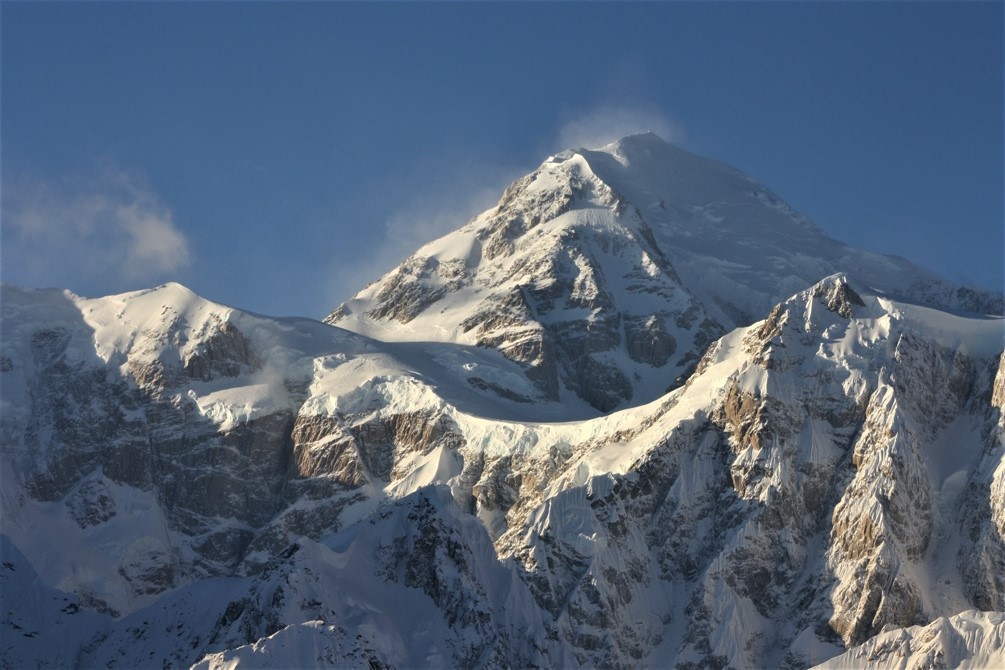
    Nearly 1,000 people have registered to climb Denali this year
    The post Climbers Return to America’s Highest Peak appeared first on Gripped Magazine.


    Link Preview Image
    Climbers Return to America's Highest Peak - Gripped Magazine

    Nearly 1,000 people have registered to climb Denali this year

    favicon

    Gripped Magazine (gripped.com)


    0 0 0 Reply
  • IFSCI
    The first race for Sam Watson 🇺🇸 in front of a home crowd since his new WR #shorts
    IFSCI IFSC


    0 0 0 Reply
  • IFSCI
    The first men's race from IFSC World Cup Denver 🇺🇸 #shorts
    IFSCI IFSC


    0 0 0 Reply
  • IFSCI
    The first Speed race from the first ever IFSC World Cup Denver 🇺🇸 #shorts
    IFSCI IFSC


    0 0 0 Reply
  • GrippedG
    Mary Eden Climbing 50-Metre Roof Crack
    GrippedG Gripped

    Half boulder problem, half trad route, Black Mamba is a wild climb on the White Rim
    The post Mary Eden Climbing 50-Metre Roof Crack appeared first on Gripped Magazine.


    Link Preview Image
    Mary Eden Climbing 50-Metre Roof Crack - Gripped Magazine

    Half boulder problem, half trad route, Black Mamba is a wild climb on the White Rim

    favicon

    Gripped Magazine (gripped.com)


    0 0 0 Reply
  • IFSCI
    Speed finals | Denver 2025
    IFSCI IFSC


    0 0 0 Reply
  • IFSCI
    Speed qualifications | Denver 2025
    IFSCI IFSC


    0 0 0 Reply
  • UK ClimbingU
    Fri Night Vid Sir William and the Quest for the Holy Jug
    UK ClimbingU UK Climbing

    This week's Friday Night Video is a holy quest. We join Sir William Bosi in his crusade to tick Excalibur, Stefano Ghisolfi's 9b+ near Arco, Italy.


    Attention Required! | Cloudflare

    favicon

    (www.ukclimbing.com)


    0 0 0 Reply
  • American Alpine ClubA
    Guidebook XIV—Policy Spotlight
    American Alpine ClubA American Alpine Club
    1. A thing done; a deed.
    2. A written ordinance of Congress, or another legislative body; a statute.
    3. A main division of a play, ballet, or opera.
    4. A play for theater, radio, or television.
    5. An enticing, emotional, or unexpected series of events or set of circumstances.
      EXPLORE, in the waning days of the 118th Congress, met every definition of the words “drama” and “act” as it made its way into becoming law. As I sat at my computer watching Senator Joe Manchin ask for unanimous consent of the bill on the Senate floor, it was not lost on me that years of work, by hundreds of organizations, teetered on the edge of achievement. And it passed in a most glorious fashion. But let me back up just a bit...
      Not too long ago, in early December of 2024, the AAC policy team traveled to Washington, DC, and met up with the Access Fund and American Mountain Guides Association (AMGA). The mission was clear—examine and pursue all avenues to get the EXPLORE Act passed. At that time, attachment to the National Defense Authorization Act (NDAA) was still on the table, as was the possibility of being bundled in with the Continuing Resolution (CR) to keep the government funded. Additionally, there was the less probable route of the bill going “stand-alone” for a unanimous consent vote on the Senate floor, but we sensed that there wasn’t enough floor time, especially given the need to end the lame-duck session of Congress, and the condition that a unanimous consent vote had to actually be unanimous without a single dissenting vote.
      It was an all-hands-on-deck moment for recreation-based organizations—Outdoor Alliance, Outdoor Recreation Roundtable, Surfrider, The Mountaineers, IMBA, Outdoor Industry Association, organizations representing hunting and fishing interests and RV interests, and many, many more orgs, all working simultaneously in an effort to see this historic recreation bill package passed.
      Our small team focused a lot of effort on speaking with the bipartisan group of 16 senators that submitted a joint letter to the Secretaries of Agriculture and the Interior expressing the appropriateness of fixed anchors in Wilderness and wanting a report on the status of the agencies’ respective proposed fixed anchor regulations. The Protecting America’s Rock Climbing (PARC) Act, a component of the EXPLORE Act that serves to recognize recreational climbing (including the use, placement, and maintenance of fixed anchors) as an appropriate use within the National Wilderness Preservation System, further emphasized the intent of those senators, and of Congress more broadly, to preserve the historical and well-precedented practice of fixed anchor utilization in Wilderness.
      It is no secret that the waning days of the 118th Congress were fairly chaotic. Characterized by the forthcoming change of administrations, few clear “unified” priorities, and the pending departure of several longtime members of Congress, the landscape was hard to navigate. We left DC understanding the potential pathways to passage of EXPLORE, but still not certain which vehicle would get it across the finish line. The following week we saw it miss the cut for the NDAA Manager’s Amendment and concentrated on advocating for its inclusion in the CR. As the days drew closer to a potential government shutdown, we came to understand that the CR was likely going to be relatively tight compared to previous iterations, and would probably not allow for bills such as EXPLORE to ride on it. The CR was out for us. That is when we heard that Senator Joe Manchin (I-WV) was considering introducing EXPLORE as a stand-alone bill.
      This was INCREDIBLE news. However, we had some concerns as we knew that the Senate was working off of the House-passed version, which had been passed via unanimous consent (UC) in April of 2024, stewarded by Rep. Bruce Westerman (R-AR). We understood that the Senate wanted the House to address some issues in the bill, but that would require the bill to be sent back to the House for consideration and a vote...which would require time. And there wasn’t any.
      On the morning of December 19, we heard that Senator Manchin was planning to introduce the House version of EXPLORE on the Senate floor for a UC vote. For those tuning into the live broadcast, we had no idea what time the possible introduction would occur. It was observable that Senator Manchin was talking to a group of senators and then left the floor. A few hours later Senator Manchin appeared and presented the EXPLORE Act for consideration via a U...

    Link Preview Image
    Guidebook XIV—Policy Spotlight — American Alpine Club

    EXPLORE—An Act and The Act By AAC Advocacy Director Byron Harvison Photos by AAC member Kennedy Carey

    favicon

    American Alpine Club (americanalpineclub.org)


    0 0 0 Reply
  • American Alpine ClubA
    Guidebook XIV—An Interview with Dougald MacDonald
    American Alpine ClubA American Alpine Club

    How would you describe the scope of the work that goes into making the American Alpine Journal (AAJ)?

    Dougald MacDonald: Producing the AA J is a year-round effort that involves literally hundreds of people. The actual “staff” of the AAJ (who are all part-timers and volunteers) includes more than 15 people, and each year we work with roughly 300 individual climbers and photographers to share their stories.
    The book goes to press in late April, so the peak of the cycle is in March and April. But the work on the following year’s edition starts immediately, plus we prepare and upload online stories all year round. AND we produce The Cutting Edge podcast and the monthly Line newsletter.

    What’s the history of the AAJ? How has it changed over the years?

    DM: The AAJ is coming up on its 100th birthday, and unsurprisingly it has changed quite a lot over the years. It started out as much more of a Club publication, telling the stories of AAC members’ adventures. In the 1950s, with the rise of Himalayan climbing, the book started to become much more international. But it was really Ad Carter—who edited the AAJ for 35 years, starting in the 1960s—who created the wide-ranging, international publication it is today. We no longer focus mostly on the activities of AAC members—though we’re very happy to tell those stories when we can—but instead try to document all significant long routes and mountain exploration anywhere in the world, by climbers from every country.
    For both the AAJ and Accidents in North American Climbing (ANAC), the most significant changes of the last 10 to 15 years have been 1) the introduction of color photography throughout both books and 2) the launch of the searchable online database of every AAJ and ANAC article ever published.

    What’s an example of a unique challenge the editors have to deal with when making the AAJ?

    DM: One challenge is that we come out so long after many of the climbs actually happened. So, readers may have seen something about any given climb several times, in news reports and social media posts and even video productions. But the AAJ has never been in the breaking news business. Instead, we aim to provide perspective and context. Perspective in that we don’t have any vested interest that might slant a story one way or another, and context on the history and geography that helps readers really understand the significance of a climb, how it relates to what’s been done before, and what other opportunities might be out there. Another big challenge is language barriers, since we work with people from all over the world. We’re fortunate to work in English, which so many people around the world use these days. We also use skilled translators for some stories, and online translation tools have improved dramatically in recent years. But there’s still a lot of back-and-forth with authors to ensure we’re getting everything just right.

    What’s an example report that was really exciting for you to edit from the last few years?

    DM: For me, personally, the coolest stories are the ones that teach me about an area of the world—or a moment in climbing history—that I knew nothing about before starting to work on a story. In the upcoming book, for example, we have stories about winter climbing in Greece (who knew?) and a mountain range in Venezuela that’s gorgeous and has peaks over 16,000 feet. Unfortunately, that range is rapidly losing its snow cover and its small glaciers. AAJ senior editor Lindsay Griffin, who is editing the story, did some cool climbs in the range in 1985, and the difference between his photos and those from today is shocking.

    Are there any big differences in process between making the AAJ and ANAC?

    DM: The biggest differences are just the scale and scope of the two books: The AAJ is a nearly 400-page book that tries to cover the entir...


    Link Preview Image
    Guidebook XIV—An Interview with Dougald MacDonald — American Alpine Club

    How would you describe the scope of the work that goes into making the American Alpine Journal ( AAJ )? Dougald MacDonald: Producing the AA J is a year-round effort that involves literally hundreds of people. The actual “staff” of the AAJ (who are all part-timers and volunteers) includes

    favicon

    American Alpine Club (americanalpineclub.org)


    0 0 0 Reply
  • GrippedG
    Adam Ondra Flashes a Jimmy Webb V13
    GrippedG Gripped

    Versace V13 is the Czech climber's latest hard bouldering first-go ascent
    The post Adam Ondra Flashes a Jimmy Webb V13 appeared first on Gripped Magazine.


    Link Preview Image
    Adam Ondra Flashes a Jimmy Webb V13 - Gripped Magazine

    Versace V13 is the Czech climber's latest hard bouldering first-go ascent

    favicon

    Gripped Magazine (gripped.com)


    0 0 0 Reply
  • GrippedG
    Nicolai Užnik Sending Mount Doom V17
    GrippedG Gripped

    The sit start to Hide and Sick V14 is Austria's hardest boulder problem
    The post Nicolai Užnik Sending Mount Doom V17 appeared first on Gripped Magazine.


    Link Preview Image
    Nicolai Užnik Sending Mount Doom V17 - Gripped Magazine

    The sit start to Hide and Sick V14 is Austria's hardest boulder problem

    favicon

    Gripped Magazine (gripped.com)


    0 0 0 Reply
  • GrippedG
    Will Bosi Climbing Excalibur 5.15c
    GrippedG Gripped

    Watch the V17 climber take down one of the hardest sport routes in the world
    The post Will Bosi Climbing Excalibur 5.15c appeared first on Gripped Magazine.


    Link Preview Image
    Will Bosi Climbing Excalibur 5.15c - Gripped Magazine

    Watch the V17 climber take down one of the hardest sport routes in the world

    favicon

    Gripped Magazine (gripped.com)


    0 0 0 Reply
  • American Alpine ClubA
    Guidebook XIV—Member Spotlight
    American Alpine ClubA American Alpine Club

    Spacewalking outside the Hubble Space Telescope, John Grunsfeld wasn’t that much closer to the stars than when he was back on the surface of Earth, but it certainly felt that way. The sensation of spacewalking, of constantly being in freefall, but orbiting Earth fast enough that it felt like weightlessness, was more of a thrill than terrifying. Looking out to the vaster universe, seeing the moon in its proximity, the giant body of the sun, stole his breath away. Grunsfeld was experiencing a sense of exploration that very few humans get to. It was deeply moving, a sensation he also got in the high glaciated ranges when he’d look around and be surrounded by crevasses and granite walls of rock and ice. Throughout his life, he couldn’t help but seek out the most inhospitable places on the planet, and even beyond.
    You might think that there is nothing similar between climbing and spacewalking. But when you ask John Grunsfeld, former astronaut and NASA Chief Scientist—and an AAC member since 1996—about the similarities, the connections are potent.
    The focus required of spacewalking and climbing is very much the same, Grunsfeld says. Just like you can’t perform at your best on the moves of a climb high above the ground without intense focus on the next move and the currents of balance in your body, so, too, suited up in the 300-pound spacesuit, with 4.3 pounds per square inch of oxygen, and 11 layers of protective cloth insulation, you still have to be careful not to bump the space shuttle, station, or telescope as you go about the work of repairing and updating such technology—the job of the mission in the first place. Outside the astronaut’s suit is a vacuum, and Grunsfeld is not shy about the stakes. “Humans survive seconds when vacuum-exposed,” he says. With such high risks, it’s a shame that the AAC rescue benefit doesn’t work in space.
    Not only is spacewalking, like climbing, inherently dangerous, it also requires intense focus, and it can be a lot like redpointing. Grunsfeld reflects that “it’s very highly scripted. Every task that you’re going to do is laid out long before we go to space. We practice extensively.” In Grunsfeld’s three missions to the Hubble Space Telescope, his spacewalks were a race against the clock—the battery life and limited oxygen that the suit supplied versus the many highly technical tasks he had to perform to update the Hubble instruments and repair various electronic systems. It’s about flow, focus, and execution—skills and a sequence of moves that he had practiced again and again on Earth before coming to space. Similarly, tether management is critical. Body positioning, and not getting tangled in the tether, is important in order to not break something—say, kick a radiator and cause a leak that destroys Hubble and his fellow astronauts inside. But to Grunsfeld, the risk is worth it. The Hubble Space Telescope is “the world’s most significant scientific instrument and worth billions of dollars. Thousands of people are counting on that work.”
    Indeed, perhaps a little more is at stake than a send or a summit.
    Growing up in Chicago, Grunsfeld’s mind first alighted on the world of science and adventure through the National Geographic magazines he devoured, and a school project that had an outsized effect. Grunsfeld’s peers were assigned to write a brief biography of people like George Washington and Babe Ruth. Rather than these more familiar figures, Grunsfeld was assigned to research the life of Enrico Fermi—a nuclear physicist who was instrumental in the Manhattan Project, the creator of the world’s first artificial nuclear reactor, and a lifelong mountaineer. Suddenly, science and the alpine seemed deeply intertwined.
    Grunsfeld started climbing as a teenager, top-roping in Devil’s Lake, back when the cutting edge of gear innovation meant climbing by wrapping the rope around your waist and tying it with a bowline. Attending a NOLS trip to the Wind River Range and further expanding on his rope and survivor skills truly cemented his love of climbing in wild spaces. Throughout the years, climbing was a steady beat in his life, a resource for joy. He would climb in Lumpy Ridge, the Sierra, the White Mountains of New Hampshire, Tahquitz, Peru, Bolivia, and many other places with his wife, Carol, his daughter, and close friends like Tom Loeff, another AAC member.
    If climbing was a steady beat, his fascination with space and astrophysics would be a starburst. At first, his application to become a NASA astronaut was denied, but in 1992, Grunsfeld joined the NASA Astronaut Corps. It would shape the rest of his life’s work. Between 1...


    Link Preview Image
    Guidebook XIV—Member Spotlight — American Alpine Club

    No Mountain High Enough The Intersections between Space Travel and High-Altitude Mountaineering Member Spotlight: Dr. John Grunsfeld, Astronaut By Hannah Provost Spacewalking outside the Hubble Space Telescope, John Grunsfeld wasn’t that much closer to the stars than when he was back on the s

    favicon

    American Alpine Club (americanalpineclub.org)


    0 0 0 Reply
  • EpicTVE
    This one goes deeper than the pockets.
    EpicTVE EpicTV


    0 0 0 Reply
  • EpicTVE
    Simon Padin | Success
    EpicTVE EpicTV


    0 0 0 Reply
  • GrippedG
    The New Metolius Basic Stick Clip
    GrippedG Gripped

    An easy-to-use lightweight option that will make your days at the crag safer and more fun
    The post The New Metolius Basic Stick Clip appeared first on Gripped Magazine.


    Link Preview Image
    The New Metolius Basic Stick Clip - Gripped Magazine

    An easy-to-use lightweight option that will make your days at the crag safer and more fun

    favicon

    Gripped Magazine (gripped.com)


    0 0 0 Reply

Welcome to the OpenBeta Forums!

Our goal is to provide a friendly, welcoming, helpful online community of people passionate about climbing. Remember to follow the Community Guidelines, and have fun!

Online Users


  • Login

  • Login or register to search.

OpenBeta
Free climbing database built & run by climbers.

Get involved
How to get involved Dev onboarding
Social
Forum (this site!) Discord chatInstagramLinkedInTwitter
The Org
About usOpenBeta vs othersOur blogMake a donationBuy a T-shirtBecome a Partner
Source code
OpenBeta on GitHubClimb catalogGraphQL APISandbag library Docs site
  • First post
    Last post
0
  • Feed
  • Categories
  • Recent
  • Tags
  • Popular
  • World
  • Users