Skip to content

Simon Padin | Success

Videos
1 1 188 1

Suggested topics


  • The Huayhuash Is Still Open

    General News climbing
    1
    0 Votes
    1 Posts
    41 Views
    American Alpine ClubA
    The mountain’s scale, as seen through my own eyes, terrified me. Film and photographs, a 60-year-old trip report, and even the topo sketches I had stared at for hours before arriving—none of them captured the size, or the exposure, or the weight of it. Lying in its eastern valley, listening to the static hiss of rain against nylon, I couldn’t sleep. I had been catfished by my own dreams. Any confidence I had built up in the Cordillera Blanca now felt suspect. Bootpacks and snow anchors set in place by mountain guides, lively refugios and high camps, and broader terrain that was mostly walkable; these were all crutches that fed into my delusion, now taken away by just one close glimpse at Jirishanca. On June 2, 2025, after a few hours of tossing and turning in my sleeping bag, I set off with my partner Eric Kanopkin to climb Jirishanca Chico, a 5,400-meter peak in the Cordillera Huayhuash range of Peru. The grassy hills that rolled up to Niñacocha, the meltwater of the Rondoy Glacier, were flooded with rainwater and cow manure. Our double boots squished loudly as we went up the valley, waking and startling cattle as we passed. We were indiscreet spies under the cover of midnight’s darkness, clambering across no-man’s-land toward what we assumed was our acclimatization objective. The first time I had seen the Huayhuash was back in 2024, from the popular hilltop sport climbing crag of Hatun Machay. I was there with Maxwell Hodges, a friend who helped introduce me to the climbing life—as well as to the Cordillera Blanca. That day, we were sunning ourselves on rock, a happy respite from slogging up the Blanca’s sloping glaciers. “Why don’t we head there?” I had asked him, pointing toward the jagged, snowcapped massif of the Huayhuash. All we knew then of that place was the famous climbing accident recounted in Joe Simpson’s Touching the Void. While descending a 6,000-meter peak called Siula Grande in 1985, Simpson broke his leg and fell into a crevasse, which ultimately resulted in one of the most epic survival stories in mountaineering. Max just laughed. We weren’t ready. He was right; we could barely lead the bolted 5.10s at Hatun without our legs shaking. Throughout a season of climbing the high peaks of the Cordillera Blanca and another year of climbing in Colorado, I could not stop thinking about the Huayhuash. Max and I climbed tourist peaks like Chopicalqui, Tocllaraju, and Pisco, and since we were always surrounded by other climbers and guides from all over the world, it was easy enough to mimic the common patterns of ascension even on our dirtbag budget. We followed the well-worn paths made by pack mules and beater taxis. Throughout our adventures, I kept my head up to admire the condors, untethered by the ground’s limits, as we were. The Huayhuash represented something different to me. Unlike the Blanca, it hosts no regular climbing activity; it’s harder to reach and has a higher concentration of more technical peaks. The number of climbers coming into the range each year can be counted on one hand. A significant reason for that lies in its history. The Huayhuash was closed off to climbing in the late 1980s into the ‘90s, as a result of the violent hegemony of a Maoist terrorist group called El Sendero Luminoso. Foreign climbers were turned away from the remote area for years, and the Huayhuash faded off of ticklists. Even after its reopening, the Huayhuash brought in limited climbing activity, while the Blanca, just hours to its north, expanded in popularity. After leaving Peru in 2024, I was still drawn to the Huayhuash, but not just for the austere beauty of its mushroom-capped ridges and dramatic summit pinnacles. The mystique that shrouded the range, the lingering stigma among climbers, was what really captivated me. It was simply bizarre to me that two ranges, the Huayhuash and the Blanca, so close and similar in geography, could be perceived so differently by climbers. Stoked, ambitious, and just out of college, I was determined to go find out for myself. Once the sun rose, warm colors illuminated a world of winter above us. Eric and I were finally on the Rondoy Glacier, heading toward Chico’s northeast face. To climber’s right, Jirishanca’s north ridge was a sweeping ramp of snow and ice into the golden and pink heavens. That was the ultimate route that we were preparing for on Chico, a goal that ironically seemed farther out of reach the closer we got to it. I was worried that I was already in over my head, but my fear was dissipating from the restless night before. Dwarfed by the apu, the Quechua’s mountain gods, I was moment... https://americanalpineclub.org/news/2026/2/15/the-huayhuash-is-still-open
  • How strong is this anchor?

    Videos climbing hownot2
    1
    0 Votes
    1 Posts
    43 Views
    HowNOT2H
    https://www.youtube.com/watch?v=vyWKGBJGmzY
  • The Summer Alpine Set Up

    Videos climbing
    1
    0 Votes
    1 Posts
    125 Views
    EpicTVE
    https://www.youtube.com/watch?v=MsUTCaPNjLs
  • The secrets behind the Scarpa Instinct Family

    Videos climbing
    1
    0 Votes
    1 Posts
    150 Views
    EpicTVE
    https://www.youtube.com/watch?v=xHpuZ44Ikd0
  • 0 Votes
    3 Posts
    287 Views
    IvesI
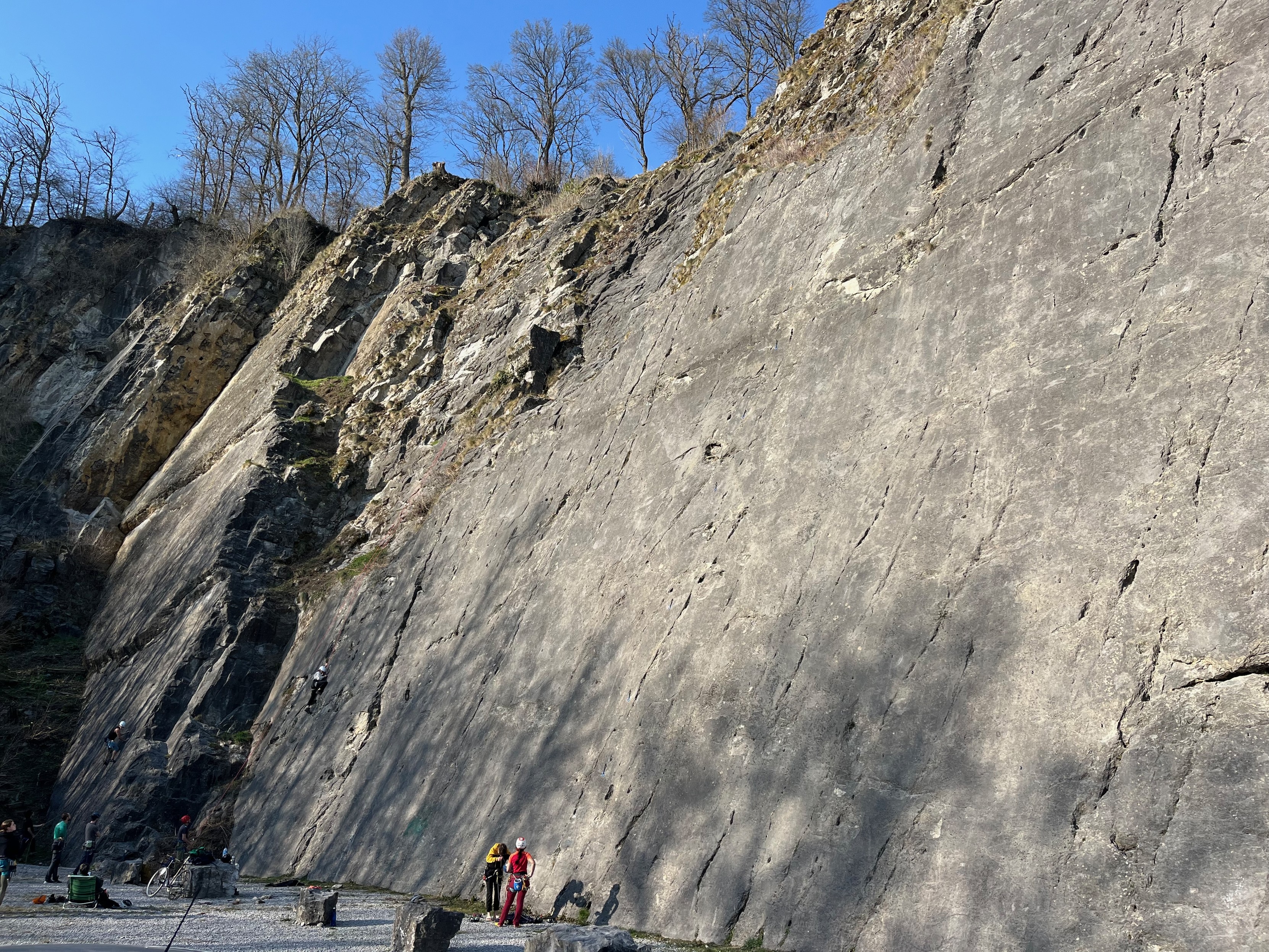
    Today was an absolutely beautiful day to start #climbing outside again. We went back to Landelies, near Charleroi because it's a warm south-facing crag with ample opportunity to get reacquainted with tiny rock holds after climbing indoors on plastic during the winter.
  • The Line: News From the Cascades to the Karakoram

    General News climbing
    1
    0 Votes
    1 Posts
    180 Views
    American Alpine ClubA
    The west face of Sloan Peak, about 20 kilometers southwest of Glacier Peak in Washington’s North Cascades, has seen a flurry of winter climbing in the past five years. But one obvious plum remained: a direct route up the center of the face, with an intimidating crux pitch leading past steep rock to a hanging dagger. In January, Northwest climbers Justin Sackett and Michael Telstad picked that plum, climbing nearly 2,000 feet up the west face in a long day. We’re sharing Telstad’s report for AAJ 2025 here. The west face of Sloan Peak (7,835’) has been at the forefront of my mind for about as long as I’ve been winter climbing. Despite numerous attempts, the main face was unclimbed to the summit in winter until 2022, with the completion of Superalpine (IV WI3/4, Legallo-Roy). In 2023, the Merrill-Minton (a.k.a. The Sloan Slither, 1,600’, IV WI4+) climbed partway up the center of the face, then moved rightward to join Superalpine. A previous winter line on Sloan Peak, Full Moon Fever (IV AI4 R 5.8, Downey-Hinkley-Hogan, 2011), started on the west face then angled up the northern shoulder. Directly above the point where the Merrill-Minton cuts right to easier ground, a large hanging dagger is guarded by gently overhanging, compact gneiss. Known as one of the biggest unpicked plums in the North Cascades, the direct line past the dagger was going to get climbed sooner or later—it was just a question of by whom and in what style. When a perfect weather window arrived in the forecast, I convinced Justin Sackett to drive up from Portland for an attempt. Early on January 19, 2025, we stepped away from the car and into the rainforest. We reached the base of the route at first light. Following the Merrill-Minton for the first three pitches, we encountered climbing up to WI5 R—a far cry from the moderate ice reported on the first ascent. Below the dagger, we took a short break and got ready for an adventure. I’d chosen to leave the bolt kit behind. This route deserved an honest attempt on natural gear before being sieged. After traversing back and forth a few times, I chose my line to the ice and started up. The rock on this portion of the wall is highly featured but compact and fractured. Just about every seam that might take gear was packed full of frozen moss; finding decent protection was a slow, agonizing process. A steep crux near the end of the pitch held potential for a huge fall, but an improbable no-hands rest allowed me just enough of a reprieve to get good gear. Justin joined me in the sun above the dagger, and we continued up a pitch of perfect blue water ice to snow slopes. Rather than finish via the standard scramble route, we opted for an obvious corner system above us. Reminiscent of Shaken Not Stirred on the Mooses Tooth in Alaska, this narrow slot held steps of water ice broken by sections of steep snow—the ideal finish to an excellent climb. Arriving on the windless summit around 3:45 p.m., we took a short break and began our descent along the southeast shelf. After what felt like an eternity of steep downclimbing, we post-holed back to the cars, arriving a bit after 8 pm. Our direct new route is called Borrowed Time (1,900’, IV WI5 M7). In a sad footnote to the Sloan Peak story, a climber was severely injured in a long fall on the mountain about a week after the ascent reported above, apparently attempting one of the initial pitches on either this line or the Merrill-Minton route. The climber was pulled from the face in a dramatic helicopter mission—the five-minute video from Snohomish County Sheriff’s Office is a remarkable window into such rescues. We wish the climber well in his recovery. Crashhhhh! rang through the perfectly still night. To say this woke up August Franzen, Cody Winckler, and me would be a lie. How could we sleep? We were camped below the biggest objective of our lives, on our first trip to Pakistan, alone in the Yashkuk Yaz Valley aside from our two cooks and liaison officer back at base camp, surrounded by the most beautiful, terrifying, inspiring, and chaotic mountains we’d ever seen. Now, on the glacier beneath Yashkuk Sar I (6,667m), about a mile past our advanced base camp, I poked my head out the tent door to see a gargantuan avalanche roaring down the peak’s north wall, its powder cloud billowing toward us. “Should we run?” asked August. https://americanalpineclub.org/news/2025/2/25/the-line-from-the-cascades-to-the-karakoram
  • Beautiful weather for #climbing .

    Pics and trips climbing
    1
    1
    0 Votes
    1 Posts
    163 Views
    IvesI
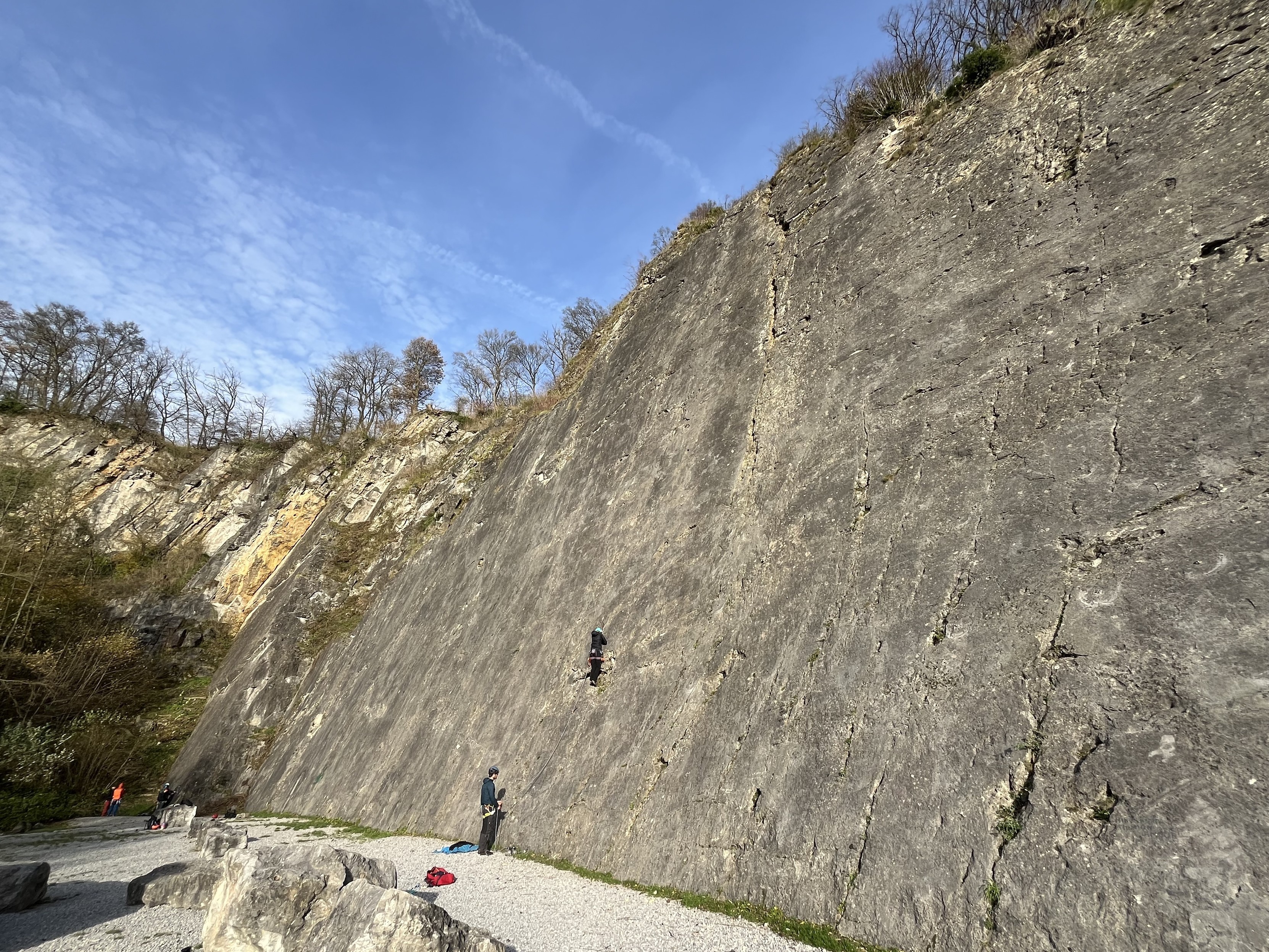
    Beautiful weather for #climbing .
  • 0 Votes
    8 Posts
    572 Views
    Joel KinF
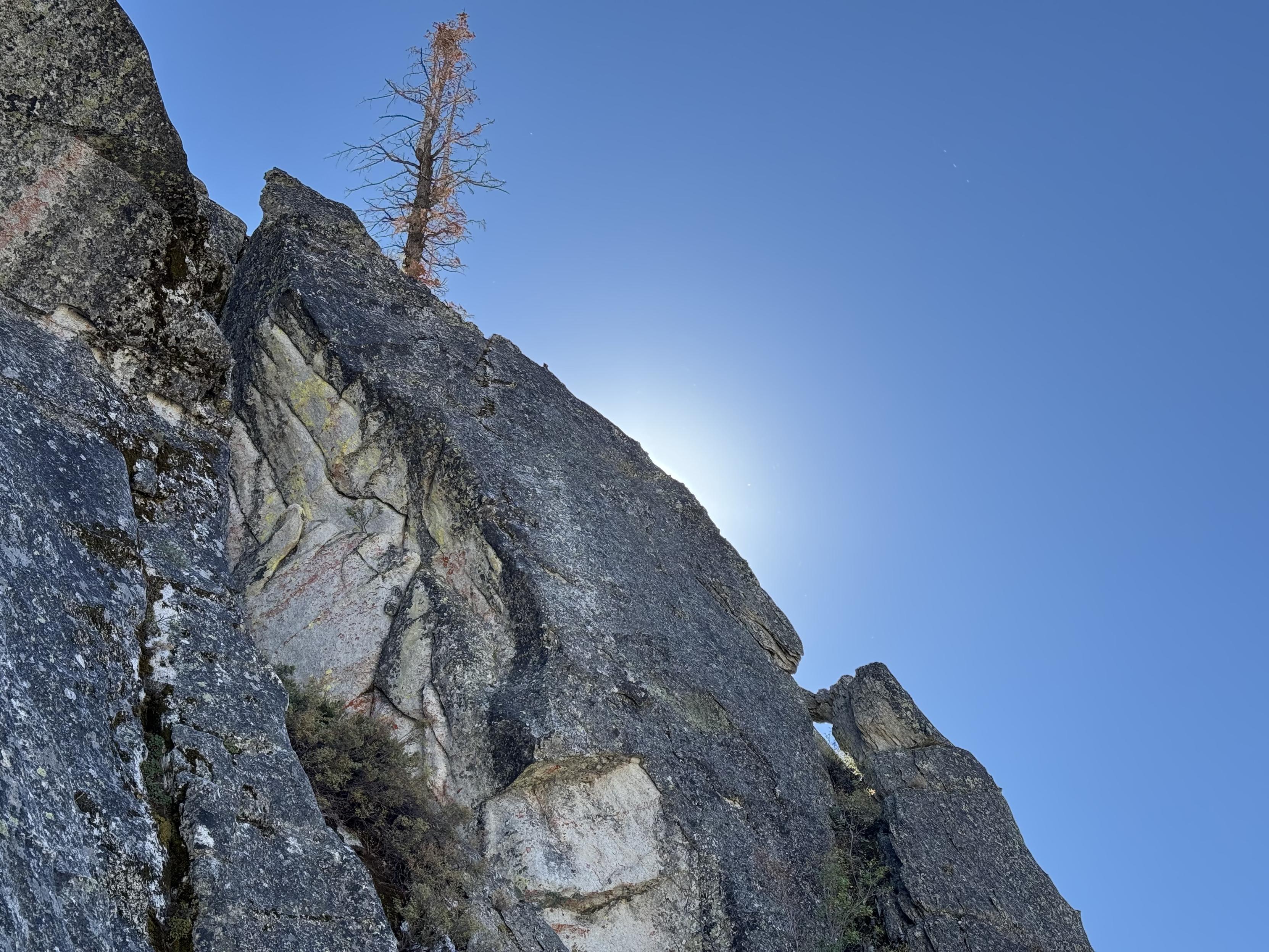
    I spent the day climbing at Lover’s Leap and I’m totally blissed out. #climbing