Skip to content

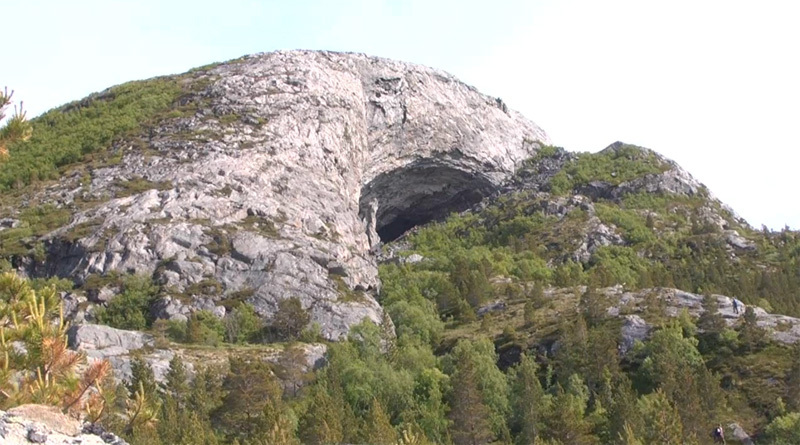
Alex Megos Sends a Flatanger 5.14d on His Second Go

General News
1 1 132 1

Suggested topics


  • How Strong is a Moldy Cam

    Videos climbing hownot2
    1
    0 Votes
    1 Posts
    68 Views
    HowNOT2H
    https://www.youtube.com/watch?v=c4N_-LljPoc
  • Guidebook XIV—Member Spotlight

    General News climbing
    1
    0 Votes
    1 Posts
    153 Views
    American Alpine ClubA
    Spacewalking outside the Hubble Space Telescope, John Grunsfeld wasn’t that much closer to the stars than when he was back on the surface of Earth, but it certainly felt that way. The sensation of spacewalking, of constantly being in freefall, but orbiting Earth fast enough that it felt like weightlessness, was more of a thrill than terrifying. Looking out to the vaster universe, seeing the moon in its proximity, the giant body of the sun, stole his breath away. Grunsfeld was experiencing a sense of exploration that very few humans get to. It was deeply moving, a sensation he also got in the high glaciated ranges when he’d look around and be surrounded by crevasses and granite walls of rock and ice. Throughout his life, he couldn’t help but seek out the most inhospitable places on the planet, and even beyond. You might think that there is nothing similar between climbing and spacewalking. But when you ask John Grunsfeld, former astronaut and NASA Chief Scientist—and an AAC member since 1996—about the similarities, the connections are potent. The focus required of spacewalking and climbing is very much the same, Grunsfeld says. Just like you can’t perform at your best on the moves of a climb high above the ground without intense focus on the next move and the currents of balance in your body, so, too, suited up in the 300-pound spacesuit, with 4.3 pounds per square inch of oxygen, and 11 layers of protective cloth insulation, you still have to be careful not to bump the space shuttle, station, or telescope as you go about the work of repairing and updating such technology—the job of the mission in the first place. Outside the astronaut’s suit is a vacuum, and Grunsfeld is not shy about the stakes. “Humans survive seconds when vacuum-exposed,” he says. With such high risks, it’s a shame that the AAC rescue benefit doesn’t work in space. Not only is spacewalking, like climbing, inherently dangerous, it also requires intense focus, and it can be a lot like redpointing. Grunsfeld reflects that “it’s very highly scripted. Every task that you’re going to do is laid out long before we go to space. We practice extensively.” In Grunsfeld’s three missions to the Hubble Space Telescope, his spacewalks were a race against the clock—the battery life and limited oxygen that the suit supplied versus the many highly technical tasks he had to perform to update the Hubble instruments and repair various electronic systems. It’s about flow, focus, and execution—skills and a sequence of moves that he had practiced again and again on Earth before coming to space. Similarly, tether management is critical. Body positioning, and not getting tangled in the tether, is important in order to not break something—say, kick a radiator and cause a leak that destroys Hubble and his fellow astronauts inside. But to Grunsfeld, the risk is worth it. The Hubble Space Telescope is “the world’s most significant scientific instrument and worth billions of dollars. Thousands of people are counting on that work.” Indeed, perhaps a little more is at stake than a send or a summit. Growing up in Chicago, Grunsfeld’s mind first alighted on the world of science and adventure through the National Geographic magazines he devoured, and a school project that had an outsized effect. Grunsfeld’s peers were assigned to write a brief biography of people like George Washington and Babe Ruth. Rather than these more familiar figures, Grunsfeld was assigned to research the life of Enrico Fermi—a nuclear physicist who was instrumental in the Manhattan Project, the creator of the world’s first artificial nuclear reactor, and a lifelong mountaineer. Suddenly, science and the alpine seemed deeply intertwined. Grunsfeld started climbing as a teenager, top-roping in Devil’s Lake, back when the cutting edge of gear innovation meant climbing by wrapping the rope around your waist and tying it with a bowline. Attending a NOLS trip to the Wind River Range and further expanding on his rope and survivor skills truly cemented his love of climbing in wild spaces. Throughout the years, climbing was a steady beat in his life, a resource for joy. He would climb in Lumpy Ridge, the Sierra, the White Mountains of New Hampshire, Tahquitz, Peru, Bolivia, and many other places with his wife, Carol, his daughter, and close friends like Tom Loeff, another AAC member. If climbing was a steady beat, his fascination with space and astrophysics would be a starburst. At first, his application to become a NASA astronaut was denied, but in 1992, Grunsfeld joined the NASA Astronaut Corps. It would shape the rest of his life’s work. Between 1... https://americanalpineclub.org/news/2025/5/19/guidebook-xivmember-spotlight
  • 0 Votes
    1 Posts
    122 Views
    GrippedG
    We talk with Jake Tiger to learn more about his experience establishing Hollow Man V9, Squamish's newest highball line The post Stunning 36-Foot Highball in Squamish Gets First Ascent appeared first on Gripped Magazine. https://gripped.com/profiles/stunning-36-foot-highball-in-squamish-gets-first-ascent/
  • The Height of Mountains

    General News climbing
    1
    0 Votes
    1 Posts
    194 Views
    American Alpine ClubA
    Originally published in Guidebook XIII Eric Gilbertson was on the summit of Rainier. Or was he? With the differential GPS set up in front of him, he hopped from foot to foot—it was cold up there, but he was also anxious to confirm his suspicions by applying a more rigorous measuring process to the changes he could see with the naked eye. Funded by the AAC Research Grant, he had used an Abney level to measure the relative heights of Columbia Crest, the traditional icecap summit of Rainier where he stood now, as compared to the actual highest point in the summit area—the southwest edge of the crater rim, which was a rock outcrop. Based on the Abney level, Columbia Crest was distinctly shorter than the southwest rim. With calculations spinning in his head, he noticed the unmistakably dirtier, more trampled quality of Columbia Crest, the way dirt and rocks seemed to muddle the pure snow dome, bringing a wilted quality to the landscape, especially compared to what he could remember seeing in old photographs of Rainier’s summit. He would have to wait to process the data from the differential GPS to be sure exactly by how much the summit had changed. Yet more than the relief of seeing his hypothesis likely confirmed, a bigger question loomed: Were mountains, which so many consider the stalwart indicator of the unmoving, the unchanging, the steady, actually shrinking? And what would it mean if they were? Eric Gilbertson is a man of many lists and projects. Each of his projects coalesces around peakbagging, and now surveying. The idea to research the current heights of the five remaining icecap peaks in the Lower 48, which includes Rainier, started when Mt. St. Helens eroded off the top 100 highest peaks of Washington list. Gilbertson had discovered that St. Helens had been steadily eroding by four inches each year since 1989, and because of that, St. Helens had technically fallen off the top 100 list around 2021. As an exacting, rigorous person who prizes accuracy above all in his life’s work, Gilbertson was intrigued—were there more discrepancy in the heights of the other top 100 Washington mountains? If his goal was to do all the hundred highest, and be the first to do them all in winter no less, he wanted to do it right. Before fact-checking the hundred highest list, before measuring the status of the five historical icecap peaks of the Lower 48, Eric and his brother Matthew had been pursuing what they called “The Country High Points Project.” Though the brothers are each respected alpinists in their own right, with several technical first ascents and inclusions in the American Alpine Journal to Eric’s name, they are peakbaggers at heart. Which is why they conceived of the project to get to the highest point of every country in the world, as defined by UN members and observer states, plus Antarctica. Thus, there are 196 highpoints on their list. So far, Eric has gotten to the highest point of 144 countries and Matthew has ticked 97. Eric says he sees the project as a framework for creating opportunities for really interesting adventures. “[It] kind of requires every kind of skill set you can imagine. It definitely requires high-altitude mountaineering, like K2 is on there and Everest, but it also requires jungle bushwhacking in the Caribbean or hiking through the desert in Chad. There is so much red tape you have to get through—like in West Africa there are so many police checkpoints so you have to navigate those—so many languages you have to speak, logistics to make it interesting, and the other interesting aspect is [sometimes we don’t know which] is the highest mountain, so in comes the survey equipment.” When, in 2018, the brothers determined the highest point in Saudi Arabia had actually been misunderstood all along, Eric became particularly interested in exactness and discovery, and how these elements added an interesting complexity to getting to the great heights of the world. A lot more was unknown than one might first imagine, given our information-overload culture. Not knowing if the mountain you were climbing was even the highest point in the country added a challenge that seemed to surpass even first ascenting. Yet Eric is not always flitting across to the farthest reaches of the world. As an associate teaching professor at Seattle University, he is rooted a good portion of the year, so he is constantly finding ways to feed his passion for discovery and peakbaggi... https://americanalpineclub.org/news/2025/2/10/guidebook-xiii-researchgrant
  • Will Bosi makes the second ascent of Excalibur, 9b+

    General News climbing
    1
    1 Votes
    1 Posts
    118 Views
    UK ClimbingU
    Will Bosi has made the second ascent of Stefano Ghisolfi's Excalibur, 9b+, at Drena, near Arco, Italy. https://www.ukclimbing.com/forums/t.php?n=778536
  • 0 Votes
    4 Posts
    313 Views
    kodrausK
    I was happy to get through this slab in the end after dedicating a session to falling off it. The "fifth position" foot sequence was the trick.#climbinghttps://vimeo.com/1051000251
  • Adam Ondra’s Change P1 5.15a Gets Rare Repeat

    General News climbing
    1
    0 Votes
    1 Posts
    155 Views
    GrippedG
    https://gripped.com/news/adam-ondras-change-p1-5-15a-gets-rare-repeat/
  • 0 Votes
    1 Posts
    170 Views
    UK ClimbingU
    When sharing news of his ascent of Weeping Arete, Dan Varian avoided the fanfare that one might associate with the first ascent of a boulder lauded as one of Gritstone's last great problems. https://www.ukclimbing.com/forums/t.php?n=772598