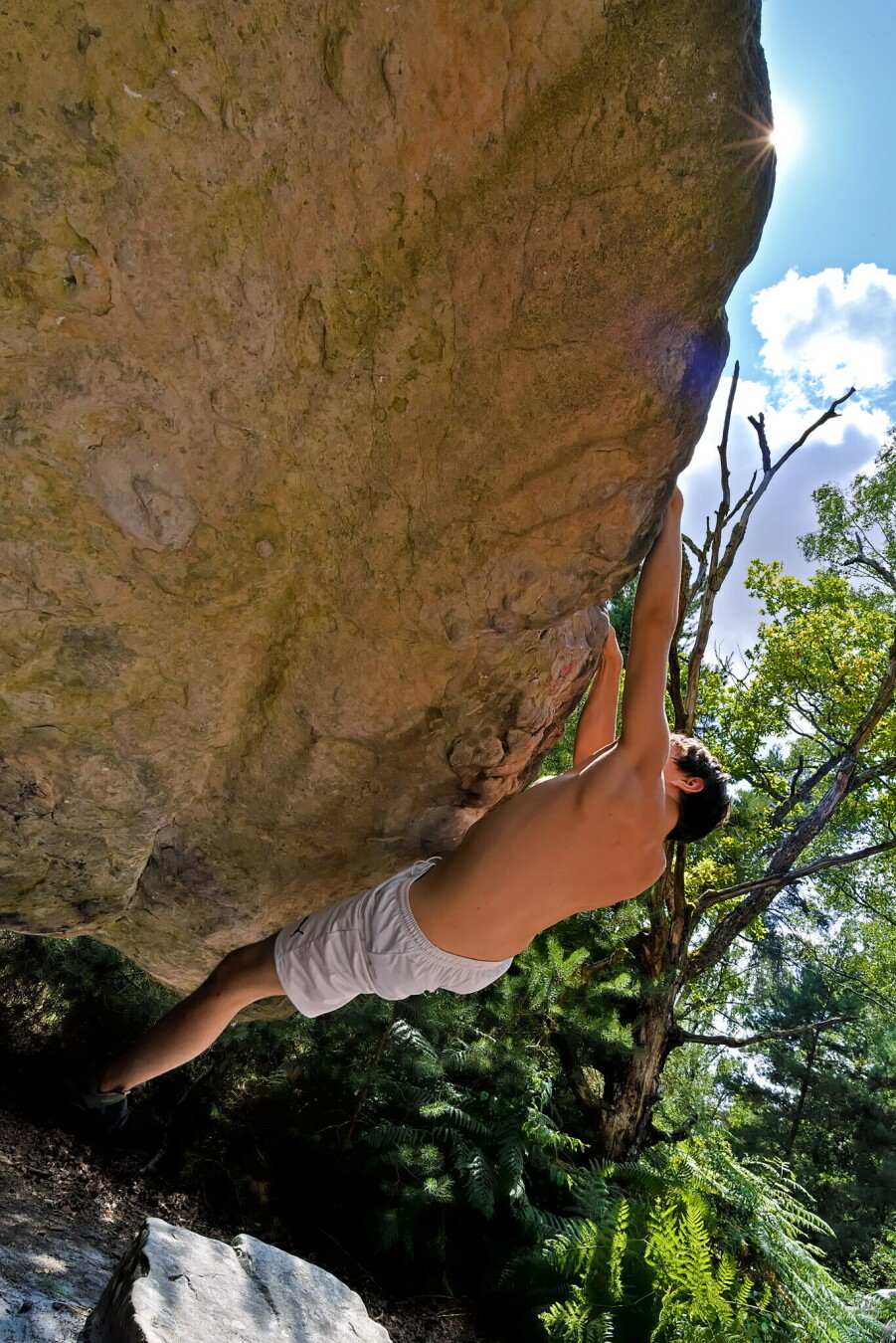
Why should climbers be exempt from the bolting ban?
-
I know a lot of climbers and Hick is certainly representing that group of people.
But, it sure seems like fixed climbing anchors are a perfect example of "permanent installations,” exactly what's banned in wilderness.
Why should climbers be exempt? Because they're my friends and have fun climbing?
Explain to me why it's wrong to ban permanent installations in wilderness or why climbing is special.
https://coloradosun.com/2024/09/23/senators-hickenlooper-climbing-anchors-wilderness/
-
I know a lot of climbers and Hick is certainly representing that group of people.
But, it sure seems like fixed climbing anchors are a perfect example of "permanent installations,” exactly what's banned in wilderness.
Why should climbers be exempt? Because they're my friends and have fun climbing?
Explain to me why it's wrong to ban permanent installations in wilderness or why climbing is special.
https://coloradosun.com/2024/09/23/senators-hickenlooper-climbing-anchors-wilderness/
@colo_lee That's a tough ask unfortunately, especially in the Forest area (Parks are separate), since they aren't currently hiring any seasonal employees soon.
At least not until there is more budget clarity.

Forest Service halts 2025 seasonal hires amid budget crunch
Officials outlined decisions to scale back hiring for temporary and seasonal positions as funding for the next fiscal year is stuck in limbo.

E&E News by POLITICO (www.eenews.net)
-
@colo_lee That's a tough ask unfortunately, especially in the Forest area (Parks are separate), since they aren't currently hiring any seasonal employees soon.
At least not until there is more budget clarity.
Forest Service halts 2025 seasonal hires amid budget crunch
Officials outlined decisions to scale back hiring for temporary and seasonal positions as funding for the next fiscal year is stuck in limbo.
E&E News by POLITICO (www.eenews.net)
@louis I don't understand. Please explain?
Are you saying that the FS doesn't have the staff to ban anchors? And so we should allow them? Or am I just confused?
-
@louis I don't understand. Please explain?
Are you saying that the FS doesn't have the staff to ban anchors? And so we should allow them? Or am I just confused?
@colo_lee Sorry, perhaps I misunderstood. It's just to stop a ban.
I thought it was more about safety maintenance and trail maintenance and such.
My bad!
-
@colo_lee Sorry, perhaps I misunderstood. It's just to stop a ban.
I thought it was more about safety maintenance and trail maintenance and such.
My bad!
@louis no problem.
I find this issue puzzling. (I'm also surprised when our senator is making the same arguments as Joe Manchin.)
Trail maintenance is certainly an issue. And it seems like allowing more fixed anchors would only make the maintenance issue worse.
When I've asked my climbing friends about this, they've basically said they like climbing and the fixed anchors make that better and safer. And after all, they're doing less damage than those other people. Which I find unconvincing ...
-
@louis no problem.
I find this issue puzzling. (I'm also surprised when our senator is making the same arguments as Joe Manchin.)
Trail maintenance is certainly an issue. And it seems like allowing more fixed anchors would only make the maintenance issue worse.
When I've asked my climbing friends about this, they've basically said they like climbing and the fixed anchors make that better and safer. And after all, they're doing less damage than those other people. Which I find unconvincing ...
@colo_lee I think it's a tough situation, and like anything, there is a happy medium.
By encouraging climbing, safety, etc. you can both bring tourism to parks and forests.
But by bringing too much traffic, you can of course create pollution, etc.
And just who is qualified to put in permanent anchors is a good question. Cleaning routes of loose rocks is important, but how do you ensure people aren't intentionally chipping new holds?
Nuanced questions with next-to-no funding.
-
@colo_lee I think it's a tough situation, and like anything, there is a happy medium.
By encouraging climbing, safety, etc. you can both bring tourism to parks and forests.
But by bringing too much traffic, you can of course create pollution, etc.
And just who is qualified to put in permanent anchors is a good question. Cleaning routes of loose rocks is important, but how do you ensure people aren't intentionally chipping new holds?
Nuanced questions with next-to-no funding.
@louis thanks -- that gives some useful addl insight.
I can see why the simplest answer from the wilderness admin perspective is "climbing anchors are clearly permanent installations. Thus banned".
If that's not what we the people want, then Congress needs to update the law. This seems to be what Hick et. al. are trying to do. Funding must be included.
I'm still unconvinced that we should modify the definition of wilderness to say "some permanent installations are ok". How wild is wild?
-
@louis thanks -- that gives some useful addl insight.
I can see why the simplest answer from the wilderness admin perspective is "climbing anchors are clearly permanent installations. Thus banned".
If that's not what we the people want, then Congress needs to update the law. This seems to be what Hick et. al. are trying to do. Funding must be included.
I'm still unconvinced that we should modify the definition of wilderness to say "some permanent installations are ok". How wild is wild?
@colo_lee Great questions all around. To which I have no answers.
Ideally there would be some sort of a governing body deciding anchors on this area are acceptable this other area, they are not.
Or limit the number of anchors in a sepecific location, etc.
But, to your point, funding is necessary for that. And the climbing community isn't exactly the most potent economic force out there.
Parks and forests always lack the attention they deserve, since they don't generate revenue.
-
@colo_lee Great questions all around. To which I have no answers.
Ideally there would be some sort of a governing body deciding anchors on this area are acceptable this other area, they are not.
Or limit the number of anchors in a sepecific location, etc.
But, to your point, funding is necessary for that. And the climbing community isn't exactly the most potent economic force out there.
Parks and forests always lack the attention they deserve, since they don't generate revenue.
@louis thanks -- this has been useful for me trying to think about this issue. Appreciate the conversation!
-
 D devnull moved this topic from World on
-
I know a lot of climbers and Hick is certainly representing that group of people.
But, it sure seems like fixed climbing anchors are a perfect example of "permanent installations,” exactly what's banned in wilderness.
Why should climbers be exempt? Because they're my friends and have fun climbing?
Explain to me why it's wrong to ban permanent installations in wilderness or why climbing is special.
https://coloradosun.com/2024/09/23/senators-hickenlooper-climbing-anchors-wilderness/
@colo_lee@mstdn.social @louis@indieweb.social your question is a good one, and is one that has many facets that allow for seemingly endless discussion. I won't pretend to know it all, but I will try to explain some of those facets.
One part is that the updates to the Wilderness Act make it next to impossible to install bolts for climber protection, as it requires the registration and manual approval before bolts can be added. My understanding is that for an already resource-starved agency, this would essentially cause the legitimate process to be so consumed by red tape that bolting would cease to exist.
Another part is that rock climbing is and has long been considered a legitimate use of recreating on public land. The addition of bolts is fairly minimal and leaves next to no trace on the wall itself. On any given climbing route you'd be hard pressed to locate the bolts unless you knew what you were looking for.
Allowing bolting to continue won't cause parks and wilderness to overflow with climbers blasting their punk rock and trashing the place, if that were the case it would've happened already.
Yet another facet argues that the trace left behind by bolts pales in comparison to many other forms of recreation. Equestrian trails leaving mounds of horse poop to rot (definitely not "leave no trace"!), mountain bikers wearing away trails, semi-permanent huts for cross-country skiiers, etc.
Yet a couple 1"x1" pieces of metal are going to destroy the mountain...?
-
@colo_lee@mstdn.social @louis@indieweb.social your question is a good one, and is one that has many facets that allow for seemingly endless discussion. I won't pretend to know it all, but I will try to explain some of those facets.
One part is that the updates to the Wilderness Act make it next to impossible to install bolts for climber protection, as it requires the registration and manual approval before bolts can be added. My understanding is that for an already resource-starved agency, this would essentially cause the legitimate process to be so consumed by red tape that bolting would cease to exist.
Another part is that rock climbing is and has long been considered a legitimate use of recreating on public land. The addition of bolts is fairly minimal and leaves next to no trace on the wall itself. On any given climbing route you'd be hard pressed to locate the bolts unless you knew what you were looking for.
Allowing bolting to continue won't cause parks and wilderness to overflow with climbers blasting their punk rock and trashing the place, if that were the case it would've happened already.
Yet another facet argues that the trace left behind by bolts pales in comparison to many other forms of recreation. Equestrian trails leaving mounds of horse poop to rot (definitely not "leave no trace"!), mountain bikers wearing away trails, semi-permanent huts for cross-country skiiers, etc.
Yet a couple 1"x1" pieces of metal are going to destroy the mountain...?
-
@colo_lee@mstdn.social @louis@indieweb.social your question is a good one, and is one that has many facets that allow for seemingly endless discussion. I won't pretend to know it all, but I will try to explain some of those facets.
One part is that the updates to the Wilderness Act make it next to impossible to install bolts for climber protection, as it requires the registration and manual approval before bolts can be added. My understanding is that for an already resource-starved agency, this would essentially cause the legitimate process to be so consumed by red tape that bolting would cease to exist.
Another part is that rock climbing is and has long been considered a legitimate use of recreating on public land. The addition of bolts is fairly minimal and leaves next to no trace on the wall itself. On any given climbing route you'd be hard pressed to locate the bolts unless you knew what you were looking for.
Allowing bolting to continue won't cause parks and wilderness to overflow with climbers blasting their punk rock and trashing the place, if that were the case it would've happened already.
Yet another facet argues that the trace left behind by bolts pales in comparison to many other forms of recreation. Equestrian trails leaving mounds of horse poop to rot (definitely not "leave no trace"!), mountain bikers wearing away trails, semi-permanent huts for cross-country skiiers, etc.
Yet a couple 1"x1" pieces of metal are going to destroy the mountain...?
@devnull @louis Great -- this is the kind of info I was looking for.
The update Hick & others are proposing would be the one that requires reg & approval of new bolts? So, your worry is that it effectively regulates away climbing bolts because of resource limits?
That's very different positioning than what I've seen. Namely that this update is supposed to save the ability to place bolts. Would be ironic for it to effectively end it.
1/2
-
@devnull @louis Great -- this is the kind of info I was looking for.
The update Hick & others are proposing would be the one that requires reg & approval of new bolts? So, your worry is that it effectively regulates away climbing bolts because of resource limits?
That's very different positioning than what I've seen. Namely that this update is supposed to save the ability to place bolts. Would be ironic for it to effectively end it.
1/2
@devnull @louis Does the proposed update apply just to wilderness areas or more broadly to public lands? My thinking is that those are very different uses: I'm all for climbing, biking, camping, horse infrastructure on FS and NPS land, it's specifically wilderness where I'm questioning "permanent installations".
And yeah, horses on trail suck. I'm glad no bikes in wilderness. I'd like it if there were also no horses. Poop, trail destruction, a disaster in the rain and mud.
2/2
-
@devnull @louis Does the proposed update apply just to wilderness areas or more broadly to public lands? My thinking is that those are very different uses: I'm all for climbing, biking, camping, horse infrastructure on FS and NPS land, it's specifically wilderness where I'm questioning "permanent installations".
And yeah, horses on trail suck. I'm glad no bikes in wilderness. I'd like it if there were also no horses. Poop, trail destruction, a disaster in the rain and mud.
2/2
@colo_lee@mstdn.social no, not quite.
Hickenlooper, et al. are writing a bill to request additional guidance and to protect the ability to bolt in the wilderness, among other things. It's a response to the original issue from the NPS and US Forest service.
A good summary of the original issue and potential access threat is summarized by the Access Fund here
-
@colo_lee@mstdn.social no, not quite.
Hickenlooper, et al. are writing a bill to request additional guidance and to protect the ability to bolt in the wilderness, among other things. It's a response to the original issue from the NPS and US Forest service.
A good summary of the original issue and potential access threat is summarized by the Access Fund here
@devnull Thanks.
Reading that article, the analogy that occurred to me is trails. I don't object at all to trails in wilderness areas. And it's ok for the trails to be "permanent installations": with drainage, bolted down steps, etc.
The climbing infrastructure seems very similar, thinking of bolts as trails.
And like trails, we should control where they are. Social trails should be discouraged and blocked when found.
(Again, I'm just talking about wilderness areas, not all public lands.)

Hello! It looks like you're interested in this conversation, but you don't have an account yet.
Getting fed up of having to scroll through the same posts each visit? When you register for an account, you'll always come back to exactly where you were before, and choose to be notified of new replies (either via email, or push notification). You'll also be able to save bookmarks and upvote posts to show your appreciation to other community members.
With your input, this post could be even better 💗
Register Login