Skip to content

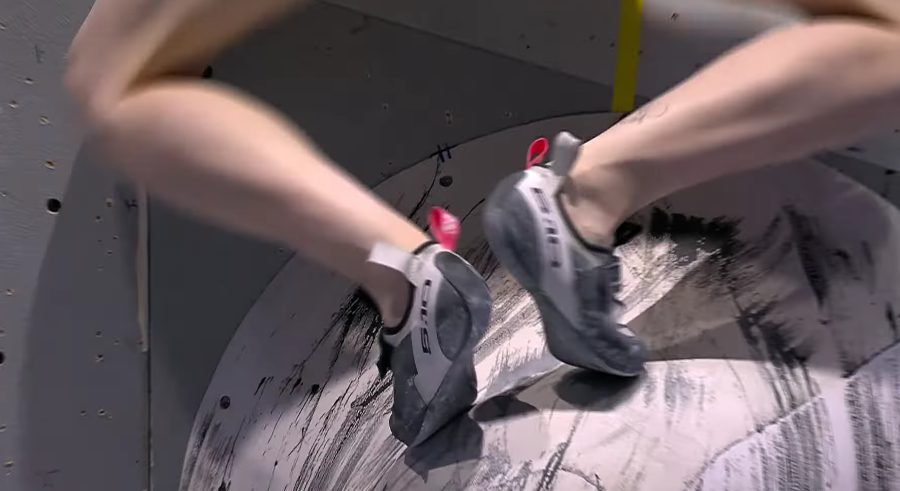
WTF Is Up With The IFSC Camera Work?

General News
2 2 230

Suggested topics


  • The Prescription—The Stacked Rappel

    General News climbing
    1
    0 Votes
    1 Posts
    33 Views
    American Alpine ClubA
    Rappelling is one of the most accident-prone facets of climbing, with improper/incomplete setup being an all-too-common cause of misadventure. In the 2025 ANAC, we featured an accident that involved a rappel fatality from a difficult ice/mixed route in the Canadian Rockies. Steep, multi-pitch winter climbing combines a challenging environment with the technical complexities of big-wall climbing. Gloved hands, copious gear, and often-cumbersome clothing can impede the usual streamlined rappel setup and safety checks. As John Godino mentioned in his 2025 ANAC Know the Ropes feature, the stacked rappel can help ameliorate these issues by promoting “More efficient rappels with reduced risk—what’s not to like?”   At the end of 2024, a very experienced climber named Dave Peabody (48) fell to his death while rappelling from a route on the Stanley Headwall. Alik Berg was Peabody’s partner on that day. Berg wrote to ANAC: Dave and I had been regular climbing partners for about 12 years, with many seasons of winter, alpine, and rock climbing. On December 26, we headed to the Stanley Headwall to climb Drama Queen (170m, WI6 M7). This was a fairly routine climbing day for us. That morning, we saw teams on the neighboring climbs French Reality and Dawn of the Dead. We topped out at dusk (around 5 p.m.) and began rappelling by headlamp. We both used an ATC-Guide on our belay loops and a prusik backup on our leg loops. The last pitch (P4) was the steepest, and we climbed on a single rope (blue) with the second rope (red) as a tag line. The pitch was short enough to be rappelled with the blue rope, while we left red fixed at the beginning of the pitch to pull ourselves back into the anchor atop P3.  This awkward rappel was partly free hanging, and pulling back into the belay required care to not disturb a large, dripping ice dagger. Dave descended first. I soon joined him. He had already begun setting up the next rappel, threading the red rope through the anchor and joining the two ropes with a single flat overhand knot. The P3 anchor is a pair of modern bolts with Fixe rap rings. There was enough space on the small ice ledge to not be crowded, and we busied ourselves with the routine tasks of rigging the next rappel. I pulled the blue rope, verbally confirming with Dave that the joining knot was in place before making the final tug and pulling up the tail to add a stopper knot. We tied an additional stopper knot in the red rope before tossing it off. We noted a bit of a tangle in the red rope that we’d deal with on the way down. Dave readied himself to start the rappel. I was distracted with untangling and tossing the remaining rope from the ledge and did not directly observe his connection to the ropes. He started the rappel, moving normally. As Dave descended, my gaze at that moment was on the overhand knot joining the rope ends. I sensed something was off but couldn’t register what it was. At this point, Dave fell. The interval between sensing something was amiss to when Dave started falling was very short, maybe one to two seconds or fewer. There was enough time to register this thought but not enough to assess, let alone react. I believe he was about five to 10 meters below the anchor when he fell—not when he first stepped off the ledge and weighted the system. In the immediate aftermath, I became fixated on something being “off” with the knot and that being the likely point of failure. It wasn’t until reaching the ground the next morning that it became clear that the knot was not the cause of the accident. When Dave fell, I reacted by grabbing the free-running (red) rope and squeezing hard enough to melt my gloves and burn my fingers, but not enough to slow his fall. In the darkness, I could not see him at the base, only the faint glow of his headlamp. It was about 6 p.m. The team on French Reality had already left the area. The party on Dawn of the Dead had descended, traversed the base of the wall, and were around the corner and out of earshot. About 15 minutes after the accident, their headlamps reappeared as they looped back into view near valley bottom—about one kilometer northwest of my location. I was able to yell down, and they turned around. At 6:45 p.m., they reached the base, and we could communicate properly. It was then that they realized the severity of the situation and activated their inReach.  Dave and I had both carried a cell ... https://americanalpineclub.org/news/2026/1/20/the-prescriptionthe-stacked-rappel
  • Guidebook XV—Member Spotlight: Rob Mahedy

    General News climbing
    1
    0 Votes
    1 Posts
    101 Views
    American Alpine ClubA
    Rob Mahedy, a 59-year-old cancer survivor from Crested Butte, Colorado, arrived in Alaska this spring with a purpose: to summit Mt. Hayes via the Washburn route. No stranger to high-altitude climbs—he’s soloed Mt. Earnslaw in New Zealand, Island Peak in Nepal, and Denali (Mt. McKinley)—Mahedy encountered a different kind of challenge this time. In Fairbanks, he heard reports of a milder winter and below-average snowpack, signs of a shifting climate he could not ignore. He adjusted course, choosing not to summit this year but to climb as far as the famed knife ridge, saving the final push for another expedition. As with his own survival, the lesson was clear: adaptation is not a sign of weakness—it’s wisdom. “I didn’t get to the top,” Mahedy said in an interview shortly after his eight days on Mt. Hayes, “but I do consider it a successful reconnaissance climb.” First climbed in 1941 with low-tech gear and legendary grit, the Washburn route to the Mt. Hayes summit is still considered one of Alaska’s great mountaineering achievements. Known formally as the North Ridge, the route’s reputation rests not only on its technical difficulty, but on the boldness of those who first dared to climb it. Towering 13,832 feet and rising more than 8,000 feet from the valley floor in just over two miles, Hayes is the tallest peak in the eastern Alaska Range—and one of the steepest in the country. So formidable is its Northeast Face that it wasn’t summited again until 1975, when climbers Charles R. Wilson and Steve Hackett led a four-person team across the ridge. In the American Alpine Journal that year, Wilson recalled sections so narrow and soft that “you could not put your feet side by side”—a place where progress toggled between precision and peril. Mahedy remembers a previous climb that took him to the top of Denali—the classic West Buttress, a route that was also pioneered by Bradford Washburn. Climbing with a small group at first, he broke off and made his way up during a 21-day adventure. “I stood atop the summit alone,” he recalled. “I had a clear summit day and could see down the Susitna River to Cook Inlet and west to the Bering Sea.” He descended for six days on skis. With Hayes, he was searching for a similar moment of stillness. To begin his Mt. Hayes climb along the Washburn route, Mahedy flew to Anchorage and then boarded the Alaska Railroad for the 12-hour trip to Fairbanks, where his local fact-finding began. A number of questions ran through Mahedy’s mind as he met up with experienced climbers in Fairbanks. “What am I up for, what am I getting myself into?” he wondered. “These people have local knowledge, so what went through my mind was, ‘What can I learn?’ ” Mahedy was confident about withstanding the bitter cold temperatures, which can drop below −4°F with windchill factors below −22°F. Even with his experience in Alaska and Nepal, he knew to be wary of the glacier travel and potential crevasse navigation ahead of him. Weighing heavier on Mahedy was how cancer would affect his strength and stamina. Mahedy, a muscular six-foot-four alpinist, left New Jersey for Crested Butte as a young man and quickly took to the mountains like a local. He hiked, skied, cycled, and climbed with the quiet intensity of someone who doesn’t just visit wild places but needs them and absorbs the solitude. A carpenter by trade, he’s helped restore many of the historical commercial buildings in Crested Butte’s bucolic downtown, shaping the town with the same hands that have gripped ice tools on Himalayan ridges. But his passion lies beyond the summits—deep in the hidden recesses of the backcountry. “I seek out remote mountain ranges that are not heavily visited,” he said. “I follow bighorn, mountain goats, elk, caribou—sometimes bear and wolverine—looking for freshwater springs, and often I’ll stumble on evidence of the people who were here before us.” For Mahedy, wilderness exploration isn’t just about elevation—it’s about connection, and the quiet stories the land can tell. Whether it’s a summit or a century ride, Mahedy tends to meet the landscape on its own terms—and rarely turns back. But his battle with aggressive bladder cancer and lung cancer since the middle of 2024 has taken its toll on his health and fitness. Last November, a tumor was removed from his abdomen along with his bladder. Doctors fashioned a replacement neobladder using material from his small intestine. Then his cancer—urothelial cell carcinoma—was found to have metastasized in his lungs, requiring weeks of chemotherapy. https://americanalpineclub.org/news/2025/8/14/guidebook-xvmember-spotlight-rob-mahedy
  • 0 Votes
    1 Posts
    91 Views
    IFSCI
    https://www.youtube.com/watch?v=AwG2ZSXhPJA
  • Mary Eden Climbing 50-Metre Roof Crack

    General News climbing
    1
    0 Votes
    1 Posts
    143 Views
    GrippedG
    Half boulder problem, half trad route, Black Mamba is a wild climb on the White Rim The post Mary Eden Climbing 50-Metre Roof Crack appeared first on Gripped Magazine. https://gripped.com/video/mary-eden-climbing-50-metre-roof-crack/
  • 0 Votes
    1 Posts
    128 Views
    IFSCI
    https://www.youtube.com/watch?v=kkSdrix59l8
  • 0 Votes
    1 Posts
    253 Views
    The Dude of PhotographyT
    Throwback to some #bouldering shenanigans in #fontainebleau. #font #bleau #outdoor #climbing
  • 10 Rock Climbing Falls for Your Entertainment

    General News climbing
    1
    0 Votes
    1 Posts
    131 Views
    GrippedG
    From little whips to ground falls, here are some short clips to distract you today The post 10 Rock Climbing Falls for Your Entertainment appeared first on Gripped Magazine. https://gripped.com/video/10-rock-climbing-falls-for-your-entertainment/
  • 0 Votes
    1 Posts
    155 Views
    climbingC
    Awardees will undertake projects that address barriers to sustainable climbing access while promoting conservation and stewardship https://www.climbing.com/news/access-fund-justice-equity-diversity-and-inclusion-in-climbing/