Skip to content

Janja Garnbret Wins 20th Boulder Gold at World Cup

General News
1 1 173

Suggested topics


  • 0 Votes
    1 Posts
    42 Views
    CBC SudburyC
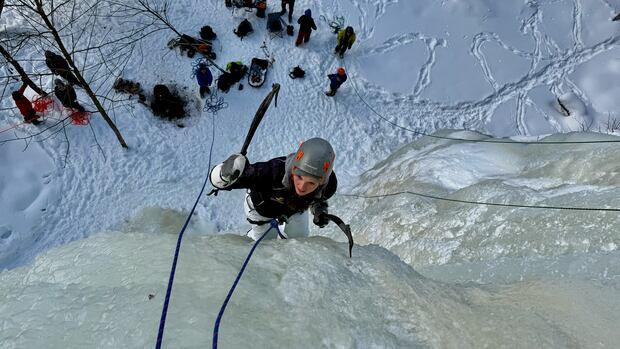
    Ice climbing festival to make chilly debut in Sault Ste. Marie areaIce Fest will bring climbers of all levels to the rarely explored Gros Cap Bluffs, as well as Searchmont, for a weekend of ice climbing, instructional clinics and live music.#festival #climbing #ice #SaultSteMarie #GrosCapBluffs #Searchmonthttps://www.cbc.ca/news/canada/sudbury/ice-climbing-festival-sault-9.7102951?cmp=rss
  • The Line—Reward and Risk on Kaqur Kangri

    General News climbing
    1
    0 Votes
    1 Posts
    101 Views
    American Alpine ClubA
    Three teams will be honored with Piolets d’Or in Italy this December, and all three contributed feature articles about their climbs to the 2025 American Alpine Journal (AAJ). Tom Livingstone wrote about his and Aleš Česen’s new route on Gasherbrum III in Pakistan; Dane Steadman described the first ascent of Yashkuk Sar, also in Pakistan, with August Franzen and Cody Winckler; and Spencer Gray told the story of climbing the southwest arête of Kaqur Kangri in Nepal with Ryan Griffiths. There’s a lot to love about Spencer’s AAJ piece —it documents an amazing ascent. But we were also struck by the final passage, in which he reflects on the inherent and sometimes insidious risks of Himalayan alpinism. No one got hurt on the climb of 6,859-meter Kaqur Kangri, but afterward Spencer tallied 20-plus minor incidents that each could have ended very badly. Honest self-assessments like this are essential to a long life in the mountains, so we’ve shared Spencer’s thoughts here for readers to consider in light of their own climbing. Objectives like the southwest arête of Kaqur Kangri used to be what most climbing was: trying something kind of hard, an inconvenient distance from home, and relying on imagination as much as effort to turn a thing dreamt into a thing done. There are still plenty of places to contrive that same experience. We just have to look harder—and be willing to court risk in an unpredictable operating environment.  Our team didn’t have what we’d consider a close call, but in debriefing, I still counted 23 discrete times when the risk ticked up. A mule nearly broke my knee with a kick when I tried to bring it into camp one morning. On our first day of climbing, we hustled up a ramp that was probably at the outside edge of the ricochet zone of the upper serac band. Two days later, Ryan [Griffiths] and I both simultaneously realized that we were pushing our unroped luck on low-angle but hard-frozen talus above the west face. “If we slip here, it’s to the bottom, eh?” I said. Of four minor rockfall incidents, we mitigated two by our choice of protected belays and bivvies. Another was friendly fire: On rappel, I chucked a baseball-sized rock so the ropes wouldn’t dislodge it. But I misaimed, and the rock bounced down the snow slope and nailed Ryan in the shoulder. I reasoned that Ryan had probably done something in a prior life to deserve getting punched in the clavicle. He was less sure. On day three, below the snowfield, we pulled through suspended, stacked blocks in a roof that would have chopped the rope had they dislodged. On the upper headwall, my ice tool tethers got tangled behind a cam after I had campused out a diagonal rail. I couldn’t reverse the move, and I couldn’t continue until I had unthreaded the tools. Half growling, half screaming, I locked off on one arm, frontpoints screeching, and freed myself. When he followed, Ryan simply lowered out and jugged.  On the descent, Ryan and I had probably our riskiest moment when we crossed a 40-foot-wide wind slab partway down the upper northwest face. It appeared suddenly, a shallow pocket of cross-loaded danger in an otherwise stable snowpack. The tension on the slope and the soft, hollow thump as our boots and ice tools pressed through the snow put us both on edge. But with no other signs of failure or propagation, and a morning of downclimbing a similar aspect and angle above us, we each judged it safe enough to proceed. An hour before we regained the base of the mountain, fed up with navigating the messy corners of the final glacier, we briefly but obtusely committed to soloing steep glacial ice, embedded with crushed pebbles, as we traversed 15 feet above the bottom of a closed crevasse. We were spurred on by our friend Matt’s tiny light in the distance and the promise of fresh Snickers. Perhaps a week on the mountain and the tedious descent had dulled our nose for risk.  Three days later, we stopped at Chyargo La on the trek back out and took in our final view of Kaqur. I crouched beneath fluttering prayer flags to lounge against a rock, my fingers getting sticky pulling globs of gulab jamun out of a can we’d saved until now for a treat. Kaqur’s summit seracs glinted in the midday sun from what seemed like a very long ways away. Matt and Ryan laughed as I passed them the can for a shot of syrup to wash it all down. https://americanalpineclub.org/news/2025/11/18/the-linereward
  • 0 Votes
    1 Posts
    111 Views
    GrippedG
    The Banff Mountain Festival is celebrating its 50 anniversary this year The post Alison Criscitiello Receives Banff Summit of Excellence 2025 appeared first on Gripped Magazine. https://gripped.com/news/alison-criscitiello-receives-banff-summit-of-excellence-2025/
  • The Line: A Climb for Kei Taniguchi

    General News climbing
    1
    0 Votes
    1 Posts
    115 Views
    American Alpine ClubA
    In 2009, Kei Taniguchi from Japan became the first woman to win a Piolet d’Or (along with climbing partner Kazyua Hiraide) for a new route up 7,756-meter Kamet in India. Tragically, neither Taniguchi nor Hiraide are still with us. In AAJ 2025, we’re publishing a story by Akihiro Oishi, Taniguchi’s biographer, who set out to complete a route she had attempted years earlier in Nepal. We’re sharing part of Oishi’s story here. “Mr. Hagiwara, what mountain is this?” The question was asked by Kei Taniguchi as she looked at a picture taken by Hiroshi Hagiwara, editor of Rock and Snow, in 2013. The photo showed the unclimbed northeast face of Pandra (6,673 meters) in eastern Nepal. In 2016, Taniguchi attempted Pandra with Junji Wada, retreating from two-thirds height (AAJ 2017). On return to Japan she wrote, “I’ve opened Pandora’s Box. I will definitely go back to check what’s inside.” Tragically, a month later, she fell to her death from Mt. Kurodake in Japan. I interviewed many people to compile a book about Kei’s life, called A Piece of the Sun. In the final chapter, I hoped to incorporate a scene in which some of us, including Wada, climbed Pandra. However, Wada was seriously injured just before our team was due to leave Japan, and the expedition was postponed. Finally, in 2024, eight years after Kei’s accident, I went to Pandra with Suguru Takayanagi and Hiroki Suzuki to complete Kei’s route. Wada had become a family man, starting a new life. We arrived at our 5,100-meter base camp on October 12. The approach to advanced base and the face itself had changed significantly in eight years due to global warming: The northeast face looked far drier than in pictures taken by the French team that completed the first route up the face. [In October 2017, one year after the attempt by Taniguchi and Wada, French climbers Mathieu Détrie, Pierre Labbre, and Benjamin Védrines completed Peine Plancher (1,200m, WI6 M6; see AAJ 2018).] After acclimatization, we left advanced base for Pandra at 7 a.m. on October 25. It took three hours to reach the foot of the wall, after which we climbed to a bivouac site at 5,500 meters, where we pitched the tent using a snow hammock. The climbing to this point, following the line taken by Taniguchi and Wada, had involved crumbling rock and brittle ice. On day two, we climbed three pitches of excellent, steep alpine ice, dubbed the Pandra Great Icicle. Above, a couloir with poor protection and belays cut through the center of the face, and at 5,800 meters we made our second bivouac. On the 27th, we headed directly toward the summit. [From around this point or below, in 2016, Taniguchi and Wada traversed to the north spur; the 2024 team continued direct and joined the line of the 2017 French route, which came in from the left.] At around 6,000 meters, the French party had found a pitch of M6. Takayanagi, who is about ten years younger than us, onsighted that pitch easily—he should achieve great things in the Himalaya. At 6,200 meters, we found a bivouac site beneath a rock outcrop. The next morning, we left our bivouac gear and headed for the top. Takayanagi climbed an overhang that was much more difficult than the M6 the day before. We then climbed ice and difficult sugar snow, with little meaningful protection, to reach a snow cave at around 6,500 meters after dark. We shivered through the night in just the clothes we were wearing. With Suzuki in the lead, it took only 30 minutes to reach the top the next morning. Suzuki shouted, “Whoa, we did it!” I’ve been climbing with him for 20 years, but this was the first time I’d heard a serious roar. By 4 p.m. we had returned to our snow cave, and the following day we rappelled to the base. We named our route A Piece of the Sun. It will continue to burn in our hearts and guide us toward greater mountains.                   —Akihiro Oishi, Japan, with help from Kaoru Wada, Hiroshi Hagiwara, and Rodolphe Popier 2004 Taniguchi and Kazuya Hiraide complete a https://americanalpineclub.org/news/2025/8/12/the-line
  • 10 Tips to Climb Through the February Blues

    General News climbing
    1
    0 Votes
    1 Posts
    168 Views
    GrippedG
    From healthy food to getting outside, here are some ways to stay stoked during the final month of winter The post 10 Tips to Climb Through the February Blues appeared first on Gripped Magazine. https://gripped.com/profiles/10-tips-to-climb-through-the-february-blues/
  • Well, yes.

    General Climbing climbing climbingwall
    1
    0 Votes
    1 Posts
    154 Views
    Bad GardenerB
    Well, yes. As a young, fixated climber that’s where I met my wife.Thirty years ago - this is nothing new! Climbers don’t really *do* anything else, do they?https://www.bbc.co.uk/news/articles/cj4vre2j4qqo#climbing #climbingwall
  • 0 Votes
    1 Posts
    159 Views
    EpicTVE
    https://www.youtube.com/watch?v=t5MId1oWniQ
  • How do you climb by yourself... SAFELY???

    Videos climbing hownot2
    1
    0 Votes
    1 Posts
    221 Views
    HowNOT2H
    https://www.youtube.com/watch?v=DHgozZxLbyo