Skip to content

Ace Team Climbs New Alpine M7 in Alps

General News
1 1 101 1

Suggested topics


  • Guidebook XV—Member Spotlight: Rob Mahedy

    General News climbing
    1
    0 Votes
    1 Posts
    71 Views
    American Alpine ClubA
    Rob Mahedy, a 59-year-old cancer survivor from Crested Butte, Colorado, arrived in Alaska this spring with a purpose: to summit Mt. Hayes via the Washburn route. No stranger to high-altitude climbs—he’s soloed Mt. Earnslaw in New Zealand, Island Peak in Nepal, and Denali (Mt. McKinley)—Mahedy encountered a different kind of challenge this time. In Fairbanks, he heard reports of a milder winter and below-average snowpack, signs of a shifting climate he could not ignore. He adjusted course, choosing not to summit this year but to climb as far as the famed knife ridge, saving the final push for another expedition. As with his own survival, the lesson was clear: adaptation is not a sign of weakness—it’s wisdom. “I didn’t get to the top,” Mahedy said in an interview shortly after his eight days on Mt. Hayes, “but I do consider it a successful reconnaissance climb.” First climbed in 1941 with low-tech gear and legendary grit, the Washburn route to the Mt. Hayes summit is still considered one of Alaska’s great mountaineering achievements. Known formally as the North Ridge, the route’s reputation rests not only on its technical difficulty, but on the boldness of those who first dared to climb it. Towering 13,832 feet and rising more than 8,000 feet from the valley floor in just over two miles, Hayes is the tallest peak in the eastern Alaska Range—and one of the steepest in the country. So formidable is its Northeast Face that it wasn’t summited again until 1975, when climbers Charles R. Wilson and Steve Hackett led a four-person team across the ridge. In the American Alpine Journal that year, Wilson recalled sections so narrow and soft that “you could not put your feet side by side”—a place where progress toggled between precision and peril. Mahedy remembers a previous climb that took him to the top of Denali—the classic West Buttress, a route that was also pioneered by Bradford Washburn. Climbing with a small group at first, he broke off and made his way up during a 21-day adventure. “I stood atop the summit alone,” he recalled. “I had a clear summit day and could see down the Susitna River to Cook Inlet and west to the Bering Sea.” He descended for six days on skis. With Hayes, he was searching for a similar moment of stillness. To begin his Mt. Hayes climb along the Washburn route, Mahedy flew to Anchorage and then boarded the Alaska Railroad for the 12-hour trip to Fairbanks, where his local fact-finding began. A number of questions ran through Mahedy’s mind as he met up with experienced climbers in Fairbanks. “What am I up for, what am I getting myself into?” he wondered. “These people have local knowledge, so what went through my mind was, ‘What can I learn?’ ” Mahedy was confident about withstanding the bitter cold temperatures, which can drop below −4°F with windchill factors below −22°F. Even with his experience in Alaska and Nepal, he knew to be wary of the glacier travel and potential crevasse navigation ahead of him. Weighing heavier on Mahedy was how cancer would affect his strength and stamina. Mahedy, a muscular six-foot-four alpinist, left New Jersey for Crested Butte as a young man and quickly took to the mountains like a local. He hiked, skied, cycled, and climbed with the quiet intensity of someone who doesn’t just visit wild places but needs them and absorbs the solitude. A carpenter by trade, he’s helped restore many of the historical commercial buildings in Crested Butte’s bucolic downtown, shaping the town with the same hands that have gripped ice tools on Himalayan ridges. But his passion lies beyond the summits—deep in the hidden recesses of the backcountry. “I seek out remote mountain ranges that are not heavily visited,” he said. “I follow bighorn, mountain goats, elk, caribou—sometimes bear and wolverine—looking for freshwater springs, and often I’ll stumble on evidence of the people who were here before us.” For Mahedy, wilderness exploration isn’t just about elevation—it’s about connection, and the quiet stories the land can tell. Whether it’s a summit or a century ride, Mahedy tends to meet the landscape on its own terms—and rarely turns back. But his battle with aggressive bladder cancer and lung cancer since the middle of 2024 has taken its toll on his health and fitness. Last November, a tumor was removed from his abdomen along with his bladder. Doctors fashioned a replacement neobladder using material from his small intestine. Then his cancer—urothelial cell carcinoma—was found to have metastasized in his lungs, requiring weeks of chemotherapy. https://americanalpineclub.org/news/2025/8/14/guidebook-xvmember-spotlight-rob-mahedy
  • IFSC World Cup 2025 Curitiba: Boulder Results

    General News climbing
    1
    0 Votes
    1 Posts
    116 Views
    UK ClimbingU
    Last weekend saw the debut of IFSC World Cup Climbing in South America, with the city of Curitiba in south Brazil playing host to the second boulder World Cup of the season. https://www.ukclimbing.com/forums/t.php?n=781532
  • 0 Votes
    1 Posts
    87 Views
    climber-magazineC
    British climber Hamish McArthur made the second ascent of No One Mourns The Wicked (Font 9A) in Thunder Ridge, Colorado, USA. https://www.climber.co.uk/news/hamish-mcarthur-repeats-no-one-mourns-the-wicked-f9a-in-a-session/
  • The Height of Mountains

    General News climbing
    1
    0 Votes
    1 Posts
    130 Views
    American Alpine ClubA
    Originally published in Guidebook XIII Eric Gilbertson was on the summit of Rainier. Or was he? With the differential GPS set up in front of him, he hopped from foot to foot—it was cold up there, but he was also anxious to confirm his suspicions by applying a more rigorous measuring process to the changes he could see with the naked eye. Funded by the AAC Research Grant, he had used an Abney level to measure the relative heights of Columbia Crest, the traditional icecap summit of Rainier where he stood now, as compared to the actual highest point in the summit area—the southwest edge of the crater rim, which was a rock outcrop. Based on the Abney level, Columbia Crest was distinctly shorter than the southwest rim. With calculations spinning in his head, he noticed the unmistakably dirtier, more trampled quality of Columbia Crest, the way dirt and rocks seemed to muddle the pure snow dome, bringing a wilted quality to the landscape, especially compared to what he could remember seeing in old photographs of Rainier’s summit. He would have to wait to process the data from the differential GPS to be sure exactly by how much the summit had changed. Yet more than the relief of seeing his hypothesis likely confirmed, a bigger question loomed: Were mountains, which so many consider the stalwart indicator of the unmoving, the unchanging, the steady, actually shrinking? And what would it mean if they were? Eric Gilbertson is a man of many lists and projects. Each of his projects coalesces around peakbagging, and now surveying. The idea to research the current heights of the five remaining icecap peaks in the Lower 48, which includes Rainier, started when Mt. St. Helens eroded off the top 100 highest peaks of Washington list. Gilbertson had discovered that St. Helens had been steadily eroding by four inches each year since 1989, and because of that, St. Helens had technically fallen off the top 100 list around 2021. As an exacting, rigorous person who prizes accuracy above all in his life’s work, Gilbertson was intrigued—were there more discrepancy in the heights of the other top 100 Washington mountains? If his goal was to do all the hundred highest, and be the first to do them all in winter no less, he wanted to do it right. Before fact-checking the hundred highest list, before measuring the status of the five historical icecap peaks of the Lower 48, Eric and his brother Matthew had been pursuing what they called “The Country High Points Project.” Though the brothers are each respected alpinists in their own right, with several technical first ascents and inclusions in the American Alpine Journal to Eric’s name, they are peakbaggers at heart. Which is why they conceived of the project to get to the highest point of every country in the world, as defined by UN members and observer states, plus Antarctica. Thus, there are 196 highpoints on their list. So far, Eric has gotten to the highest point of 144 countries and Matthew has ticked 97. Eric says he sees the project as a framework for creating opportunities for really interesting adventures. “[It] kind of requires every kind of skill set you can imagine. It definitely requires high-altitude mountaineering, like K2 is on there and Everest, but it also requires jungle bushwhacking in the Caribbean or hiking through the desert in Chad. There is so much red tape you have to get through—like in West Africa there are so many police checkpoints so you have to navigate those—so many languages you have to speak, logistics to make it interesting, and the other interesting aspect is [sometimes we don’t know which] is the highest mountain, so in comes the survey equipment.” When, in 2018, the brothers determined the highest point in Saudi Arabia had actually been misunderstood all along, Eric became particularly interested in exactness and discovery, and how these elements added an interesting complexity to getting to the great heights of the world. A lot more was unknown than one might first imagine, given our information-overload culture. Not knowing if the mountain you were climbing was even the highest point in the country added a challenge that seemed to surpass even first ascenting. Yet Eric is not always flitting across to the farthest reaches of the world. As an associate teaching professor at Seattle University, he is rooted a good portion of the year, so he is constantly finding ways to feed his passion for discovery and peakbaggi... https://americanalpineclub.org/news/2025/2/10/guidebook-xiii-researchgrant
  • Chris Weidner, 50, Climbs His First 5.14c

    General News climbing
    1
    0 Votes
    1 Posts
    100 Views
    GrippedG
    His first of the grade comes a decade after climbing his first 5.14b The post Chris Weidner, 50, Climbs His First 5.14c appeared first on Gripped Magazine. https://gripped.com/news/chris-weidner-50-climbs-his-first-5-14c/
  • 0 Votes
    10 Posts
    602 Views
    BohwaZB
    Just "fixed" the BetaCreator software used to create rock climbing topo images, now working on modern web browsers, here: https://bohwaz.github.io/betacreator/#rockclimbing #climbing #betacreator
  • 0 Votes
    1 Posts
    130 Views
    mootParadoxM
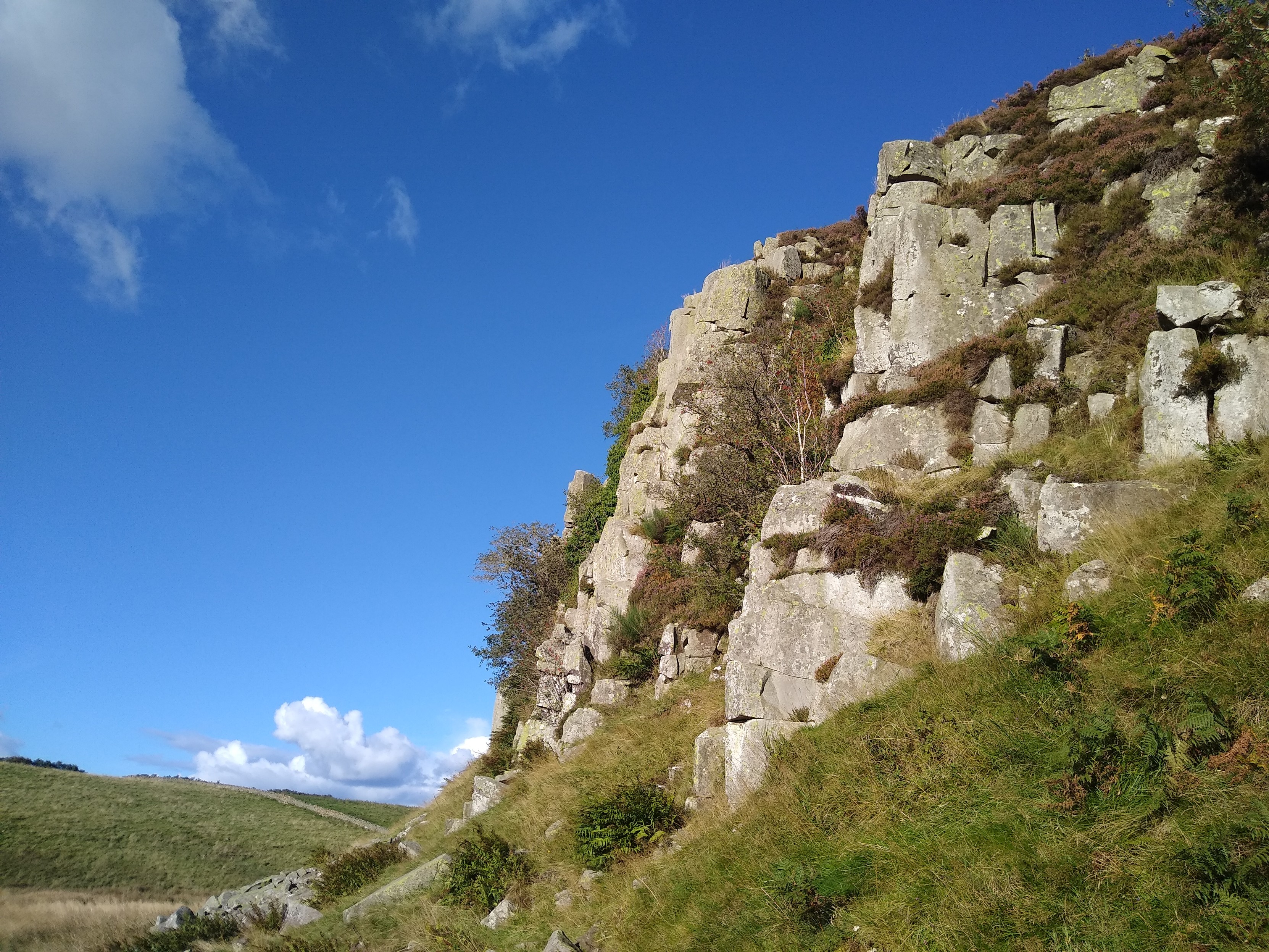
    Very pleasant afternoon and evening at Crag Lough, with a brief jaunt up Sunset at Peel Crag on the way back to the car park... it had to be done! And midge-free, surprisingly!! My first time leading Hadrian's Buttress too; a classic 3-star Severe towards the end of Crag Lough. Great route! 🧗 #Northumberland #Climbing #TradClimbing
  • New Route on Himalayan Mountain Cho Oyu

    General News climbing
    1
    0 Votes
    1 Posts
    151 Views
    GrippedG
    https://gripped.com/profiles/new-route-on-himalayan-mountain-cho-oyu/