Skip to content

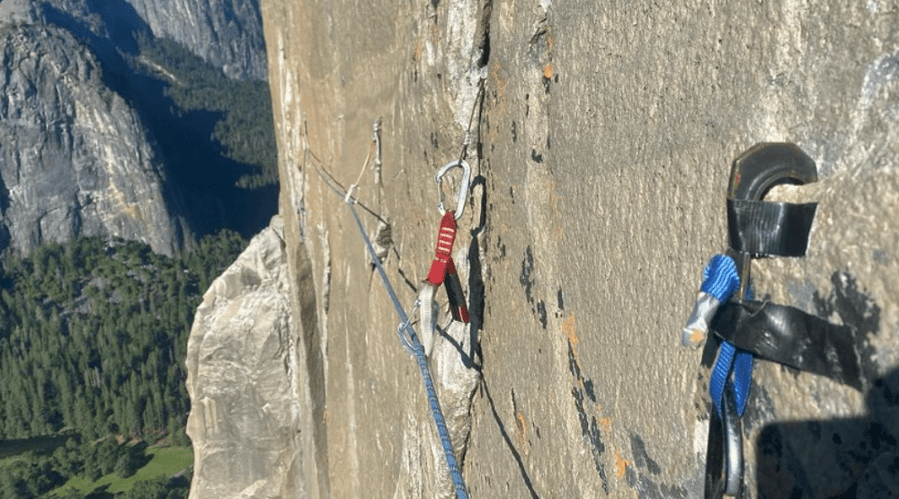
Oliver Tippett Solos Reticent Wall, a 21-Pitch Yosemite A4+

General News
1 1 95

Suggested topics


  • The Long Way Back by Mike Reddy

    General News climbing climbingzine
    1
    0 Votes
    1 Posts
    78 Views
    ClimbingZineC
    “Oh you feel and you taste it and you want to go higher. So what do you do? And so you peak into the mountain where your desire goes. Spilt blood on this place it only echoes true all through the days. And so you peak into the mountain where your desire goes.” The Mountain… https://climbingzine.com/long-way-back-mike-reddy/
  • 1 Votes
    1 Posts
    78 Views
    American Alpine ClubA
    A prominent trend in international climbing is the rise of local climbing communities and cultures around the world, not least in Nepal. As documented in Bernadette McDonald’s award-winning Alpine Rising book, Sherpas and other Nepali climbers, who long worked in the mountains only as skilled employees, now guide their own paying clients and, increasingly, go climbing for fun, with impressive results—the 2021 first winter ascent of K2 being the most dramatic example. The 2025 AAJ will have our biggest Nepal section in many years—at least 38 pages of new routes and exploration—and one reason is the number of Nepali climbers exploring their local mountains, from the first ascent of 6,750-meter Khumjungar to success on the huge south-southwest ridge of Cho Oyu after more than 40 years of attempts. Here, we’re sharing the story of a Nepali expedition to the remote and wild Kanjiroba Himal: Three 8,000-meter guides went on a post-work holiday adventure and succeeded on the first ascent of a 6,500-meter peak. In the premonsoon season of 2024, Nepali guides Vinayak Jaya Malla, Pasang Kami Sherpa, and Pasang Rinzee Sherpa worked commercial expeditions to 8,000-meter peaks. After returning to Kathmandu, they enjoyed only a few days of rest before heading to Jumla in West Nepal, arriving on June 4. They were perfectly acclimatized for the adventure ahead: the first ascent of the highest summit of the Patrasi group, situated on the western rim of the Kanjiroba Sanctuary, a trip partially sponsored by the Mount Everest Foundation. None of the climbers had previously trekked or climbed in the area.      Along with four helpers from Kathmandu, the team drove to Pere (2,700m) on June 5. Adding a local guide and three porters, they then walked four hard days via the Chaudhabise Valley to a base camp at 5,050 meters below the west side of the Patrasi group. Day three involved crossing the Tang Tang Pass (4,950m) and descending to an overnight camp at 4,100 meters in the Changda Valley, where they met an encampment of local people gathering yarsagumba (caterpillar fungus) for traditional Tibetan and Chinese medicine. At 8 a.m. on the 10th, they began their ascent of Patrasi. They first climbed a 200-meter snow couloir to reach the northwest ridge of Patrasi II (6,471m). After climbing 11 belayed pitches with rock to French 5a (around 5.8), and simul-climbing other sections, they reached 5,700 meters, where they were able to fashion a partial tent site. For safety, they slept that night in their harnesses. The following morning, they left at 5 a.m. After another 11 pitches (up to M4) and a little simul-climbing, they arrived at 6,000 meters, where they decided to pitch their second camp at around 4 p.m. The climbing had been quite challenging, in cold and windy conditions with intermittent snow showers. The rock was poor, and there were many places where protection points were 10 to 15 meters apart. At 4 a.m. on June 12, the three set out for a long summit push. Following the corniced ridge, then crossing a section of hard blue WI3, they reached the top of Patrasi II, descended a little to a snow slope, then headed up onto the left flank of the northeast ridge of Patrasi I. They reached the 6,521-meter summit at 4:35 p.m. in cloudy weather. The descent was long and tiring, with their muscles cramping toward the end of the day. Downclimbing and 15 long rappels (they climbed on 70-meter ropes) took them back to the 6,000-meter camp. It was 9:30 p.m., and they didn’t bother to cook, instead falling asleep very quickly. On the 13th, it took the trio almost 11 hours to descend all the way to base camp. By the 17th, they were back in Jumla. All equipment and nondegradable waste was packed out, and they left only five snow stakes, 10 pitons, and some cord on the mountain. Commenting on the trip, Pasang Kami Sherpa said, “This expedition added an interesting chapter to my mountaineering journey. It was in stark contrast to my experience on 8,000m peaks, where fixed rope, oxygen, well-stocked camps, and support systems are the norm. Here, we were on our own, a small team carrying only essential things, making our own decisions, and adapting to whatever ... https://americanalpineclub.org/news/2025/3/16/the-line-nepali-climbers-on-nepals-mountains
  • Break test machine made of wood?

    Videos climbing hownot2
    1
    0 Votes
    1 Posts
    107 Views
    HowNOT2H
    https://www.youtube.com/watch?v=9unrntTci-w
  • CONNECT: The Next Generation of Crag Developers

    General News climbing
    1
    0 Votes
    1 Posts
    165 Views
    American Alpine ClubA
    The mentorship gap is a frequent topic of discussion in a lot of climbing circles, and the gap seems to be especially pronounced for climbers trying to get into crag and boulder development. In this episode, we dove into the joys of having too many mentors to count. Long-time developer and AAC member Josh Pollock decided to collaborate with Jefferson County, in the Front Range of Colorado, to develop a beginner-friendly crag called the Narrow Gauge Slabs. For this project, sustainability and accessibility was a focus from the start, and Josh and other local developers designed a mentorship program that would coincide with developing the crag, to support climbers of traditionally marginalized backgrounds who want to equip themselves with knowledge and mentorship resources so that they could be developers and mentors in their own right. In this episode, we sat down with Lily Toyokura Hill and Ali Arfeen, two mentees in the program who have really taken this experience and run with it, stepping into leadership roles in the local climbing community. We cover what inspired them to become developers, perceptions of route development and who belongs, grading and individual bolting styles, and much more. The conversation with Lily, Ali, and Josh illuminates a lot about the power of mentorship and the complex considerations of developing in modern climbing. https://americanalpineclub.org/news/2024/11/18/connect-the-next-generation-of-crag-developers
  • 22 of Connor Herson’s Hardest Rock Climbs

    General News climbing
    1
    0 Votes
    1 Posts
    109 Views
    GrippedG
    Few climbers have amassed such a long list of difficult trad routes in such a short time The post 22 of Connor Herson’s Hardest Rock Climbs appeared first on Gripped Magazine. https://gripped.com/profiles/22-of-connor-hersons-hardest-rock-climbs/
  • Vuelo del Águila

    Pics and trips climbing mountaineering spain
    1
    3
    0 Votes
    1 Posts
    126 Views
    Spanish Highs, Sierra NevadaS
    Superb day to be in the high mountains, climbing day with guest Jordan experiencing the Vuelo del Águila rock climbing route up onto Veleta 3394m.#climbing #mountaineering #spain
  • The Line: Global Ambition

    General News climbing
    1
    0 Votes
    1 Posts
    89 Views
    American Alpine ClubA
    https://americanalpineclub.org/news/2024/8/19/the-line-the-monthly-newsletter-of-the-aaj
  • Famous Mountain Road in the USA Collapses

    General News climbing
    1
    0 Votes
    1 Posts
    138 Views
    GrippedG
    https://gripped.com/news/famous-mountain-road-in-the-usa-collapses/