It’s bouldering season in Hueco Tanks, Texas. While most consider bouldering relatively safe, it is perhaps the most accident- and injury-plagued facet of climbing. This month we bring you an accident that took place in 2024 on a famous John Sherman highball called See Spot Run.
This accident will be featured in the 2025 Accidents in North American Climbing.
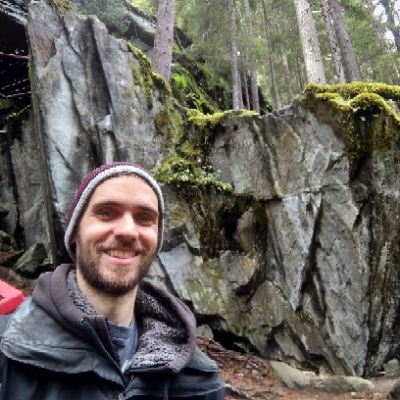
On January 22, I (Pete Korpics, 35) was attempting to climb a long-standing project of mine called See Spot Run (V6). I was well aware of the risks involved and that it would require ample padding.
During previous sessions, I had placed six or more pads in a wide area including the back of the fall zone. Six pads or more is ideal, but I was admittedly negligent on the day of the accident, as I felt I’d complete the route and was excited to do it. I also felt that the pad number and pad placement—five total and not as wide as prior attempts—was adequate, given the presence of two spotters. I felt very strong getting to the crux. After pulling through the crux, I got very pumped, lost momentum, and hesitated. We all know that moment when you feel uncertain about the next move. In those moments we tell ourselves, “Do it anyway.” Sometimes this works, but often it doesn’t. In this case, I fell.
I fell from roughly 15 feet up, with quite a bit of force. My spotters were hesitant to put their bodies in harm’s way. I had told them that, above the crux, staying clear was the best thing to do. Having two people injured is worse than one.
Due to the momentum of the fall and the poor pad placement, my left foot hit the rock and right foot hit the pad. I severely sprained my ankle. It was probably not helpful that it has in the past received the same injury.
Bouldering is inherently dangerous, and highball problems particularly so. Besides being a four-star John Sherman classic, See Spot Run is a notorious ankle breaker. It is 25 feet tall and described on Mountainproject.com as “one of the more notorious highball problems at Hueco.”
During the same season that Korpics had his accident, other falls from the route caused multiple ankle sprains.
Keep ‘Em On The Pad!
On highballs, the impact forces of a falling climber can be equally hazardous to the spotter. The general rule for highballs (and all bouldering for that matter) is to ensure that the falling climber lands on the pads and stays on the pads after impact. Spotting might look less like controlling and guiding the fall, and more like giving the falling climber a shove to keep them on the pads. The spotter(s) should also protect the head and neck from striking bare ground, rocks, etc.
Korpics wrote to ANAC: ”Preventable action would have included better pad placement and more pads. We could have used thinner pads to cover gaps between pads. This accident may also have been prevented by assertive spotting, and a strong shove from one of the spotters would have landed me on the pads. That possibility was negated because I had instructed my spotters to stand clear if I fell from above the crux.
“Confidence should not lead to complacency,” he continued. “I’d been climbing a lot and climbing well, including numerous highballs prior to the accident, so I’d let my guard down. I do not blame the spotters, as I had given them specific instructions. I had placed the pads, I chose to climb despite knowing more pads would be better, and the injury was my fault.”
(Sources: Pete Korpics, Mountainproject.com, and the Editors.)
https://americanalpineclub.org/news/2025/1/14/the-prescriptionjanuary