Skip to content

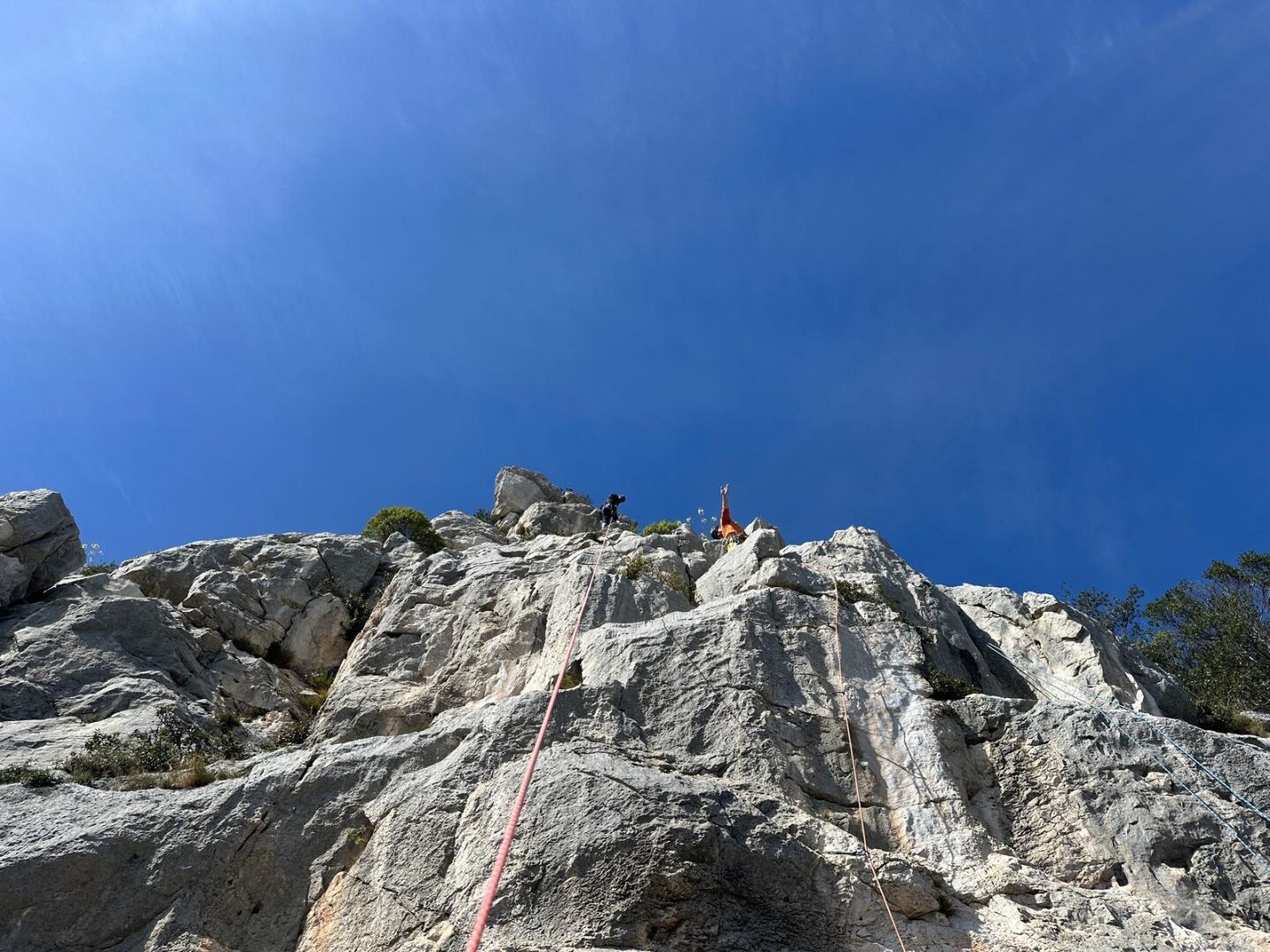
Prisoners of the Sun E9 6c by Robbie Phillips

General News
1 1 107 1

Suggested topics


  • The Line—Reward and Risk on Kaqur Kangri

    General News climbing
    1
    0 Votes
    1 Posts
    45 Views
    American Alpine ClubA
    Three teams will be honored with Piolets d’Or in Italy this December, and all three contributed feature articles about their climbs to the 2025 American Alpine Journal (AAJ). Tom Livingstone wrote about his and Aleš Česen’s new route on Gasherbrum III in Pakistan; Dane Steadman described the first ascent of Yashkuk Sar, also in Pakistan, with August Franzen and Cody Winckler; and Spencer Gray told the story of climbing the southwest arête of Kaqur Kangri in Nepal with Ryan Griffiths. There’s a lot to love about Spencer’s AAJ piece —it documents an amazing ascent. But we were also struck by the final passage, in which he reflects on the inherent and sometimes insidious risks of Himalayan alpinism. No one got hurt on the climb of 6,859-meter Kaqur Kangri, but afterward Spencer tallied 20-plus minor incidents that each could have ended very badly. Honest self-assessments like this are essential to a long life in the mountains, so we’ve shared Spencer’s thoughts here for readers to consider in light of their own climbing. Objectives like the southwest arête of Kaqur Kangri used to be what most climbing was: trying something kind of hard, an inconvenient distance from home, and relying on imagination as much as effort to turn a thing dreamt into a thing done. There are still plenty of places to contrive that same experience. We just have to look harder—and be willing to court risk in an unpredictable operating environment.  Our team didn’t have what we’d consider a close call, but in debriefing, I still counted 23 discrete times when the risk ticked up. A mule nearly broke my knee with a kick when I tried to bring it into camp one morning. On our first day of climbing, we hustled up a ramp that was probably at the outside edge of the ricochet zone of the upper serac band. Two days later, Ryan [Griffiths] and I both simultaneously realized that we were pushing our unroped luck on low-angle but hard-frozen talus above the west face. “If we slip here, it’s to the bottom, eh?” I said. Of four minor rockfall incidents, we mitigated two by our choice of protected belays and bivvies. Another was friendly fire: On rappel, I chucked a baseball-sized rock so the ropes wouldn’t dislodge it. But I misaimed, and the rock bounced down the snow slope and nailed Ryan in the shoulder. I reasoned that Ryan had probably done something in a prior life to deserve getting punched in the clavicle. He was less sure. On day three, below the snowfield, we pulled through suspended, stacked blocks in a roof that would have chopped the rope had they dislodged. On the upper headwall, my ice tool tethers got tangled behind a cam after I had campused out a diagonal rail. I couldn’t reverse the move, and I couldn’t continue until I had unthreaded the tools. Half growling, half screaming, I locked off on one arm, frontpoints screeching, and freed myself. When he followed, Ryan simply lowered out and jugged.  On the descent, Ryan and I had probably our riskiest moment when we crossed a 40-foot-wide wind slab partway down the upper northwest face. It appeared suddenly, a shallow pocket of cross-loaded danger in an otherwise stable snowpack. The tension on the slope and the soft, hollow thump as our boots and ice tools pressed through the snow put us both on edge. But with no other signs of failure or propagation, and a morning of downclimbing a similar aspect and angle above us, we each judged it safe enough to proceed. An hour before we regained the base of the mountain, fed up with navigating the messy corners of the final glacier, we briefly but obtusely committed to soloing steep glacial ice, embedded with crushed pebbles, as we traversed 15 feet above the bottom of a closed crevasse. We were spurred on by our friend Matt’s tiny light in the distance and the promise of fresh Snickers. Perhaps a week on the mountain and the tedious descent had dulled our nose for risk.  Three days later, we stopped at Chyargo La on the trek back out and took in our final view of Kaqur. I crouched beneath fluttering prayer flags to lounge against a rock, my fingers getting sticky pulling globs of gulab jamun out of a can we’d saved until now for a treat. Kaqur’s summit seracs glinted in the midday sun from what seemed like a very long ways away. Matt and Ryan laughed as I passed them the can for a shot of syrup to wash it all down. https://americanalpineclub.org/news/2025/11/18/the-linereward
  • The Prescription—Off Route Rappel

    General News climbing
    1
    0 Votes
    1 Posts
    74 Views
    American Alpine ClubA
    Fall is finally here and conditions for rock climbing are prime. Many of you will be heading out onto crags or wall that require rappels. Just remember that while rappel mishaps come in all forms, two common errors are getting off the rappel route and/or getting the rappel rope stuck. To extricate oneself and avoid rescue it’s good to learn the art of ascending a rope. In this incident from 2021, one climber found himself off route. With some basic tools and an understanding of the concept of rope ascension, this climber got his team out of trouble. On May 25, Climber 1 (David) and Climber 2 experienced a common rappel mishap on Devils Tower. David recounts: I share this as a cautionary tale. After climbing the Bon Homme Variation (5.8) and then the Bailey Direct route to top out, we decided to head down by the Meadows rappels. I saw a cairn and some rap rings and rigged the rap, assuming I was on the Meadows rappe route. Boy was I wrong! After descending about 125 feet (with two 60-meter ropes), I realized I was off route. I saw a tiny ledge with a second rap anchor at 150 feet, but when I got there with no Meadows in sight, I knew I was screwed. There was a steady 30 mph wind with gusts to about 45. Luckily, we had a set of small radios, so I could talk with my partner. I pulled up an end and tied in and had him start belaying me. Unfortunately, the climbing was well above my grade and the rock was covered with lichen and offered no grip, so I was going nowhere fast. He started hauling me but didn’t know how to rig something to assist, so I had him tie off his ATC to fix the line. I knew the concepts of selfrescue/ jugging but hadn’t ever practiced. I had to quickly figure it out. I carry a Petzl Micro Traxion as well as a Sterling HollowBlock to use as a prusik. I attached the HollowBlock high and clipped into it with my rappel extension. I put the Micro Traxion low on the rope and rigged a foot stirrup with a cordelette, all while hanging in air 500 feet above the boulder field. I figured out the method—step up on the Traxion, slide up the prusik, sit back on the prusik, pull slack through the Traxion, repeat over and over. A few times, I got to where I thought I could climb, but it was too complicated to switch from jugging to climbing. At one point the sling to my prusik got tangled in the Traxion. Somehow I got the Traxion opened (while just hanging on the prusik) and freed the sling. It’s impossible to relay the genuine fear I had during this experience. In the end it all worked out, and in about an hour I was back on top. I learned a lot.  The Meadows rappels are known to lead climbers astray and have been the location of at least one recorded fatality. The descent is unobvious, despite it being used to descend from the most popular routes on Devils Tower. With an almost 90-year rock climbing history, there are many anchors on the Tower–some at five- to ten foot intervals–that make even well-traveled rappels problematic. As David recounts, “I should have spent more time looking around and been 100 percent sure of the descent route. The top of the Tower is disorienting if you don’t pay attention to the landscape on the ground.” David was smart to carry tools for ascending a fixed rope—a little prior practice would have made his journey back to the anchor a lot easier. Learn and practice safe transitions from rappelling to ascending and the methods to back up such an ascent. Bringing radios was another good choice. David recalls, “It was very windy, and it was impossible to shout. Without the radios I’m pretty sure I would have had to call SAR. Best thirty dollars I ever spent.” (Sources: David, via Mountain Project, and the Editors.) Every year, we receive several reports of people getting stuck while rappelling and having to ascend their ropes. Knowing this one technique would save you a lot of stress and prevent what could be a costly and risky rescue. IFMGA/AMGA Guide Jason Antin walks us through ascending a double rope after rappelling off route. We recommend that climbers take a rock rescue course from a guide to get a full in-depth training on how to ascend a rope. Credits: Pete Takeda, Editor of Accidents in North American Climbing, IFMGA/AMGA Guide Jason Antin, Producers: Shane Johnson and Sierra McGivney; Videographer: Foster Denn... https://americanalpineclub.org/news/2025/9/17/the-prescriptionoff-route-rappel
  • 1 Votes
    1 Posts
    75 Views
    climber-magazineC
    Annie Sanders and Dohyun Lee secured their first ever gold medals in the Madrid Lead World Cup over the weekend. https://www.climber.co.uk/news/sanders-and-lee-take-their-first-gold-medals-in-madrid/
  • 0 Votes
    1 Posts
    69 Views
    climber-magazineC
    The Olympic champions, Janja Garnbret and Toby Roberts, have both finished the 2025 Boulder season with Gold medals at Innsbruck. https://www.climber.co.uk/news/olympic-champions-garnbret-and-roberts-take-the-last-boulder-golds-of-2025/
  • Dohyun Lee 🇰🇷 tops 'Psychedelic Zebra' #shorts

    Videos climbing ifsc
    1
    0 Votes
    1 Posts
    72 Views
    IFSCI
    https://www.youtube.com/watch?v=0Iia139GMsc
  • 0 Votes
    1 Posts
    79 Views
    IFSCI
    https://www.youtube.com/watch?v=mpI45_bPJW8
  • Lee Sungsu climbs Burden of Dreams, 9A, twice

    General News climbing
    1
    0 Votes
    1 Posts
    121 Views
    UK ClimbingU
    Lee Sungsu has made the fifth ascent of Burden of Dreams (f9A), two days after invalidating his own ascent due to his t-shirt brushing the pads when pulling up for the first move. https://www.ukclimbing.com/forums/t.php?n=781580
  • Jonathan Siegrist First to Repeat Martial Law 5.15a

    General News climbing
    1
    0 Votes
    1 Posts
    122 Views
    GrippedG
    https://gripped.com/news/jonathan-siegrist-first-to-repeat-martial-law-5-15a/