Skip to content

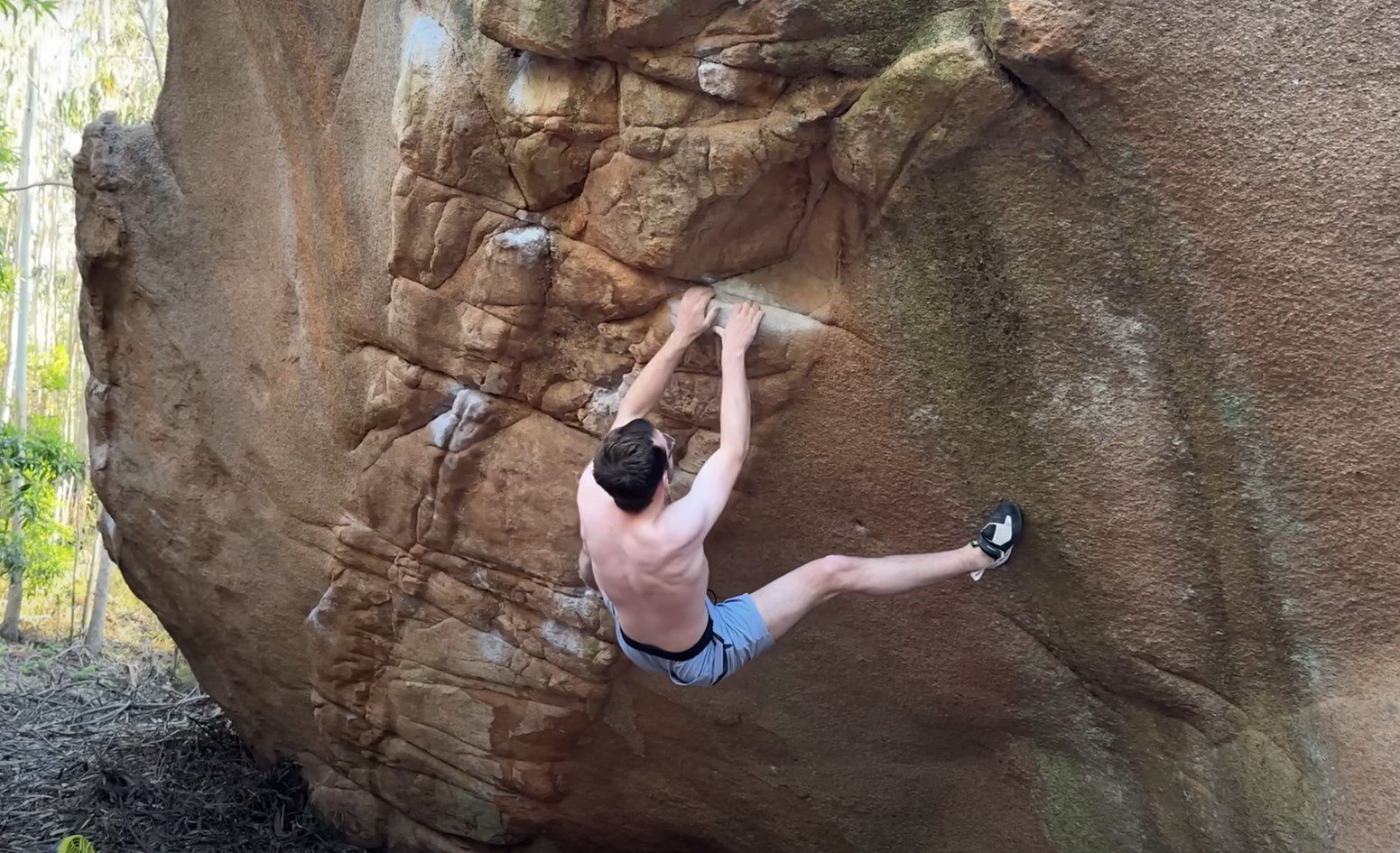
Portugal Bouldering with Will Bosi

General News
1 1 125

Suggested topics


  • Don’t break your rope

    Videos climbing hownot2
    1
    0 Votes
    1 Posts
    18 Views
    HowNOT2H
    https://www.youtube.com/watch?v=XcDa2wESs7o
  • The Line—Reward and Risk on Kaqur Kangri

    General News climbing
    1
    0 Votes
    1 Posts
    46 Views
    American Alpine ClubA
    Three teams will be honored with Piolets d’Or in Italy this December, and all three contributed feature articles about their climbs to the 2025 American Alpine Journal (AAJ). Tom Livingstone wrote about his and Aleš Česen’s new route on Gasherbrum III in Pakistan; Dane Steadman described the first ascent of Yashkuk Sar, also in Pakistan, with August Franzen and Cody Winckler; and Spencer Gray told the story of climbing the southwest arête of Kaqur Kangri in Nepal with Ryan Griffiths. There’s a lot to love about Spencer’s AAJ piece —it documents an amazing ascent. But we were also struck by the final passage, in which he reflects on the inherent and sometimes insidious risks of Himalayan alpinism. No one got hurt on the climb of 6,859-meter Kaqur Kangri, but afterward Spencer tallied 20-plus minor incidents that each could have ended very badly. Honest self-assessments like this are essential to a long life in the mountains, so we’ve shared Spencer’s thoughts here for readers to consider in light of their own climbing. Objectives like the southwest arête of Kaqur Kangri used to be what most climbing was: trying something kind of hard, an inconvenient distance from home, and relying on imagination as much as effort to turn a thing dreamt into a thing done. There are still plenty of places to contrive that same experience. We just have to look harder—and be willing to court risk in an unpredictable operating environment.  Our team didn’t have what we’d consider a close call, but in debriefing, I still counted 23 discrete times when the risk ticked up. A mule nearly broke my knee with a kick when I tried to bring it into camp one morning. On our first day of climbing, we hustled up a ramp that was probably at the outside edge of the ricochet zone of the upper serac band. Two days later, Ryan [Griffiths] and I both simultaneously realized that we were pushing our unroped luck on low-angle but hard-frozen talus above the west face. “If we slip here, it’s to the bottom, eh?” I said. Of four minor rockfall incidents, we mitigated two by our choice of protected belays and bivvies. Another was friendly fire: On rappel, I chucked a baseball-sized rock so the ropes wouldn’t dislodge it. But I misaimed, and the rock bounced down the snow slope and nailed Ryan in the shoulder. I reasoned that Ryan had probably done something in a prior life to deserve getting punched in the clavicle. He was less sure. On day three, below the snowfield, we pulled through suspended, stacked blocks in a roof that would have chopped the rope had they dislodged. On the upper headwall, my ice tool tethers got tangled behind a cam after I had campused out a diagonal rail. I couldn’t reverse the move, and I couldn’t continue until I had unthreaded the tools. Half growling, half screaming, I locked off on one arm, frontpoints screeching, and freed myself. When he followed, Ryan simply lowered out and jugged.  On the descent, Ryan and I had probably our riskiest moment when we crossed a 40-foot-wide wind slab partway down the upper northwest face. It appeared suddenly, a shallow pocket of cross-loaded danger in an otherwise stable snowpack. The tension on the slope and the soft, hollow thump as our boots and ice tools pressed through the snow put us both on edge. But with no other signs of failure or propagation, and a morning of downclimbing a similar aspect and angle above us, we each judged it safe enough to proceed. An hour before we regained the base of the mountain, fed up with navigating the messy corners of the final glacier, we briefly but obtusely committed to soloing steep glacial ice, embedded with crushed pebbles, as we traversed 15 feet above the bottom of a closed crevasse. We were spurred on by our friend Matt’s tiny light in the distance and the promise of fresh Snickers. Perhaps a week on the mountain and the tedious descent had dulled our nose for risk.  Three days later, we stopped at Chyargo La on the trek back out and took in our final view of Kaqur. I crouched beneath fluttering prayer flags to lounge against a rock, my fingers getting sticky pulling globs of gulab jamun out of a can we’d saved until now for a treat. Kaqur’s summit seracs glinted in the midday sun from what seemed like a very long ways away. Matt and Ryan laughed as I passed them the can for a shot of syrup to wash it all down. https://americanalpineclub.org/news/2025/11/18/the-linereward
  • A Brief guide to B2 and B3 Mountaineering Boots

    Videos climbing
    1
    0 Votes
    1 Posts
    90 Views
    EpicTVE
    https://www.youtube.com/watch?v=C5LGTPpZA3s
  • 0 Votes
    1 Posts
    112 Views
    American Alpine ClubA
    Cams might not be as bomber as you think. We are stoked to kick off our Prescription video series by unpacking some magical thinking around cams. This video series will give you greater detail and visual insight into the accidents analyzed in our monthly Prescription newsletters. Featuring Accidents in North American Climbing Editor Pete Takeda, and IFMGA/AMGA Mountain Guide Jason Antin, these bite-sized lessons will get you thinking about how this accident analysis applies to you and your climbing. For Rocktober we have two accidents that represent a larger trend we noticed in 2023. This trend involves: 1) Placing an inadequate number of protection pieces and 2) Poorly placed camming protection. Garrett Genereux submitted the following report to ANAC: At the end of a great day of climbing on May 15, my partner Lance (30) and I, Garrett Genereux (34), decided to do one last route on our way out of the main area. We stopped at Lion’s Chair Start (5.10c/d R). As usual, no one was on it despite the routes on both sides being busy. I had been on the route several times before. I didn't realize how tired I was until on the route. I was trying to conserve energy by not placing too much pro. I was about one body length above my first two pieces of gear and placed a 0.4 cam. My belayer asked if it was a good placement. I assured him that it was fine and kept moving. As I approached the first bolt, where the crack pinches down, I became very fatigued and started getting scared. I wanted to clip the bolt as fast as I could. I was able to hang the draw at my farthest reach. Then I pulled up rope to make the clip. As I inched the rope closer to the lower carabiner, my left foot greased off and I fell. There was a ton of rope in the system, and when I heard the 0.4 plink out of the crack, I knew I was going to the ground. My left foot briefly hit and then I landed on my butt. I lost my breath and made some guttural noises trying to get it back. I lay supine. My ankle hurt and my lower back was pretty tight, but I had full sensation and movement below. I even remember feeling like I needed to pee while lying there and took that as a good sign. The folks nearby were able to clean up the lower pieces and someone with the longest stick clip I've ever seen, snagged the draw off the bolt. Someone let me borrow their camp chair. I was able to slip off my climbing shoes. My left ankle was dark in color and already beginning to swell, but I could bear weight and felt that we didn’t need a crew to carry me out. My partner carried the gear and I used my stick clip as a walking stick as we hiked to the road. My ankle was just a soft-tissue injury, and my back had compression fractures at T12, L1, and L2. Two months later, I was back climbing and feeling well. Since then I have even gotten back on the same route. I sewed it up with 11 pieces rather than three. Simply put, I did not place enough protection. In the first 15 feet, I only placed three pieces: a nut and a cam protecting the start and then the 0.4 cam that pulled. Also, I could have climbed a bit higher to a better hold and clipped the bolt with the same amount of rope in the system as I had when I fell. I also should have checked in with myself mentally and physically. While it is not the most difficult route, it does take focus and it gets an R rating in the newest guide. (Source: Garrett Genereux.) On the morning of July 10, Mac Taylor (25) fell on the first pitch of Gunky (2 pitches, 5.8). He wrote the following account for ANAC: “Two friends and I hiked to the base of Gunky (5.8) at the Sandstone Buttress. I was new to the area. We hiked with gear on our harnesses while carrying ropes and a bag with water and extra gear. I decided to lead the first pitch, despite being told that there was a scary roof section. Part of the reason I chose to lead it was that I already had most of the gear racked on my harness. On the route, I placed a large nut and a number 1 Camalot. I then clipped a bolt and placed a 0.75 Camalot in a shallow slot deep in the crack that I was climbing.  “Halfway up the pitch, I rested and placed a number 2 Camalot deep in an offwidth-sized crack. I laybacked the crack and got established below the roof. From there, I struggled to find comfortable holds. I was about 10 feet above my last piece. https://americanalpineclub.org/news/2024/10/23/the-prescriptionoctober-2024
  • 0 Votes
    1 Posts
    103 Views
    climbingC
    It depends on your foot shape. https://www.climbing.com/gear/review-red-chili-clue-climbing-shoe-2024/
  • Para Climbing Proposed for LA 2028 Paralympic Games

    General News climbing
    1
    0 Votes
    1 Posts
    95 Views
    UK ClimbingU
    https://www.ukclimbing.com/forums/t.php?n=771876
  • Newsflash All Out, 8c, for Rhoslyn Frugtniet

    General News climbing
    1
    0 Votes
    1 Posts
    117 Views
    UK ClimbingU
    https://www.ukclimbing.com/forums/t.php?n=771441
  • 0 Votes
    1 Posts
    113 Views
    Hard Is EasyH
    https://www.youtube.com/watch?v=nMM-6WGAOlw