Skip to content

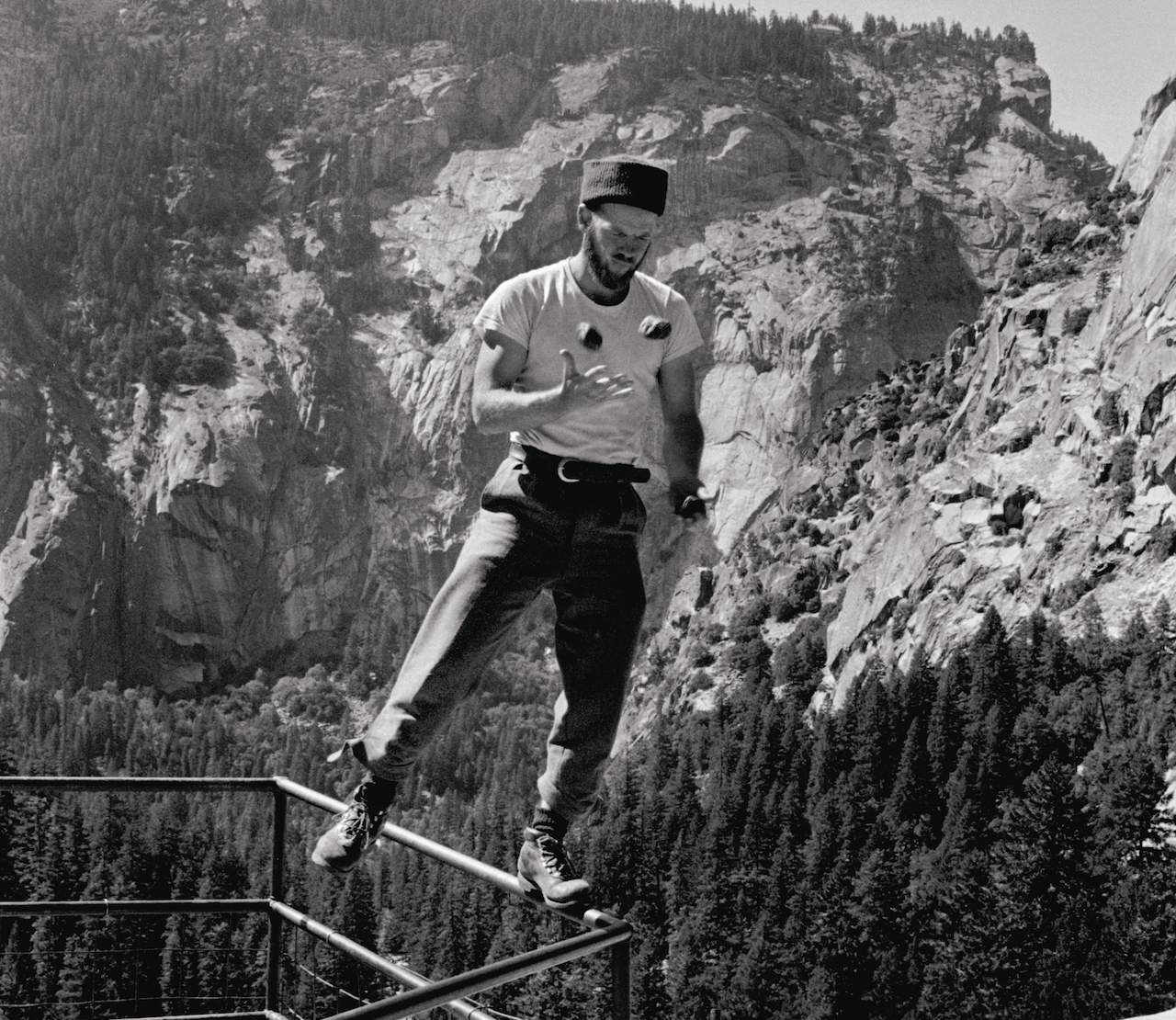
Part 2: Chuck Pratt, Liquid Sunshine by Pat Ament

General News
1 1 86 1

Suggested topics


  • 0 Votes
    1 Posts
    109 Views
    IFSCI
    https://www.youtube.com/watch?v=QDcC24owZHE
  • 0 Votes
    1 Posts
    171 Views
    EpicTVE
    https://www.youtube.com/watch?v=_n-hikfpDFo
  • Hard boulder repeats in Switzerland

    General News climbing
    1
    0 Votes
    1 Posts
    133 Views
    UK ClimbingU
    Switzerland has been the sceneof a number of top-end bouldering ascents, withJames Pearson, Yannick Floh, and Elias Iagnemma all making hard repeats of rarely climbed boulders in the region of 8C - 8C+. https://www.ukclimbing.com/forums/t.php?n=779032
  • 0 Votes
    1 Posts
    131 Views
    climber-magazineC
    Chris Sharma has added yet another stellar Deep Water Soloing first ascent on Mallorca, Vision Quest (F9a). https://www.climber.co.uk/news/chris-sharma-makes-first-ascent-of-vision-quest-another-f9a-mallorca-dws/
  • 0 Votes
    1 Posts
    116 Views
    UK ClimbingU
    Kendal Mountain Festival continues to announce an outstanding line-up for its November event. https://www.ukclimbing.com/forums/t.php?n=775145
  • 0 Votes
    1 Posts
    142 Views
    American Alpine ClubA
    Mark Westman has been climbing in the Alaska Range for nearly three decades and was a Denali Mountaineering Ranger for ten years. He has attempted Mt. Russell, on the southwest edge of Denali National Park, three times by three different routes over 27 years. The third time was the charm, as he and Sam Hennessey raced to the summit in a single day in late April. It was only the ninth ascent of the 11,670-foot peak, and Westman believes the line they followed may be the most reliable way to reach this elusive summit. At 9:45 a.m. on April 27, Paul Roderick dropped Sam Hennessey and me on the upper Dall Glacier, directly beneath the nearly 6,000-foot-tall east face of Mt. Russell—our objective.   We had in mind a rapid round trip. After quickly setting up a tent to stash food and bivouac gear, we departed half an hour after landing with light packs. We started up the left side of the east face, following the same line that Sam had climbed the previous spring with Courtney Kitchen and Lisa Van Sciver. On that attempt, they carried skis with the hope of descending off the summit. After 3,600 feet of snow and ice slopes, they reached the south ridge, which they found scoured down to unskiable hard ice. They retreated and skied back down to the Dall Glacier. The route Sam and I followed on the east face steepened to 50° at about mid-height, and the snow we had been booting up gave way to sustained hard névé and occasional ice—much icier conditions than what Sam and partners had found at the same spot in 2023. We continued to a flat area at 9,600 feet, near the base of the upper south ridge of the mountain. Until this point, we had climbed unroped for most of the way. The upper south ridge was the route followed by Mt. Russell’s first ascent team in 1962 (see AAJ 1963). They accessed it from the west side via an airplane landing on the Chedotlothna Glacier (which is no longer feasible because of glacial recession). This section of ridge was repeated by Dana Drummond and Freddie Wilkinson in 2017 after they pioneered a new route up the direct south face and south ridge of Russell (5,000’, AK Grade 4; see AAJ 2018). From where we intersected the ridge, there were several tricky sections of traversing across 50° ice and knife-edge ridges. We used the rope for these parts, then continued unroped for several hundred feet, easily avoiding numerous crevasses. Just beneath the summit, we reached a near-vertical wall of rime ice, surrounded by fantastically rimed gargoyle formations that spoke to the ferocious winds that typically buffet this mountain. We belayed the short bulge of rime and minutes later became only the ninth team to reach the summit, just seven hours after leaving our landing site. The peak known today as Mt. Russell appears to have been called Todzolno' Hwdighelo' (literally “river mountain”) in the Upper Kuskokwim Athabascan language. This is according to a National Park Service–sponsored study of Indigenous place names written by James Kari, professor emeritus of linguistics at the University of Alaska. Today’s Mt. Russell was named for geologist Israel Cook Russell—one of founding members of the AAC. The California 14er Mt. Russell is also named for him. There wasn’t a cloud in any direction and not a breath of wind. I had made storm-plagued attempts on Russell in two different decades, and there were many other seasons where I had partners and dates lined up but never left Talkeetna due to poor weather. It was truly gratifying to reach the top of this elusive summit. Sam and I descended to the landing site in just four hours, making for an 11-hour round-trip climb and the mountain’s first one-day ascent. Paul picked us up the following morning. While all of the terrain we followed had been climbed previously, the east face and south ridge had not been linked as a singular summit route. Having attempted the now very broken northeast ridge in 1997, and having climbed most of the Wilkinson-Drummond route in 2019, I feel... https://americanalpineclub.org/news/2024/9/3/the-line-mark-westman-mt-russell-and-more
  • 0 Votes
    1 Posts
    136 Views
    American Alpine ClubA
    By: Katie Ives Each book in the American Alpine Club Library is a portal to another world—of golden spires feathered with rime, fluted snow beneath indigo skies, or red-granite aiguilles above a sea of ice. Beyond these worlds, there are countless layers of other worlds encountered by readers inspired to seek their own adventures and return with their own tales. For climbing is an act of storytelling: we trace the arc of a narrative with our bodies and our minds, rising from the base of a mountain toward a climactic point and descending to a resolution. And the history of mountaineering is also the history of reading and imagination, of old dreams endlessly transforming into new ones. On July 15, 1865, English alpinist Adolphus Warburton Moore found himself on the edge of a ridge that looked like something from a fantasy novel. The slender crest of blue ice seemed to rise for an eternity. Sheer voids dropped off on either side. Neither the iron tips of their alpenstocks nor the hobnails of their boots stuck to its flawless surface.   It was inconceivable to climb. No one had yet established a route on this aspect of Mont Blanc, where the Brenva Face rose for 1,400 meters in a chaos of cliffs, towers, and buttresses, fringed by unstable seracs and swept by avalanches and rockfall.  Still, the Swiss guide Jakob Anderegg kept going, and the rest of the team, including Moore, cautiously followed. As the crest narrowed, they shuffled along à cheval, one leg on either side, aware that any fall might be catastrophic [1]. Long after they finished the first ascent of the Brenva Spur and descended by a safer route, the ice crest lingered in the imaginations of those who read Moore’s memoir, The Alps in 1864. In 1906, British author A.E.W. Mason located the climactic scene of his crime novel Running Water on the Brenva Spur—a point of no return that appeared perfect for an attempted murder of one climber by another, “a line without breadth of cold blue ice” [2]. Mason’s Running Water, like its author’s inspiration, begins with reading. Riding the train to Chamonix, his young protagonist Sylvia Thesiger becomes immersed in an old copy of the British Alpine Journal, published more than two decades prior to the novel. All night, she couldn’t sleep, remembering her first glimpse of the Mont Blanc massif beyond the curtain of a train window, recalling her sense of inchoate longing for its moonlit towers of ice and snow.  Although women climbers had taken part in numerous firsts by the time of the novel’s plot, they weren’t permitted to publish in the Alpine Journal under their own bylines until 1889, when Margaret Jackson recounted her epic first winter traverse of the Jungfrau. And there’s no female author or character in the story Thesiger reads about the first ascent of an aiguille near Mont Blanc. Yet she longs to enter its world, and when she arrives in Chamonix, she hires guides to take her on her own first climb, up the Aiguille d’Argentière. As an ice slope tilts upward, sheer and smooth as a pane of glass, she rejoices, feeling as if she’s finally dreamed her way into a scene from mountain literature, “the place where no slip must be made.” Astounded at her fearlessness and intuitive skill, a guide tells her she bears an uncanny resemblance to a famous climber from the Alpine Journal story she’d just admired.  “I felt something had happened to me which I had to recognize—a new thing,” she recalls. “Climbing that mountain...was just like hearing very beautiful music. All the vague longings which had ever stirred within me, longings for something beyond, and beyond.” Later, after she falls in love with a climber, the memory of that day suffuses their bond with a steadfast alpine glow—“ice-slope and rock-spire and the bright sun over all.”    By the end, however, the novel shifts from her journey of self-discovery toward an outcome more conventional for its era. Newly wed, Thesiger is relegated to waiting below the Brenva Spur while the male hero and villain confront each other above that narrow blue crest. Readers don’t find out, for certain, whether she’ll climb any mountains again. A sense of incompleteness remains: the mysterious promise of her alpine epiphanies and of her suppressed and inmost self seem to flow beyond the narrative’s abrupt conclusion, like the recurring dreams she has of running water.  After the publication of https://americanalpineclub.org/news/2024/6/26/the-climb-that-inspired-the-novel-that-inspired-the-climbs-the-many-stories-of-the-brenva-face-of-mont-blanc
  • Our Print Magazine is Back! Here’s How to Buy

    General News climbing
    1
    0 Votes
    1 Posts
    122 Views
    climbingC
    https://www.climbing.com/news/print-magazine-how-to-buy/