Skip to content

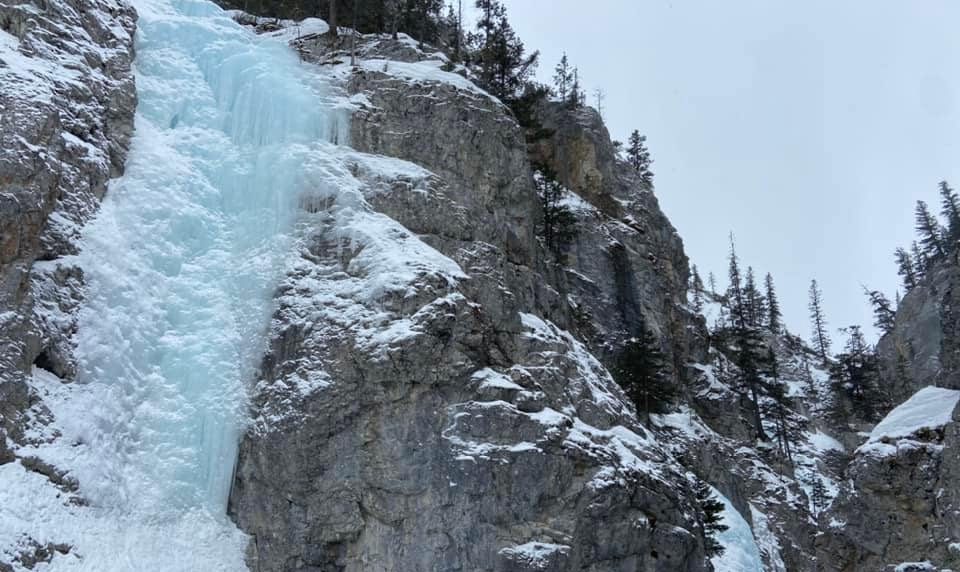
Six Great Early Season Ice Climbing Tips

General News
1 1 101 1

Suggested topics


  • Alex Megos Repeats an Adam Ondra 5.15a/b

    General News climbing
    1
    0 Votes
    1 Posts
    67 Views
    GrippedG
    Iron Curtain is a rarely repeated Ondra route in Flatanger that's made a little easier with kneepads The post Alex Megos Repeats an Adam Ondra 5.15a/b appeared first on Gripped Magazine. https://gripped.com/news/alex-megos-repeats-an-adam-ondra-5-15a-b/
  • The Line: A Climb for Kei Taniguchi

    General News climbing
    1
    0 Votes
    1 Posts
    54 Views
    American Alpine ClubA
    In 2009, Kei Taniguchi from Japan became the first woman to win a Piolet d’Or (along with climbing partner Kazyua Hiraide) for a new route up 7,756-meter Kamet in India. Tragically, neither Taniguchi nor Hiraide are still with us. In AAJ 2025, we’re publishing a story by Akihiro Oishi, Taniguchi’s biographer, who set out to complete a route she had attempted years earlier in Nepal. We’re sharing part of Oishi’s story here. “Mr. Hagiwara, what mountain is this?” The question was asked by Kei Taniguchi as she looked at a picture taken by Hiroshi Hagiwara, editor of Rock and Snow, in 2013. The photo showed the unclimbed northeast face of Pandra (6,673 meters) in eastern Nepal. In 2016, Taniguchi attempted Pandra with Junji Wada, retreating from two-thirds height (AAJ 2017). On return to Japan she wrote, “I’ve opened Pandora’s Box. I will definitely go back to check what’s inside.” Tragically, a month later, she fell to her death from Mt. Kurodake in Japan. I interviewed many people to compile a book about Kei’s life, called A Piece of the Sun. In the final chapter, I hoped to incorporate a scene in which some of us, including Wada, climbed Pandra. However, Wada was seriously injured just before our team was due to leave Japan, and the expedition was postponed. Finally, in 2024, eight years after Kei’s accident, I went to Pandra with Suguru Takayanagi and Hiroki Suzuki to complete Kei’s route. Wada had become a family man, starting a new life. We arrived at our 5,100-meter base camp on October 12. The approach to advanced base and the face itself had changed significantly in eight years due to global warming: The northeast face looked far drier than in pictures taken by the French team that completed the first route up the face. [In October 2017, one year after the attempt by Taniguchi and Wada, French climbers Mathieu Détrie, Pierre Labbre, and Benjamin Védrines completed Peine Plancher (1,200m, WI6 M6; see AAJ 2018).] After acclimatization, we left advanced base for Pandra at 7 a.m. on October 25. It took three hours to reach the foot of the wall, after which we climbed to a bivouac site at 5,500 meters, where we pitched the tent using a snow hammock. The climbing to this point, following the line taken by Taniguchi and Wada, had involved crumbling rock and brittle ice. On day two, we climbed three pitches of excellent, steep alpine ice, dubbed the Pandra Great Icicle. Above, a couloir with poor protection and belays cut through the center of the face, and at 5,800 meters we made our second bivouac. On the 27th, we headed directly toward the summit. [From around this point or below, in 2016, Taniguchi and Wada traversed to the north spur; the 2024 team continued direct and joined the line of the 2017 French route, which came in from the left.] At around 6,000 meters, the French party had found a pitch of M6. Takayanagi, who is about ten years younger than us, onsighted that pitch easily—he should achieve great things in the Himalaya. At 6,200 meters, we found a bivouac site beneath a rock outcrop. The next morning, we left our bivouac gear and headed for the top. Takayanagi climbed an overhang that was much more difficult than the M6 the day before. We then climbed ice and difficult sugar snow, with little meaningful protection, to reach a snow cave at around 6,500 meters after dark. We shivered through the night in just the clothes we were wearing. With Suzuki in the lead, it took only 30 minutes to reach the top the next morning. Suzuki shouted, “Whoa, we did it!” I’ve been climbing with him for 20 years, but this was the first time I’d heard a serious roar. By 4 p.m. we had returned to our snow cave, and the following day we rappelled to the base. We named our route A Piece of the Sun. It will continue to burn in our hearts and guide us toward greater mountains.                   —Akihiro Oishi, Japan, with help from Kaoru Wada, Hiroshi Hagiwara, and Rodolphe Popier 2004 Taniguchi and Kazuya Hiraide complete a https://americanalpineclub.org/news/2025/8/12/the-line
  • Janja Garnbret Wins Two Gold Medals

    General News climbing
    1
    0 Votes
    1 Posts
    68 Views
    GrippedG
    "I know the crowd was worried a little bit, I was not," said Janja Garnbret The post Janja Garnbret Wins Two Gold Medals appeared first on Gripped Magazine. https://gripped.com/profiles/janja-garnbret-wins-two-gold-medals-2/
  • Guidebook XIV—Rewind the Climb

    General News climbing
    1
    1 Votes
    1 Posts
    113 Views
    American Alpine ClubA
    Before there were 8a.nu leaderboards and Mountain Project ticklists, before there were beta videos and newspaper articles for every cutting-edge ascent, there was a word-of-mouth understanding of who was setting the standard of the day. Pushing the standard of climbing at the Gunks has proven to be key in the history of climbing in the United States, and any connoisseur of climbing history will know the names of Fritz Wiessner, Hans Kraus, Jim McCarthy, John Stannard, Steve Wunsch, and John Bragg—all AAC members by the way. But what often gets overlooked in the whispers of rowdy Vulgarian parties, naked climbing antics, and strict leader qualifications that swirl around Gunks history are the distinct contributions of women to Gunks climbing. A central figure in this story is the unique character Bonnie Prudden. First, we must set the scene. Prudden was most active climbing in the Gunks in the late 1940s and early 1950s, when climbing on rock was done in sneakers with a hemp rope. Rather than boldness, a strict no-falls attitude pre-vailed, and good judgment was prized over achieving the next cutting-edge grade. Pitons and aid climbing were status quo, and without a priority on pushing the limits of the sport, the time period was considered non-competitive. While Wiessner, Kraus, Prudden, and others were climbing 5.7s (even occasionally 5.8), most climbers stuck to routes rated 5.2–5.4. Climbing in the Gunks started with Fritz Wiessner, who went on a developing tear starting in 1935. He and Hans Kraus would be the leading developers of the area until the late 1950s, collectively establishing 56 of the 58 multi-pitch climbs put up in that period. In 30 of those first ascents, Prudden played a role, and she wasn’t just tagging along. With competition on the back burner, the significance of leading was murky. Some of the climbers at the time proclaimed that there wasn’t a big difference between leading and following. However, the great tension and division that would characterize the Gunks’ history— between the Appalachian Mountain Club climbers (Appies) and the rebel Vulgarians that opposed their rules—came down to the question of regulating leading. The Appies, the dominant climbing force in the Gunks until the Vulgarians and other rabble-rousers splintered the scene in the 1960s, created a lead qualification system, determining who could lead at any given level. Alternatively, some climbers were designated as “unlimited leaders,” who didn’t need approval to lead specific routes. Although they were painted as control freaks by the Vulgarians, the truth behind why the Appie crowd was so invested in regulating leading (and minimizing the risk inherent in climbing) was because they were keenly aware of the generosity of the Smileys, the landowners who looked the other way as climbers galavanted around on the excellent stone of the Trapps and Sky Top. Bonnie Prudden was lucky enough to rise above all of the drama. As a close friend and frequent climbing partner of Hans Kraus’s (who was obviously an “unlimited leader,” being one of the first, and much-exalted, developers of the area), Prudden had frequent access to new, difficult climbs. In interviews with researcher Laura Waterman, Prudden relayed that in the early years, while climbing with her then husband, Dick Hirschland, she always led because of their significant weight difference. Later she took the lead simply because of her skill, tutored by Kraus and Wiessner. Prudden took her first leader fall on the 5.6 Madame G (Madame Grunnebaum’s Wulst) and recalls catching a fall from Kraus only four times. At the time, 5.7 and 5.8 was the very top of the scale, and Prudden was keeping up—and sometimes showing off. The story of the first ascent of Bonnie’s Roof, now free climbed at 5.9, is often held up as proof of Prudden’s talent, and rightfully so. But the gaps in the story and the fuzziness of Prudden’s memory of it might reveal more than the accomplishment itself. On that day in 1952, Prudden thought the intimidating roof “looked like the bottom of a boat jutting out from the cliff,” as she wrote in an article about the climb in Alpinist 14, published in 2005. Overhanging climbing was still a frontier to explore, but Kraus was a man on the hunt for exposure, rather than difficulty. It just so happened that the massive overlapping tiers of Bonnie’s Roof would provide both. Prudd... https://americanalpineclub.org/news/2025/5/14/guidebook-xivrewind-the-climb
  • Babsi Zangerl Makes History with Flash of El Cap

    General News climbing
    1
    0 Votes
    1 Posts
    100 Views
    GrippedG
    She just flashed Freerider 5.13a – a truly jaw-dropping ascent The post Babsi Zangerl Makes History with Flash of El Cap appeared first on Gripped Magazine. https://gripped.com/news/babsi-zangerl-makes-history-with-flash-of-el-cap/
  • Mountain in U.S.A. Loses Confederate Name

    General News climbing
    1
    0 Votes
    1 Posts
    92 Views
    GrippedG
    The tallest peak in the traditional territory of the Cherokee has been restored 150 years after being changed The post Mountain in U.S.A. Loses Confederate Name appeared first on Gripped Magazine. https://gripped.com/profiles/mountain-in-u-s-a-loses-confederate-name/
  • 0 Votes
    1 Posts
    119 Views
    mkroehnertM
    Vor ein paar Wochen waren wir in den #Vogesen #Klettern. Erster Tag am Neuntelstein mit Granit. Zweiter Tag am Carriere de Ziegelberg mit Sandstein. Crag photos from #climbing in the #Vosges. One day Neuntelstein with granite. Second day sandstone at Ziegelberg. #RockClimbing #OutdoorClimbing
  • Five Must-Climb 5.10s in the Adirondacks

    General News climbing
    1
    0 Votes
    1 Posts
    109 Views
    GrippedG
    <p>There are thousands of climbs to explore in this remote park in the state of New York </p> <p>The post <a href="https://gripped.com/profiles/five-must-climb-5-10s-in-the-adirondacks/">Five Must-Climb 5.10s in the Adirondacks</a> appeared first on <a href="https://gripped.com">Gripped Magazine</a>.</p>